
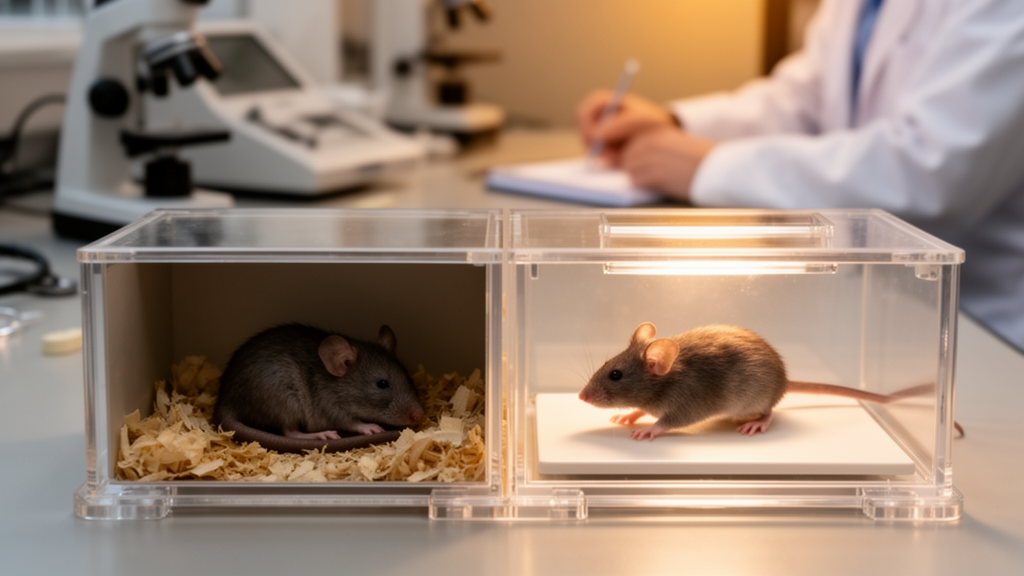
A study investigating sex differences in the Ts65Dn mouse model of Down syndrome found that female mice demonstrated superior long-term object recognition memory, increased anxiety-like traits, elevated risk-taking, heightened social behavior, and reduced depression-like behavior compared to their male counterparts. Concurrently, male Ts65Dn mice exhibited more fragmented sleep than females, highlighting important neurobehavioral distinctions between the sexes in this widely examined genetic model.
Down syndrome arises from a full or partial trisomy of human chromosome 21 and represents one of the most frequent neurodevelopmental disabilities with an identified genetic cause. Individuals with Down syndrome regularly experience alterations in learning, memory, and sleep patterns, and sex differences across these functional domains have previously been recorded in humans. Although the genetically engineered Ts65Dn mouse model reproduces many of these phenotypic characteristics, sex-specific differences in cognition and behavior have historically received little investigation in animal models despite recommendations to include both sexes in experimental designs.
To evaluate whether sex-dependent traits exist in the mouse model, researchers tested cohorts of male and female Ts65Dn mice alongside diploid 2N control animals. The experimental battery was designed to interrogate critical phenotypic traits that characterize the condition, focusing on short-term and long-term memory, emotional regulation, exploratory tendencies, and baseline sleep architecture.
Cognitive evaluations utilized the Novel Object Recognition test, the Novel Object Location test, and the T-Maze to evaluate memory function across different modalities and retention intervals. The experimental results indicated that female Ts65Dn mice performed significantly better than males in long-term object recognition memory. However, researchers observed no significant sex differences in performance during tasks assessing long-term spatial memory or short-term memory.
Behavioral and affective profiles were measured using the Open-Field test, Elevated Plus Maze, Social test, and Splash tests. These assessments demonstrated that female Ts65Dn mice engaged in more social behavior and exhibited less depression-like behavior than male Ts65Dn mice. At the same time, female Ts65Dn mice displayed higher levels of both anxiety-like and risk-taking behaviors than males in the corresponding testing environments.
Continuous physiological sleep recordings assessed sleep structure across both sexes in Ts65Dn and 2N control mice. An analysis of global sleep architecture revealed no differences between male and female mice in the overall amounts of wakefulness, non-rapid eye movement sleep, or rapid eye movement sleep. In contrast, sleep continuity differed notably between the sexes, with male Ts65Dn mice presenting significantly more fragmented sleep than female Ts65Dn mice.
When comparing Ts65Dn mice to 2N control animals, the authors noted that many of the observed behavioral differences were also present in the controls, indicating that several traits reflect general sex effects on mouse behavior rather than mechanisms unique to Down syndrome. Nevertheless, two specific phenotypic manifestations emerged as distinct to the Ts65Dn genotype: the heightened sleep fragmentation identified in male Ts65Dn mice, and the elevated anxiety and risk-taking profile observed in female Ts65Dn mice compared to males.
The finding that sleep fragmentation is specific to male Ts65Dn mice introduces an unresolved question regarding whether interrupted sleep architecture contributes to the memory deficits observed in these animals. Although physiological sleep recordings revealed no significant differences between the sexes in the overall duration of wakefulness, non-rapid eye movement sleep, or rapid eye movement sleep, sleep continuity was uniquely disrupted in males. The researchers observed that while female Ts65Dn mice demonstrated superior long-term object recognition memory, male Ts65Dn mice experienced markedly more fragmented sleep. Whether this disrupted sleep directly contributes to their poorer recognition performance remains to be fully investigated, marking an important boundary in understanding how sleep architecture interacts with cognitive performance in the model.
Investigating these relationships provides valuable context because the triplication of gene expression resulting from full or partial trisomy of human chromosome 21 renders Down syndrome an exceptionally complex disability. The phenotypic traits that characterize the condition in humans, most notably altered learning, memory, and sleep, are closely reproduced in the Ts65Dn mouse. These shared characteristics make the strain an effective experimental subject for examining the underlying causes of neurodevelopmental alterations as well as exploring potential therapeutic mitigations. Although sex differences in cognition and sleep are well documented in humans with Down syndrome, research on animal models has rarely evaluated or reported outcomes as a function of sex. This absence occurred despite broad acceptance of the general scientific principle that both sexes should be included in experimental designs wherever possible.
To evaluate these critical traits systematically, the study tested male and female Ts65Dn mice alongside diploid 2N controls across a battery of behavioral tasks. The experimental design assessed memory, anxiety, risk-taking, depression, and social interaction using Novel Object Recognition, Novel Object Location, T-Maze, Open-Field, Elevated Plus Maze, Social test, and Splash tests. Crucially, comparing the findings against 2N control mice demonstrated that most observed behavioral and sleep differences between the sexes were also present in the controls, reflecting general sex effects on mouse behavior rather than mechanisms specific to Down syndrome. Only two traits emerged as uniquely driven by the Ts65Dn genotype: the elevated sleep fragmentation in male Ts65Dn mice, and the combination of heightened anxiety and risk-taking behavior in female Ts65Dn mice compared to males.
Subject of Research: Sex differences in cognitive, behavioral, and sleep phenotypes in a mouse model of Down syndrome
Article Title: Cognitive, behavioral, and sleep characterization of sex differences in the Ts65Dn mouse model of Down syndrome
Article References: Kurashige, T. L., Lopez, S. T., Peroulas, S., Chan, L., Heller, H. C., & Pittaras, E. (2026). Cognitive, behavioral, and sleep characterization of sex differences in the Ts65Dn mouse model of Down syndrome. Biology of Sex Differences. https://doi.org/10.1186/s13293-026-01009-1
Image Credits: AI Generated
DOI: 10.1186/s13293-026-01009-1
Keywords: Ts65Dn mouse model, Down syndrome, sex differences, sleep fragmentation, object recognition memory, Novel Object Recognition, Novel Object Location, T-Maze, Open-Field test, Elevated Plus Maze, social behavior, anxiety-like behavior, risk-taking behavior, depression-like behavior, trisomy 21, NREM sleep, REM sleep, 2N controls

