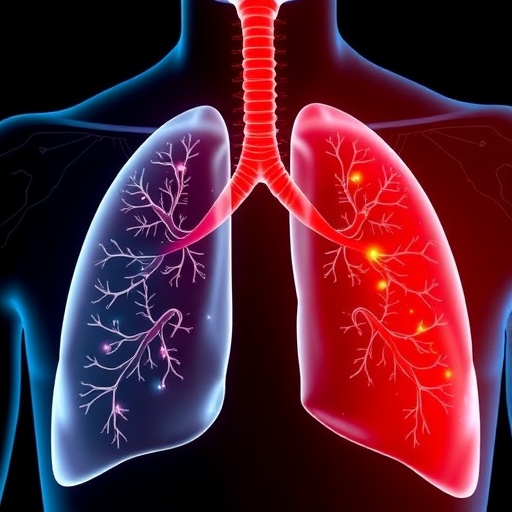
A groundbreaking new cohort study published in the prestigious journal JAMA Internal Medicine sheds critical light on the profound impact of chronic obstructive pulmonary disease (COPD) on life expectancy. The research conclusively demonstrates that COPD is linked with significantly reduced longevity, a revelation that holds true not only for individuals with traditional risk factors such as smoking but notably also for adults who have never smoked. This paradigm-shifting finding challenges long-standing assumptions and warrants heightened attention from clinicians, public health officials, and researchers alike.
COPD, a progressive respiratory disorder characterized by airflow limitation and chronic inflammatory response within the lungs, has long been associated with tobacco smoke exposure. However, this study’s robust longitudinal design examines a diverse cohort, revealing that even in the absence of active or prior smoking, afflicted individuals experience marked decreases in survival duration. These observations suggest alternative environmental or genetic contributors may play a more substantial role in COPD pathogenesis and prognosis than previously appreciated.
The methodological rigor underpinning this study stems from carefully curated observational data collected over an extended period, facilitating comprehensive analysis of mortality outcomes. Participants underwent detailed clinical assessment including spirometric evaluation, which remains the gold standard for diagnosing and quantifying airflow obstruction severity. By adjusting for confounding variables such as age, socioeconomic status, and comorbid conditions, researchers isolated the intrinsic effect of COPD on life expectancy with high precision, underscoring the strength of the association.
Fundamentally, the study advances our understanding by stratifying risk profiles within the COPD population. It illuminates that individuals with mild to moderate airflow obstruction, regardless of smoking history, still confront a pronounced decrease in lifespan. This insight compels a critical reevaluation of screening and intervention strategies, encouraging earlier diagnostic efforts and preventative measures beyond conventional smoking cessation initiatives.
Intriguingly, the research team identified possible mechanistic pathways contributing to reduced life expectancy in COPD sufferers devoid of smoking exposure. Chronic systemic inflammation, oxidative stress, and environmental pollutant exposure emerge as plausible culprits driving pulmonary decline. The study’s findings highlight the necessity for future translational research dedicated to deciphering these complex biological interactions and developing targeted therapeutic approaches.
Beyond pulmonary complications, the mortality risk associated with COPD intricately intertwines with multi-organ consequences, including cardiovascular morbidity and metabolic dysfunctions. The systemic nature of COPD underscores why life expectancy disparities extend far beyond lung function measures alone. Consequently, holistic patient management approaches incorporating multidisciplinary care models are advocated to mitigate mortality risks effectively.
Public health ramifications of this research are substantial. The revelation that COPD diminishes lifespan even in nonsmokers signals an urgent need to broaden disease awareness and promote environmental health policies aimed at reducing airborne pollutant exposure. Additionally, health systems should contemplate expanding surveillance programs capturing early COPD indicators among at-risk populations historically overlooked due to non-smoking classification.
Clinical practitioners are urged to integrate these new insights into patient risk assessments, ensuring vigilance for COPD symptoms irrespective of smoking history. Implementing personalized treatment paradigms embracing pharmacologic, rehabilitative, and lifestyle interventions could alter the disease trajectory and potentially enhance survival outcomes.
The study was presented at the American Thoracic Society 2026 International Conference, a premier forum for disseminating cutting-edge pulmonary and critical care research. Corresponding authors Dr. Surya P. Bhatt and Dr. Elizabeth C. Oelsner, leading experts in internal medicine and epidemiology, emphasize the importance of these findings in shaping future COPD research agendas and healthcare policies on a global scale.
As the medical community digests this compelling evidence, it is clear that chronic obstructive pulmonary disease should no longer be considered solely a smoker’s ailment. This investigative endeavor compels a broader reconceptualization of COPD, emphasizing inclusivity in research and prevention, and catalyzing efforts to identify novel risk factors and interventions for all affected populations.
In sum, this landmark study advocates for a paradigm shift in understanding COPD’s impact on life expectancy. It marks a potent call to action for enhanced clinical vigilance, progressive public health campaigns, and accelerated biomedical research to confront this complex pulmonary disease that silently truncates lives, irrespective of smoking history.
Subject of Research: Chronic Obstructive Pulmonary Disease and Life Expectancy
Article Title: COPD Is Associated With Lower Life Expectancy Including in Adults Who Never Smoked: Findings From a Large Cohort Study
Web References: [DOI:10.1001/jamainternmed.2026.0207]
Keywords: Chronic obstructive pulmonary disease, COPD, life expectancy, respiratory disorders, non-smokers, cohort study, internal medicine, pulmonary disease, mortality, epidemiology, inflammation, oxidative stress
Tags: advancements in COPD researchchronic obstructive pulmonary disease life expectancyCOPD and chronic inflammationCOPD disease progression and prognosisCOPD in non-smokersCOPD mortality risk factorsenvironmental factors in COPDgenetic contributors to COPDimpact of COPD on longevitylongitudinal cohort studies on COPDpublic health implications of COPDspirometry in COPD diagnosis