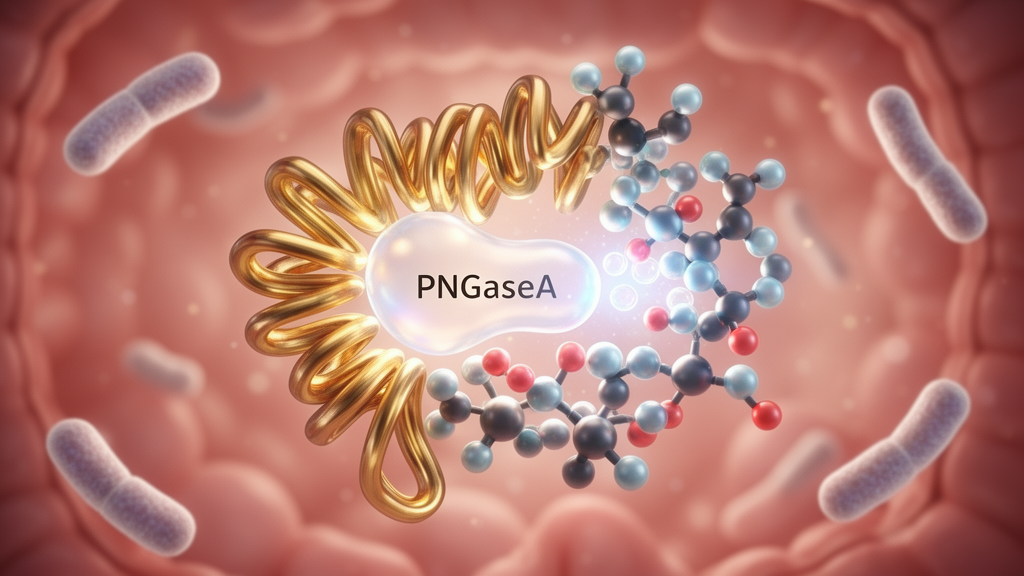
Microbiologists have determined that an enzyme typically absent from human gut microbial functions plays a critical role in allowing specific bacteria to access vital nutrients in breast milk. Published in Nature Communications, the study provides the first characterisation of a PNGaseA enzyme that infant-associated Bifidobacterium use to feed on harder-to-unlock sugars found in human milk.
Historically associated with cellular recycling and metabolic processes in plants and animals rather than human intestinal activity, PNGaseA was identified by lead author Dr. Lucy Crouch and her research team at the University of Birmingham as having an unexpected nutritional function in early gut development. The researchers observed that certain species of Bifidobacterium actively produce this enzyme to harvest nutrients that stimulate the growth of infant-associated microbial populations.
According to the investigation, the specific target nutrients consist of sugars bound to short protein chains. To become accessible to the bacteria as food, these sugars must first be enzymatically cleaved and removed from their peptide backbones. The characterisation demonstrated that the PNGaseA enzyme produced by Bifidobacterium selectively targets and releases these particular sugars.
The research team also established that while these short protein chains bearing sugars are naturally present in human breast milk, they are not found in formula feeding options. Characterising the PNGaseA enzyme therefore allowed the researchers to demonstrate the biological importance of understudied milk nutrients that support a healthy infant microbiome and shape bacterial feeding preferences.
Structural analysis conducted as part of the investigation revealed the first structure of a PNGase enzyme bound directly to an N-glycopeptide. Co-author Professor Ramón Hurtado-Guerrero from the University of Zaragoza explained that this structure illustrates exactly how the enzyme recognizes both the target sugar and its attached protein fragment.
In addition to clarifying Bifidobacterium bifidum biology, the researchers noted that the structural findings provide clues about how other PNGase enzymes, including PNGaseF and other PNGaseA variants, recognize their respective targets. The authors highlighted that the discovery illustrates the intricate biochemical complexity of the human milk-fed infant microbial community.
The study authors concluded that characterising how PNGaseA unlocks these specific nutrients will help guide translational efforts, including the development of prebiotics and improved infant formulas. As certain aspects of breast milk cannot yet be synthetically replicated, identifying the components that foster beneficial bacteria provides a foundation for engineering formulas that better support infants who lack access to human milk.
Subject of Research: Microbial PNGaseA enzymatic activity unlocking human breast milk sugars for infant gut Bifidobacterium
Article Title: Enzyme found to have surprising role in earliest infant gut microbiome development
Article References: Enzyme found to have surprising role in earliest infant gut microbiome development. Original publication (Bibliographic details unavailable.)
Image Credits: AI Generated
DOI: Not provided
Keywords: Bifidobacterium, Bifidobacterium bifidum, PNGaseA, PNGaseF, infant gut microbiome, breast milk, N-glycopeptide, prebiotics, infant formula, Nature Communications, University of Birmingham, University of Zaragoza, Lucy Crouch, Ramón Hurtado-Guerrero, microbial feeding preferences, gut microbiota, structural biology