Buried under the permanently frozen soils of Canada’s Arctic is a biological trove not tapped by modern medicine.
Canadian scientists, fascinated by the extreme Arctic tundra, are tinkering with sophisticated genomic toolkits, digging subterranean material. There is hope that their bioprospecting could also be latched on by biotech innovators aid discovery of next-generation drug therapeutics.
Labs work to biosynthesize complex bioproducts in scalable fermenters hoping to never need to grow the Arctics sensitive native organisms.
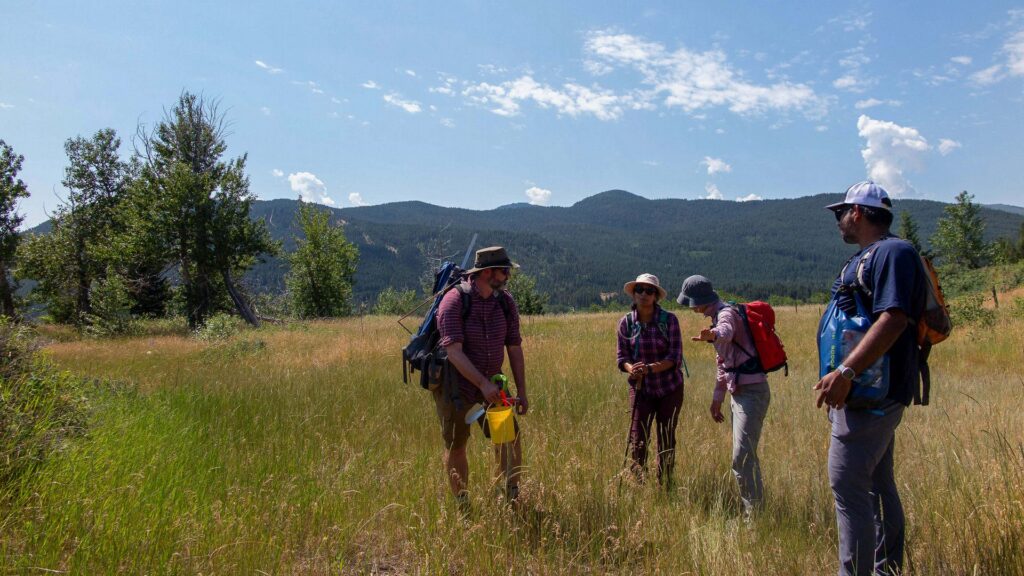
Canada’s Arctic permafrost and ancient boric soils contain huge amounts rich DNA that has degraded over thousands of years, says Srijak Bhatnagar, PhD, who leads the Enviromics Group, a computational biology and environmental microbiology research lab at Canada’s Athabasca University. He and his team have spent years gathering environmental DNA from Canada’s Arctic waters.
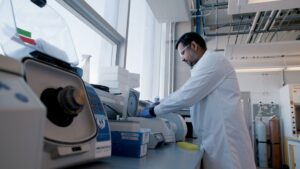
“Permafrost is revealing frozen organisms that are a historical record from tens of thousands of years ago. They could be cold-adapted, ancient, or new in the sense that humanity has not seen them in a while,” he tells GEN.
The motivation for various biotech innovators bioprospecting the Arctic for biosynthetic gene clusters is not only academic but commercial, he says.
There is a hope that aids for making novel antibiotics could someday emerge from such bioprospecting, and “antibiotics are a billion-dollar industry globally” he says.
Cultivating new microbes
In the past, nearly 99% of environmental microbes could not be cultivated under conventional laboratory settings—and this left big biochemical pathways hidden, says Justin Nodwell, PhD, a biochemistry professor at the University of Toronto. His lab specializes in taking streptomycete biosynthetic gene clusters (BGCs)—genes identified in unculturable environmental microbes that remain silent in standard conditions—and using synthetic biology to express them in Streptomyces to produce new antibiotics and natural products.
So it seems, local labs in Canada are overcoming this hurdle through high-throughput metagenomics and single-cell DNA sequencing.
“When we obtain total genomic material directly from permafrost cores, bioinformaticians can build complete genomes of unculturable organisms, and this shows cryptic BGCs,” Nodwell says.
It is true that specialized metabolism from more conventional environments has been mined extensively not just for antibiotics, he says, but also, chemotherapeutic drugs. Nodwell shared the example of doxorubicin, a frontline chemotherapeutic, rapamycin and others, pointing out a phenomenon known as the dereplication problem. Dereplication involves the process of identifying interfering substances in samples.
“You tend to rediscover things that are known. And that certainly is something we’ve encountered in this lab. In terms of whether going to Arctic environments is going to lead to new metabolites, I think scientifically that very interesting though the jury isn’t entirely in,” he says.
On the importance of prospecting extremophile microorganisms, he brings the example of Hazel Barton, PhD, a microbiologist and ecologist at the University of Alabama. She studies cave microbiomes, often cave exploring ancient caves, including a cave in New Mexico called the Lechuguilla Cave, which has not been accessed from the surface of the earth for around 4 million years.
Microbiologists like Nodwell are curious to know if “there is new stuff down there, stuff that hadn’t been sampled before. At the very least, there should be stuff that hasn’t been exposed to antibiotics used in medicine”.
Expensive synthetic biology
In Canada, researchers studying the Arctic permafrost, including Nodwell, are energized to find new microbes stuff there—though he cautions against wild expectations.
“I guess we’ll also find some things that we’ve seen before—but whether if that can be turned that into distributable medicinal products—it’s still it’s impossible to say,” he says.
From the perspective of the synthetic biology that he studies, the main obstacle occurs when taking a streptococcal BGC, identified from a non-culturable cord adapted environment, and trying to refactor it for expression in a standard warm-adapted host platform, such as Streptomyces.
Some of the biosynthetic gene clusters are enormous, up to 100,000 base pairs, which is a lot of synthetic DNA to make, he says of the technical challenges Canadian researchers face.
“[If] you’re going to do it synthetically, and it’s very expensive. If you’re going to do it by PCR, that’s a lot of reactions. It’s a major undertaking to build something like that. But it is doable,” he says.
“But whereas there’s good algorithms for finding the biosynthetic genes for compounds, the boundaries are often somewhat mysterious. Like you’ll find a string of, let’s say, 15 genes that are clearly involved in making a molecule. And then there’ll be a few on either end that it’s like maybe they’re involved, maybe they’re not. And so, if you don’t know the biochemical pathway that makes the molecule, it’s very hard to say what genes you need and where to do that cutoff. There are ways around that now, but there still is often a sort of a judgment call you have to make”.
Blind curve
In the endeavor to bioprospect Canada’s Arctic—Bhatnagar warns of a “blind curve”. Canadian researchers and biotech innovators can sequence the data and make it publicly available in places like GenBank or SRA.
But because of the financial hefty and mismatches, “a company elsewhere, most likely [in the] US, is going to mine it, create a product that could, for all we know, be a billion-dollar product,” Bhatnagar says.
Crucially, Canada is not a signatory of the UN Nagoya Protocol on Access to Genetic Resources. For indigenous populations who live in the Canadian Arctic, discussion on biopiracy and ownership of genetic materials is critically important.
“Canada is not a signatory of Nagoya Protocol, so we do not protect biocultural property. [For indigenous populations] that genetic knowledge is coming from what was their biocultural property, and they would as: What’s our benefit?”
This is a very important question to consider since what has traditionally happened is outsiders go to indigenous peoples, gather existing knowledge, listen to traditional knowledge, learn about traditional medicine, to see that knowledge used for developing patents without consideration of the indigenous people providing the original knowledge.
“I come from India (originally), and I distinctly remember in my childhood reading articles about how some of the traditional plants and medicines that we had been using; a western company basically isolated the chemical and patented it, and I’m like how can you patent it when we have been using it for like thousands of years?”
Overall, unlocking the Arctic’s subterranean DNA must ensure a delicate balance between scientific rigor and ethical stewardship. Yes—synthetic biology and chemistry could help discovery of new life-saving therapeutics, but Canadian researchers must establish build solid frameworks to protect Indigenous biocultural rights thus making local bioprospecting a mutually beneficial public good.