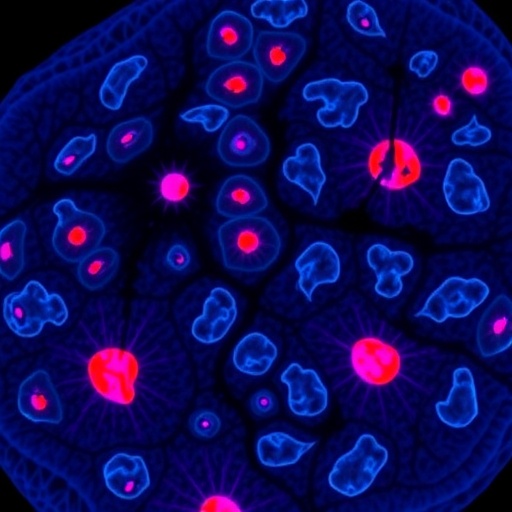
A groundbreaking study emerging from the UCLA Health Jonsson Comprehensive Cancer Center unveils new insights into how the spatial architecture of immune cells within melanoma tumors profoundly influences patient responses to advanced immunotherapies. This research delineates a crucial paradigm shift in onco-immunology, suggesting that beyond genetic profiling, the physical organization of immune components within tumors can serve as a pivotal predictor for therapeutic outcomes, especially following resistance to frontline anti-PD-1 treatments.
Anti-PD-1 therapies have revolutionized the management of advanced melanoma by potentiating the immune system’s ability to recognize and dismantle malignant cells. Despite their transformative clinical benefits, a significant proportion of tumors inevitably develop resistance or exhibit primary resistance to these agents. Following the failure of anti-PD-1 therapy, oncologists frequently administer anti-CTLA-4 immunotherapies, either alone or in combination, aiming to rekindle immune responsiveness. However, this combinational approach yields meaningful clinical responses in only approximately 30% of patients, underscoring the urgent demand for more precise biomarkers that can guide therapy selection and elucidate mechanisms of resistance.
To unravel the underpinnings of response heterogeneity, the research team scrutinized tumor biopsies procured from participants in the SWOG S1616 clinical trial, which evaluated the efficacy of ipilimumab (anti-CTLA-4) alone versus a combination of ipilimumab and nivolumab (anti-PD-1) in melanoma patients refractory to prior anti-PD-1 regimens. Employing a sophisticated confluence of high-resolution imaging modalities alongside comprehensive genetic sequencing, the investigators were able to construct detailed maps not only of gene expression within the tumor microenvironment but critically, the relative positioning and interactive landscapes of diverse immune cell subsets vis-à-vis malignant cells.
Contradicting traditional expectations that tumor genetics would singularly dictate therapeutic outcomes, the study revealed that the spatial immune contexture wielded far greater prognostic significance. Patients who exhibited clinical responses to combination immunotherapy demonstrated tumor ecosystems densely infiltrated by CD8+ T cells—key cytotoxic effectors capable of direct tumor eradication. These lymphocytes arranged themselves in organized, intimate clusters surrounding melanoma cells, accompanied by active proliferative signals and immune activation markers indicative of a dynamic and robust anti-tumor response. Moreover, efficacious responses correlated with the presence of ancillary immune subsets such as regulatory T cells and monocytes, which emerged in the tumor milieu during treatment, potentially modulating and sustaining the immune assault.
This discovery aligns with the conceptual framework of “cellular neighborhoods”—microanatomical niches within tumors where immune and cancer cells interact synergistically, fostering localized immune activity and functional cooperation. Intriguingly, tumors that failed to respond to therapy diverged sharply in their immunological architecture; they were characterized by extensive clusters of plasma cells, which appear to engender an immunosuppressive environment. These plasma cell-rich domains coincided with diminished CD8+ T cell activity and unabated tumor progression, insinuating that plasma cells may play a role in sculpting a hostile tumor microenvironment impervious to immune-mediated destruction.
Another pivotal insight from the study underscores the significance of immune cell localization relative to vascular structures in tumors. Responding tumors featured T cells strategically positioned adjacent to blood vessels and other supportive immune subsets, facilitating their motility, nutrient access, and signal reception necessary to perpetuate cytotoxic functions. Dr. Katie Campbell, the study’s lead author, articulates this mechanism, emphasizing that T cells must physically access and engage tumor cells while navigating through a conducive microenvironment enriched with appropriate activation cues; obstructions in this spatial arrangement result in therapeutic failure.
Clinically, these findings herald a transformative approach to melanoma treatment, where the microenvironmental spatial profiling of tumors could become an indispensable tool in precision oncology. By integrating structural immune mapping with conventional genetic diagnostics, clinicians could prognosticate patient responsiveness to combination immunotherapy regimens more accurately and tailor intervention strategies accordingly. This would not only spare nonresponders from ineffective therapies and adverse effects but would also prompt earlier exploration of alternative treatments potentially combining immunotherapy with chemotherapy, targeted therapy, or radiotherapy.
Future avenues of research are poised to explore strategies to convert immunologically “cold” tumors—marked by plasma cell dominance and T cell exclusion—into “hot,” immune-responsive phenotypes. This necessitates dissecting the molecular signals and cellular interactions that entrench plasma cells and suppress T cell infiltration or function. Moreover, integrating multiparametric immunotherapies with adjunct modalities aimed at remodeling the tumor microenvironment stands as a promising frontier to amplify response rates and durability of therapeutic effects.
The senior author of the study, Dr. Antoni Ribas, a leading figure in tumor immunology at UCLA, along with a multidisciplinary team spanning immunology, oncology, and molecular biology, harnessed cutting-edge technologies and collaborative expertise from institutions like the Parker Institute for Cancer Immunotherapy. Their integrative approach exemplifies the necessity of converging spatial biology with genomic analytics to parse the complexities of cancer-immune dynamics comprehensively.
In summation, this pioneering work spotlights the critical interplay between tumor spatial immunobiology and therapeutic responsiveness. It challenges the current dogma centered on genetic mutation profiles and invites a nuanced appreciation of the tumor’s immune microenvironment as a determinant of immunotherapy success or failure. As precision medicine evolves, such insights will be instrumental in designing next-generation cancer immunotherapies, predictive biomarkers, and combinatorial regimens poised to enhance patient outcomes in melanoma and beyond.
The implications extend well beyond melanoma, suggesting that spatial immune profiling could redefine cancer treatment paradigms across multiple malignancies, driving a future where treatment is not only targeted to molecular signatures but is also intricately tailored to the tumor’s microenvironmental context. For patients facing the formidable challenge of immunotherapy-resistant melanoma, these scientific advances pave the way toward more rational, effective, and personalized therapeutic strategies.
Subject of Research: Immune microenvironment organization influencing immunotherapy response in melanoma
Article Title: Understanding Tumor Spatial Immune Architecture to Predict and Enhance Immunotherapy Outcomes in Melanoma
News Publication Date: Not specified
Web References: https://doi.org/10.1158/2159-8290.CD-25-1745
References: Cancer Discovery, American Association for Cancer Research
Keywords: Melanoma, cancer immunotherapy, tumor microenvironment, CD8 T cells, plasma cells, anti-PD-1 therapy, anti-CTLA-4 therapy, combination immunotherapy, tumor immune architecture, cellular neighborhoods, immunotherapy resistance, T cell infiltration
Tags: advanced melanoma treatment strategiesanti-CTLA-4 treatment efficacyanti-PD-1 therapy resistancecombination immunotherapy biomarkersimmune cell neighborhoods in tumorsimmune microenvironment in melanomaipilimumab and nivolumab clinical trialmelanoma immunotherapy response predictiononco-immunology spatial profilingresistance mechanisms to checkpoint inhibitorsSWOG S1616 clinical trial analysistumor immune cell spatial organization