A narrative review published in Discover Medicine synthesizes preclinical and clinical evidence regarding the pharmacodynamic interactions between immune checkpoint inhibitors and three widely prescribed medication classes: statins, proton pump inhibitors, and systemic corticosteroids. The study, conducted by researchers including Desta Seyoum Tadesse and colleagues, aims to clarify how these common comedications influence the effectiveness and safety of cancer immunotherapy. By analyzing data from January 2020 to April 2026, the review highlights that the pharmacological environment of a patient can significantly modulate the immune system’s response to cancer treatments, moving beyond traditional pharmacokinetic interactions to focus on immunological mechanisms.
Immune checkpoint inhibitors are monoclonal antibodies that enhance the immune system’s ability to detect and attack cancerous cells by blocking regulatory proteins. While these agents have revolutionized the treatment of malignancies such as melanoma, non-small cell lung cancer, and renal cell carcinoma, approximately 60% of patients do not achieve a long-lasting response. The review posits that this primary resistance is not solely determined by tumor genomics but is also regulated by the systemic pharmacological environment. Cancer patients, particularly those in an aging demographic, frequently experience polypharmacy, making the interaction between immunotherapy and common medications a critical area of investigation.
The review identifies statins, proton pump inhibitors, and corticosteroids as the most commonly prescribed drugs that may interact with immune checkpoint inhibitors. Statins are typically used to treat cardiovascular health, proton pump inhibitors for gastroesophageal reflux, and corticosteroids for symptom management or immune-related adverse events. Because immune checkpoint inhibitors are eliminated through non-specific proteolytic catabolism, they are largely immune to conventional hepatic pharmacokinetic interferences. Instead, the emerging scientific paradigm focuses on pharmacodynamic interactions where concomitant drugs act as systemic modulators, shifting gut microbiome diversity, cytokine responses, and tumor-infiltrating lymphocyte recruitment.
Regarding statins, the review suggests a potential synergistic effect with immunotherapy. A meta-analysis by Liao et al. involving over 46,000 patients from 25 studies reported a pooled hazard ratio of 0.8 for overall survival in statin users compared to non-users, indicating a statistically significant 20% reduction in mortality risk. The proposed mechanism involves the inhibition of the mevalonate pathway, which may enhance antitumor immunity by modulating T-cell clonality and exhaustion. Lipophilic statins, such as atorvastatin and simvastatin, appear to have stronger associations with improved outcomes than hydrophilic agents, possibly due to greater tissue penetration and immunomodulatory potential.
In contrast, proton pump inhibitors are associated with diminished effectiveness of immune checkpoint inhibitors. The review cites observational studies showing that PPIs can reduce efficacy by inducing dose-dependent gut microbiome dysbiosis. A meta-analysis by Ciappina et al. found that PPI use was linked to an 18% increased mortality risk, with a hazard ratio of 1.18. The mechanism involves the alkalization of the intestinal lumen, which disrupts the competitive exclusion of pathobionts and depletes beneficial bacteria like Akkermansia muciniphila and Faecalibacterium prausnitzii. This ecological collapse leads to a depletion of short-chain fatty acids, which are crucial for maintaining optimal T-cell function and preventing metabolic exhaustion in the tumor microenvironment.
The impact of corticosteroids on immunotherapy outcomes is described as context-dependent. Baseline use of corticosteroids, defined as a dose of 10 mg or more of prednisone equivalent, has been negatively correlated with long-term outcomes in retrospective cohorts, with a hazard ratio of approximately 1.54. This is attributed to the suppression of de novo T-cell clonal expansion during the critical priming phase of immunotherapy. However, the therapeutic administration of corticosteroids to manage immune-related adverse events does not appear to reduce long-term survival advantage. The review suggests that once an effective anti-tumor immune response has been established, the use of steroids to control inflammation may spare the original anti-tumor repertoire while depleting bystander-activated cells.
The review emphasizes the importance of timing and dose in these drug interactions. For PPIs, high utilization within 60 days of initiating immune checkpoint inhibitor therapy is identified as a strong predictor of clinical failure. This timing is critical because the immune system is undergoing microbiome-related immune priming, and disruption at this stage can impair subsequent T-cell activation. Similarly, for corticosteroids, the distinction between baseline exposure and therapeutic use for adverse events is crucial. The review proposes a conceptual framework where initial immune activation must occur in a steroid-naïve environment to permit the expansion of the T-cell receptor repertoire, followed by timely immunosuppression to resolve inflammation without erasing immunologic memory.
Methodologically, the review conducted a systematic search in PubMed/MEDLINE, Embase, and Web of Science, identifying 226 records initially. After screening and eligibility assessment, 81 studies were included in the narrative synthesis. The authors did not conduct additional pooled analysis; instead, all quantitative estimates were taken from published meta-analyses and large cohort studies. The review acknowledges several limitations, including confounding by indication, where patients requiring baseline corticosteroids or statins may have underlying comorbidities that independently affect cancer survival. Heterogeneity in exposure definitions and cancer types across studies also poses challenges for interpreting the results.
The findings suggest a need for a paradigm shift in cancer treatment from passive drug administration to active immunologic medication reconciliation. The review recommends considering the deprescription of non-essential proton pump inhibitors before starting immunotherapy, minimizing baseline corticosteroid exposure when clinically possible, and continuing statin therapy for recognized cardiovascular reasons. These recommendations are based on the hypothesis that optimizing the pharmacological environment can enhance the efficacy of immune checkpoint inhibitors. However, the authors caution that these associations are hypothesis-generating and require validation through prospective randomized controlled trials.
Future research directions include the development of predictive scores that combine medication history with baseline biomarker profiles to estimate the probability of immunotherapy response. The review also highlights the potential for microbiome restitution strategies, such as fecal microbiota transplantation, to reverse the ecological collapse induced by proton pump inhibitors. Additionally, ongoing trials like the STATICE trial aim to provide higher-level evidence on the effects of statins in immunotherapy-treated patients. By integrating pharmacology and immunogenomics, clinicians may be able to personalize treatment strategies to optimize outcomes for individual patients.
The review underscores the complexity of drug-drug interactions in cancer immunotherapy, where the interplay between host, medication, and immune system determines therapeutic success. While the evidence is primarily observational, the consistency of findings across multiple studies suggests that concomitant medications play a significant role in shaping the efficacy of immune checkpoint inhibitors. As the field moves toward precision oncology, understanding these pharmacodynamic interactions will be essential for improving patient outcomes and reducing treatment resistance.
Ultimately, the study highlights the need for careful medication management in cancer therapy. By recognizing the potential impact of common drugs on immunotherapy, healthcare providers can make informed decisions that balance the benefits and risks of concomitant medications. The review serves as a comprehensive synthesis of the current evidence, providing a foundation for future research and clinical practice in the evolving landscape of cancer immunotherapy.
The narrative review concludes that while the associations between concomitant medications and immunotherapy outcomes are not definitively causal, they offer valuable insights into the mechanisms of treatment resistance. As more data becomes available from prospective studies, the role of pharmacodynamic interactions in cancer care will likely become more prominent, guiding the development of more effective and personalized treatment protocols.
The review details specific immunological pathways through which these medications may influence treatment outcomes. For statins, the authors describe a mechanism involving the inhibition of the mevalonate pathway, which can alter the function of myeloid-derived suppressor cells and enhance the visibility of tumor antigens. This process, referred to as an autovaccination effect, may increase the expression of MHC class I molecules on tumor cells, thereby facilitating better recognition by the immune system. Additionally, statins may modulate the epigenetic landscape of the tumor microenvironment by affecting histone methyltransferases, potentially promoting the infiltration of effector T cells into the tumor site.
Proton pump inhibitors are linked to a disruption of the gut microbiome that extends beyond simple bacterial depletion. The review explains that PPI-induced changes in gut pH can alter the composition of bile acids, favoring primary over secondary bile acids. This shift may activate specific signaling pathways in intestinal epithelial cells that promote a tolerogenic immune response and inhibit type I interferon signaling. Furthermore, the depletion of beneficial bacteria such as Akkermansia muciniphila and Faecalibacterium prausnitzii reduces the production of short-chain fatty acids, which are essential for maintaining the metabolic fitness of CD8+ T cells. Without these metabolic inputs, T cells may exhibit suboptimal glycolytic and oxidative phosphorylation flux, leading to a state of metabolic exhaustion that limits the effectiveness of PD-1 blockade.
Corticosteroids exert their effects through a complex interplay of transcriptional reprogramming and metabolic shifts in immune cells. The review notes that baseline steroid use can downregulate antigen presentation molecules on monocytes and dendritic cells, creating an immunologically cold baseline that hinders the initial activation of T cells. Moreover, corticosteroids can induce a metabolic switch in T cells from glycolysis to fatty acid oxidation, which denies effector T cells the rapid energy burst necessary for cytotoxic activity. This metabolic reprogramming, combined with the upregulation of inhibitory receptors like LAG-3 and TIGIT, can create a double-locked tumor microenvironment that is resistant to immunotherapy. The distinction between this baseline interference and the therapeutic use of steroids for adverse events is critical, as the latter may preserve established anti-tumor memory while resolving acute inflammation.
The authors propose a conceptual framework known as the immunologic prime-boost paradigm to guide clinical decision-making. This model suggests that the initial phase of immunotherapy, or the prime, requires a steroid-naïve environment to allow for the broad expansion of T-cell receptor clones. Subsequent phases, involving the expansion of the immune response and the resolution of inflammation, can tolerate targeted immunosuppression without erasing the established immunologic memory. This framework supports the idea that timing and context are as important as the specific medication used, emphasizing the need for precise medication reconciliation before and during immunotherapy treatment.
Subject of Research: A narrative review on immune checkpoint inhibitor drug interactions with statins, proton pump inhibitors and corticosteroids
Article Title: A narrative review on immune checkpoint inhibitor drug interactions with statins, proton pump inhibitors and corticosteroids
Article References: Tadesse, D. S., Befikadu, A. K., Belete, B. M., Yikna, B. B., Ali, A. M., Ayenew, K. D., Mulu, B. A., Atlaw, B. A., & Yehualashet, A. S. (2026). A narrative review on immune checkpoint inhibitor drug interactions with statins, proton pump inhibitors and corticosteroids. Discover Medicine, 3(1), Article 129. https://doi.org/10.1007/s44337-026-00693-7
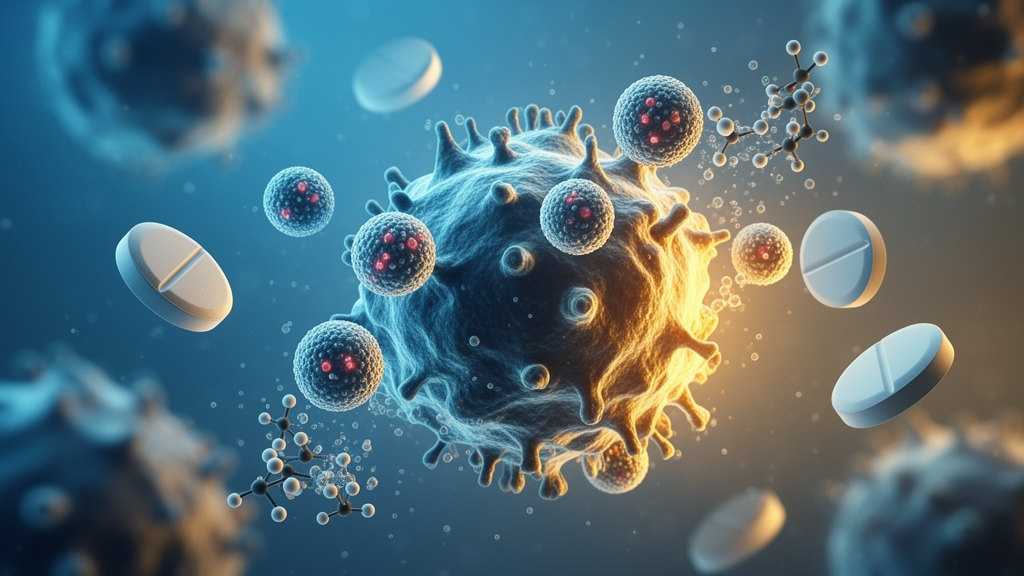
Image Credits: AI Generated
DOI: 10.1007/s44337-026-00693-7
Keywords: narrative, review, immune, checkpoint, inhibitor, drug, interactions, statins, proton, pump, inhibitors, corticosteroids