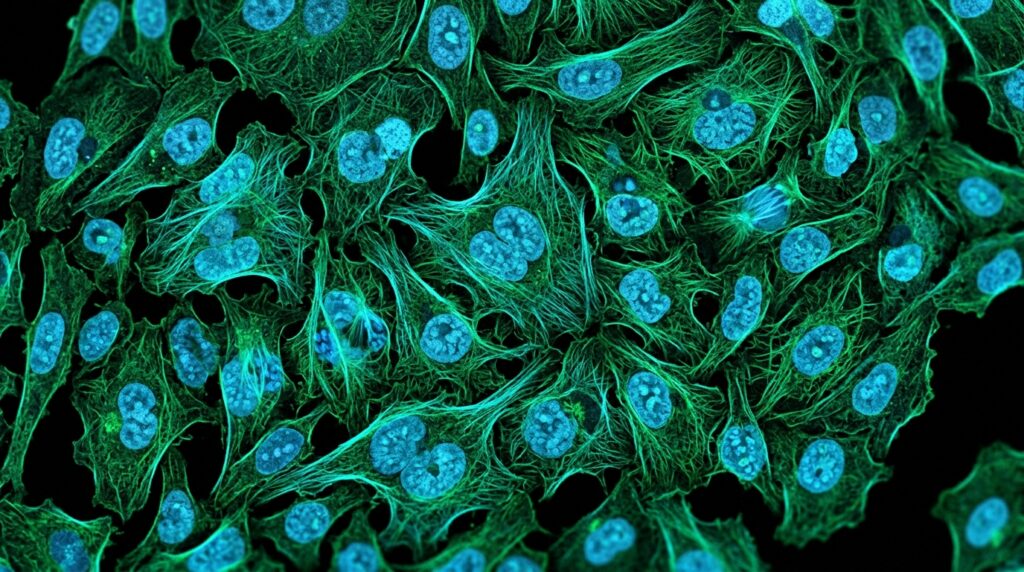
A preclinical investigation led by researchers evaluating plant-derived compounds has found that demethylzeylasteral, designated as T-96, suppresses the growth and metastatic spread of triple-negative breast cancer cells across multiple species models. Published in the journal Animal Diseases, the comparative oncology study demonstrated that T-96 induces G1 cell cycle arrest and triggers intrinsic mitochondrial apoptosis. These biological effects were functionally linked to the modulation of the MDM2-p21 signaling module, offering mechanistic insights into how this triterpenoid derivative derived from the traditional Chinese medicinal plant Tripterygium wilfordii exerts antitumor activity against aggressive mammary tumor lineages in murine, canine, and human cell contexts.
Triple-negative breast cancer represents a subtype of epithelial mammary malignancy accounting for roughly 15 percent of clinical breast cancer diagnoses, characterized by a frequent lack of standard therapeutic targets, high recurrence rates, and resistance to standard chemotherapy regimens. Canine mammary tumors frequently share pathological and molecular features with human breast cancer, including aggressive triple-negative profiles, yet post-surgical therapeutic regimens for canine patients remain poorly standardized. Demethylzeylasteral is recognized as an active triterpenoid exhibiting lower intrinsic toxicity relative to conventional triterpenoids, but its cellular targets, pharmacokinetics, and specific regulatory pathways in comparative oncology models had previously remained incompletely defined.
To evaluate baseline cytotoxic efficacy, the authors tested T-96 against human MDA-MB-231, canine CMT-7364, and murine 4T1 triple-negative breast cancer cell lines. In vitro cell viability assays using Cell Counting Kit-8 demonstrated dose-dependent growth inhibition across all lines, yielding half-maximal inhibitory concentration values of 32.28 micromolar in MDA-MB-231 cells, 32.99 micromolar in CMT-7364 cells, and 46.95 micromolar in 4T1 cells following 24 hours of exposure. Proliferation assays spanning 72 hours revealed progressive time-dependent suppression of cellular growth, which was corroborated by colony formation assays showing substantial decreases in both colony numbers and colony surface areas over a seven-day culture period. Immunofluorescence staining confirmed a reduction in the proportion of Ki-67-positive proliferating cells.
The study also assessed the migratory and invasive capacities of the tumor cells following compound exposure. Scratch-wound healing assays demonstrated that T-96 impeded wound closure in a concentration-dependent fashion over a 24-hour observation window. Transwell invasion chambers coated with Matrigel showed a parallel decrease in the number of cells invading through porous membranes toward chemoattractant media. These baseline experiments confirmed that T-96 consistently limits viable cell expansion, directional motility, and matrix invasion in human, canine, and murine triple-negative mammary carcinoma cells in vitro.
To uncover the molecular mechanisms underlying the observed growth arrest, the authors conducted high-throughput RNA sequencing on canine CMT-7364 cells treated with 30 micromolar T-96 or vehicle control for 24 hours. The transcriptomic screen identified 1,452 differentially expressed genes, comprising 603 upregulated transcripts and 848 downregulated transcripts. Kyoto Encyclopedia of Genes and Genomes pathway enrichment and Gene Ontology analyses revealed that these altered genes were concentrated predominantly in cell cycle progression pathways and cell death pathways, including intrinsic mitochondrial apoptosis. Network pharmacology integration further situated the E3 ubiquitin ligase MDM2 as a central regulatory hub coordinating both cell cycle arrest and apoptosis signaling cascades.
Flow cytometric analysis of propidium iodide-stained cells revealed that increasing concentrations of T-96 produced progressive accumulation of cells in the G1 phase across MDA-MB-231, CMT-7364, and 4T1 lines. Western blot analyses of cell cycle regulators corroborated this arrest, demonstrating consistent downregulation of phosphorylated retinoblastoma protein at serine 780, Cyclin B1, Cyclin-dependent kinase 2, and Cyclin E1. Concurrently, T-96 treatment caused a marked upregulation of the cyclin-dependent kinase inhibitor p21 and a notable decrease in MDM2 protein abundance, suggesting that disruption of the CDK2/Cyclin E complex and suppression of retinoblastoma phosphorylation mediated the G1 checkpoint blockage.
Ultrastructural analysis using transmission electron microscopy highlighted pronounced mitochondrial damage in treated cells, revealing irregular nuclear boundaries, dissolution of outer mitochondrial membranes, loss of inner cristae, water-phase vacuolization, and marked dilation of the endoplasmic reticulum. Flow cytometry with Annexin V-FITC and propidium iodide co-staining, alongside terminal deoxynucleotidyl transferase dUTP nick end labeling assays, confirmed a dose-dependent increase in apoptotic death. At the biochemical level, Western blotting demonstrated marked upregulation of the pro-apoptotic regulator BAX, cleaved caspase-9, and caspase-3, alongside substantial downregulation of the anti-apoptotic regulator Bcl-2, establishing activation of the intrinsic mitochondrial apoptotic cascade.
To clarify the role of MDM2 in mediating these responses, researchers conducted molecular docking and dynamics simulations, predicting a binding affinity of negative 6.0 kilocalories per mole between T-96 and MDM2. Cellular thermal shift assays demonstrated that 30 micromolar T-96 enhanced the thermal stability of MDM2 in cellular lysates, causing a rightward temperature shift. Functional perturbation experiments showed that transient overexpression of MDM2 using a pcDNA3.1 plasmid partially rescued cells from T-96-mediated migration inhibition, invasion suppression, G1 arrest, and apoptosis induction. Conversely, cotreatment with the MDM2 inhibitor SP141 enhanced T-96-mediated p21 upregulation, caspase activation, and growth suppression, supporting the classification of MDM2 as a functional mediator rather than an exclusive direct molecular target.
Pharmacokinetic parameters were characterized in female BALB/c mice receiving a single intraperitoneal dose of 5 milligrams per kilogram of T-96. Liquid chromatography-tandem mass spectrometry revealed rapid absorption, reaching a peak plasma concentration of 3,057 nanograms per milliliter at a time to maximum concentration of 2.0 hours. The compound exhibited an elimination half-life of 23.5 hours and a mean residence time of 30.7 hours, with measurable systemic concentrations persisting at 24 and 48 hours post-injection. Short-term toxicity assessments showed that complete blood counts and biochemical markers of hepatic and renal function remained within normal ranges, with histological examination of major visceral organs showing no acute pathological damage, supporting an administration schedule of once every 48 hours.
In vivo therapeutic efficacy was evaluated using an orthotopic syngeneic model established by transplanting luciferase-tagged 4T1 cells into female BALB/c mice. Intraperitoneal administration of T-96 at 2.5 or 5.0 milligrams per kilogram every two days significantly slowed tumor growth and reduced final tumor volume and excised tumor weight over a 26-day treatment course without significant animal body weight loss. Histological examination showed increased central necrotic lesions and elevated TUNEL-positive apoptotic cells within primary tumors, while metastatic colonisation in lung and liver tissues was significantly curtailed. Immunohistochemical staining confirmed diminished Ki-67 and MDM2 positivity in treated tumors, providing proof-of-concept evidence that T-96 suppresses mammary tumor expansion and metastatic dissemination in living systems.
A notable mechanistic question addressed in the investigation concerns the relationship between MDM2 modulation and the tumor suppressor protein p53. While MDM2 canonically governs cell cycle transit by targeting p53 for proteasomal degradation, it also binds p21 directly to stimulate p53-independent proteasomal turnover. This alternative pathway holds particular relevance in triple-negative breast cancer, where frequent p53 loss or mutation hampers conventional p53-activating therapies. Across all three tested cell models, T-96 elicited concordant reductions in MDM2 levels accompanied by p21 accumulation, persisting even in murine 4T1 cells that naturally lack p53 expression. Nevertheless, the authors emphasized that p53 signaling dynamics were not directly quantified during the experiments, and the precise TP53 status of the canine CMT-7364 lineage remains undetermined. Consequently, the research team cautioned that while T-96 activity is not restricted to wild-type p53 settings, the signaling cascade cannot yet be confirmed as wholly p53-independent.
The findings also delineate why MDM2 is designated as a functional mediator rather than an established direct molecular target of T-96. Because MDM2 overexpression achieved only partial phenotypic rescue and the study did not incorporate genetic knockout models, the investigators refrained from claiming that MDM2 is strictly indispensable for every observed antitumor effect. Rather, MDM2 functions as a central signaling node linking cell cycle inhibition to mitochondrial destruction. Sustained p21 elevation halts cycle progression at the G1 checkpoint, depriving stressed cells of opportunities for DNA damage repair and metabolic recovery. This unresolved checkpoint arrest shifts the balance among BCL-2 family proteins, prompting mitochondrial outer membrane damage, cristae degradation, and subsequent activation of cleaved caspase-9 and caspase-3. In addition to clarifying this cytotoxic axis, the authors noted that earlier investigations into T-96 primarily concentrated on alternative pathways, including TGF-beta-mediated epithelial-mesenchymal transition and PI3K/AKT signaling, indicating that multiple regulatory mechanisms may operate concurrently.
Finally, the authors identified several structural constraints that define the preliminary scope of the study. The syngeneic animal trials utilized a modest sample size of three mice per experimental cohort, a pilot scale that restricts statistical power and serves as proof-of-concept evidence rather than definitive clinical guidance. Furthermore, although routine organ histology and organ biochemical panels indicated short-term safety at the five milligram per kilogram dose, a transient reduction in circulating white blood cell counts was detected, potentially reflecting an acute systemic reaction or shifts in leukocyte distribution following intraperitoneal delivery. The study was also conducted using isolated cell lines and murine syngeneic models rather than spontaneous mammary carcinomas arising naturally in client-owned companion dogs. Further investigations incorporating expanded animal cohorts, optimized dosing intervals, and spontaneously occurring clinical canine tumors will therefore be required before translational applications can be fully assessed.
Subject of Research: Preclinical evaluation of demethylzeylasteral against triple-negative breast cancer models
Article Title: Demethylzeylasteral induces G1 arrest and mitochondrial apoptosis via functional modulation of the MDM2-p21 module in murine and canine mammary tumor cells
Article References: Li, W., He, L., Zhu, X., Zhou, H., Wang, X., Liu, Y., & Qiu, C. (2026). Demethylzeylasteral induces G1 arrest and mitochondrial apoptosis via functional modulation of the MDM2-p21 module in murine and canine mammary tumor cells. Animal Diseases, 6(1), Article 30. https://doi.org/10.1186/s44149-026-00239-5
Image Credits: AI Generated
DOI: 10.1186/s44149-026-00239-5
Keywords: Cancer Research, Triple-Negative Breast Cancer, Comparative Oncology, Demethylzeylasteral, Apoptosis, Cell Cycle Arrest, Pharmacokinetics, MDM2, induces, arrest, mitochondrial, functional