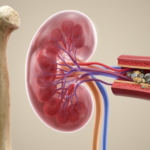
Diabetic microangiopathy, a major cause of illness and death in people with diabetes, may one day be treated with cell-free vesicles derived from adipose-derived stem cells, according to a review published in Frontiers in Pharmacology. The article, authored by researchers at Southwest Medical University in Luzhou, China, evaluates preclinical evidence on adipose-derived stem cell-derived extracellular vesicles (ADSC-EVs) across four organ-specific complications: diabetic retinopathy, diabetic kidney disease, diabetic peripheral neuropathy, and diabetic chronic wounds. The authors stress that all supporting evidence so far is preclinical, and that no clinical benefit in humans has been demonstrated.
The review frames DMA as a disease of interconnected pathological processes rather than a single defective pathway. Metabolic disturbance, oxidative stress, inflammation, immune dysregulation, endothelial dysfunction, mitochondrial abnormalities, and impaired tissue repair all contribute, and the authors argue that therapies aimed at individual pathways may be insufficient against such a multidimensional network. This reasoning underpins their interest in extracellular vesicles, whose multimolecular cargo can, in principle, modulate several disease-relevant processes at once. Preclinical studies suggest ADSC-EVs can influence oxidative stress, inflammation, angiogenesis, immune responses, and tissue repair, offering a potential basis for reshaping pathological microenvironments in diabetic tissue.
A central theme of the review is evidence specificity. The authors deliberately distinguish findings demonstrated directly for ADSC-EVs from results extrapolated from the broader extracellular vesicle field, a caution that reflects how often vesicle research generalizes from one vesicle type or cell source to another. They also examine delivery barriers that vary by organ, since reaching retinal, renal, neural, and wound tissue each presents distinct challenges for vesicle-based therapeutics.
On the engineering side, the review surveys advances that could improve targeting and potency, including parent-cell and cargo engineering, surface modification, integration with biomaterials, and stimuli-responsive delivery systems. These approaches aim to make vesicles more reproducible and better suited to specific disease sites, though the authors note that such strategies remain largely at the preclinical stage and that engineered vesicles must still prove themselves against the same translational hurdles as their natural counterparts.
The largest section of the review is devoted to barriers standing between laboratory findings and clinical use. The authors list manufacturing standardization, potency assessment, biodistribution tracking, organ-specific delivery, long-term safety evaluation, and regulatory frameworks as the major obstacles. Because extracellular vesicles are heterogeneous by nature, defining a consistent, measurable potency standard is particularly difficult, and without it, lot-to-lot comparability and regulatory approval remain uncertain. Biodistribution is equally unresolved: where vesicles travel after administration, how long they persist, and whether they accumulate off-target are questions the field has not yet answered definitively.
Looking forward, the authors propose that future studies integrate disease stratification, multi-omics profiling, rational vesicle engineering, and standardized manufacturing. Only with such rigor, they argue, can the field determine whether the multitarget effects observed in preclinical models translate into reproducible and clinically meaningful therapies for diabetic microangiopathy. Until then, ADSC-EVs remain a promising but unproven candidate in a therapeutic area with substantial unmet need.
Subject of Research: Preclinical evidence for adipose-derived stem cell extracellular vesicles as multitarget therapies in diabetic microangiopathy
Article Title: Adipose-derived stem cell extracellular vesicles in diabetic microangiopathy: from pathological networks to clinical translation
Article References: Zhu, X., Yang, W., Ni, Y., Li, Y., Wu, J., Han, Y., & Wang, Q. (2026). Adipose-derived stem cell extracellular vesicles in diabetic microangiopathy: from pathological networks to clinical translation. Frontiers in Pharmacology, 17, Article 1970641. https://doi.org/10.3389/fphar.2026.1970641
Image Credits: AI Generated
DOI: 10.3389/fphar.2026.1970641
Keywords: diabetic microangiopathy, extracellular vesicles, adipose-derived stem cells, diabetic retinopathy, diabetic kidney disease, diabetic neuropathy, chronic wounds, vesicle engineering, regenerative medicine, preclinical research, Adipose-derived, stem