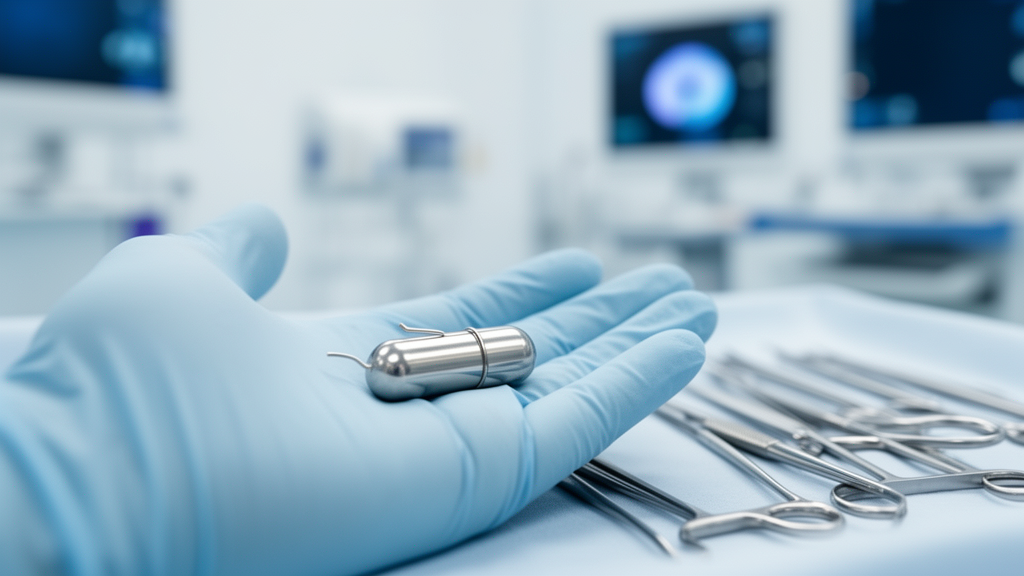
A four-year-old child presenting with third-degree atrioventricular block has successfully received a leadless pacemaker, marking the youngest documented case of such an implantation in China. The medical intervention and its associated care protocols were reported as a clinical case report in Frontiers in Pediatrics by a medical team from the Capital Institute of Pediatrics in Beijing.
The pediatric patient had a diagnosis of 22q11.2 deletion syndrome, a condition also referred to as DiGeorge syndrome or velocardiofacial syndrome. Individuals diagnosed with 22q11.2 deletion syndrome are recognized to be clinically susceptible to severe cardiac conduction abnormalities, which often necessitates specialized intervention when the normal electrical conduction of the heart is compromised.
Prior to the leadless device intervention, the four-year-old child had already undergone three separate conventional pacemaker implantations. Following these earlier transvenous procedures, the patient developed severe hypersensitivity to nickel-titanium, aligning with the heightened susceptibility of individuals with 22q11.2 deletion syndrome to adverse hypersensitivity reactions when exposed to standard transvenous pacing hardware.
Due to the repeated device failures and the development of severe material hypersensitivity, the young child was deemed ineligible for conventional transvenous pacing systems. Under these challenging circumstances, leadless pacemaker implantation served as an emerging therapeutic alternative designed to restore cardiac pacing without requiring traditional transvenous pacing leads or subcutaneous generator pockets.
The report, authored by Dongqing Sun, Bin Liu, Mengxue Yang, Kaili Wei, Fan Wang, and Ping Fang, centers on the perioperative nursing management established during the child’s hospitalization. The authors detailed their nursing observations and clinical strategies to provide practical clinical insights that may facilitate the specialized care of similarly complex pediatric patients undergoing novel pacing interventions.
Despite the successful procedure, the clinical team stressed that experience with leadless pacemaker implantation in very young children remains scarce across pediatric cardiology. Because the publication describes a single case report, the authors noted that careful individualized management remains essential for young patients presenting with severe syndromic and immunological barriers to conventional pacing.
The case report in pediatric cardiology illustrates how severe hypersensitivity reactions to transvenous pacing devices complicate the management of conduction abnormalities. When conventional pacing systems cannot be used because of severe adverse reactions, clinicians face significant constraints in delivering necessary cardiac pacing. In this challenging clinical scenario, leadless pacemaker implantation served as an emerging therapeutic alternative, successfully bypassing the traditional hardware that previously triggered severe nickel titanium hypersensitivity.
Because clinical experience in young children remains scarce, detailed documentation of perioperative nursing management offers essential practical value for pediatric cardiology. Corresponding author Bin Liu and the care team provided these clinical insights to facilitate care for similarly complex paediatric patients who experience severe hypersensitivity alongside advanced conduction abnormalities. Such insights help clinical teams manage young patients ineligible for conventional pacing systems.
Subject of Research: Pediatric leadless pacemaker implantation and perioperative nursing care in 22q11.2 deletion syndrome
Article Title: Perioperative nursing care of a pediatric patient with 22q11.2 deletion syndrome (DiGeorge syndrome/velocardiofacial syndrome) after receiving leadless pacemaker implantation: a case report
Article References: Sun, D., Li, L., Yang, M., Wei, K., Wang, F., Bai, H., Fang, P., & Liu, B. (2026). Perioperative nursing care of a pediatric patient with 22q11.2 deletion syndrome (DiGeorge syndrome/velocardiofacial syndrome) after receiving leadless pacemaker implantation: a case report. Frontiers in Pediatrics, 14, Article 1973027. https://doi.org/10.3389/fped.2026.1973027
Image Credits: AI Generated
DOI: 10.3389/fped.2026.1973027
Keywords: leadless pacemaker, 22q11.2 deletion syndrome, DiGeorge syndrome, velocardiofacial syndrome, third-degree atrioventricular block, nickel-titanium hypersensitivity, pediatric cardiology, perioperative nursing, transvenous pacing devices, conventional pacemaker, Capital Institute of Pediatrics, cardiac conduction abnormalities, pediatric case report, device hypersensitivity, pediatric cardiac pacing, atrioventricular block