Ginkgo Datapoints and Apheris have announced the founding members of the Antibody Developability Consortium, a new industry collaboration designed to help pharmaceutical and biotech companies predict antibody manufacturability and developability risks earlier. The consortium aims to do so by building what they claim will be the field’s largest standardized antibody developability dataset.
The founding members listed in today’s announcement include AbbVie, argenx, Lundbeck, and Takeda, and the consortium remains open to additional pharma and biotech companies interested in joining. Under the terms of the consortium, each founding member will contribute proprietary antibody sequencing with Gingko Datapoints, an offering of Gingko Bioworks, filling any remaining capacity from publicly available sources. The goal is to reach 10,000 antibodies in total.
“This consortium represents an important step forward in building predictive models for antibody developability by creating datasets that are designed for machine learning, addressing limitations associated with convenience datasets,” said Athena Hadjixenofontos, PhD, director of data science, head of AI in biotherapeutics and genetic medicine at AbbVie. “Federated infrastructure enables participants to contribute data while keeping proprietary sequences private. These capabilities could meaningfully accelerate antibody discovery and help advance new medicines for patients.”
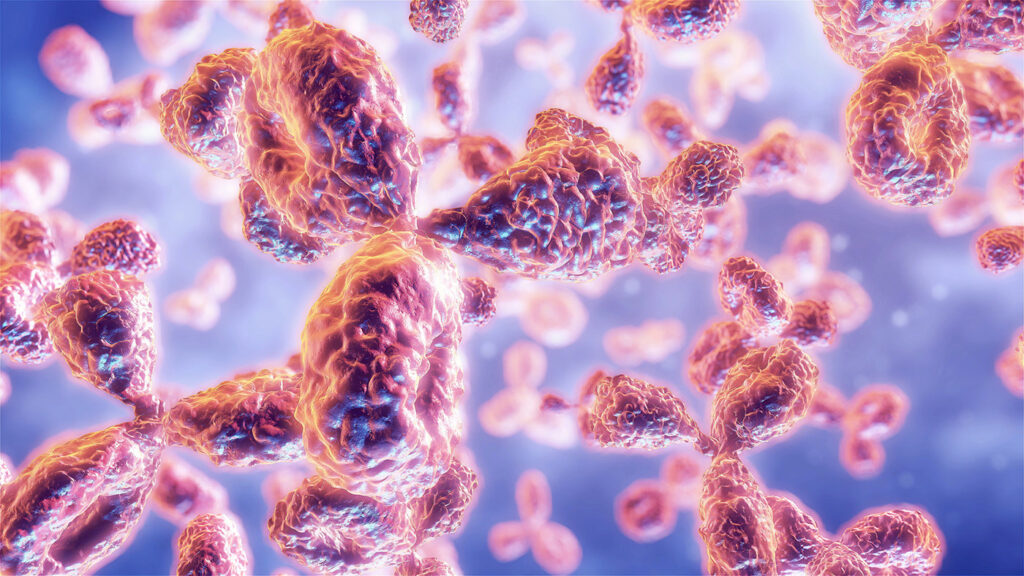
Antibody developability encompasses the biophysical properties that influence whether a candidate antibody can be manufactured, formulated, and successfully advanced into a clinical product. Predicting barriers that could prevent promising antibody candidates from progressing early could support more informed candidate selection and reduce development time and investment.
This is important, for example, “in complex therapeutic areas such as CNS” where “the ability to select well behaved candidates with superior developability properties is essential,” said Allan Jensen, PhD, vice president, biotherapeutic discovery at Lundbeck. “By bringing together diverse antibody dataset[s], this collaboration has the potential to strengthen predictive approaches.”
According to the partners, Gingko Datapoints is leading the scientific design and execution of the consortium. This includes designing the sequence selection approach, overseeing antibody production, and conducting high-throughput wet-lab characterization across core developability endpoints. Gingko is also training a foundation antibody developability model on the dataset in Apheris’ secure environment.
For its part, Apheris’ federated infrastructure is being used to deliver the foundation model into each participating member’s environment where they can fine-tune it on their proprietary data. Furthermore, members will be able to train, benchmark, and refine their own internal models in Apheris’ environment using the full consortium dataset as well as their own sequence data, without exposing their proprietary information to other members. The consortium has also tapped Charlotte Deane, PhD, professor of structural bioinformatics at the University of Oxford and Peter Tessier, PhD, professor of pharmaceutical sciences and chemical engineering at the University of Michigan, to provide independent scientific oversight.
Members are expected to have access to the initial dataset by early 2027. There are also plans to explore the addition of more complex antibody formats over time to enable new drug classes and other key properties that help the members predict which drugs will succeed or fail.
“Pooling standardized developability data across the industry can create stronger predictive models than any one company could build alone,” said Yves Fomekong Nanfack, PhD, head of AI/ML research at Takeda. “As we advance Takeda Research’s ambition to become an AI-native discovery organization, this capability can help identify promising antibody candidates earlier, inform better development decisions, and bring new therapies to patients faster.”