In the escalating arms race between medicine and multidrug-resistant bacteria, scientists have reported a strikingly simple-sounding but powerful advance: sugar-coated carbon nanotubes loaded with antibiotics that wipe out resistant strains almost completely while leaving human cells largely unharmed. The study, published in International Microbiology, describes glucosamine-functionalized multi-walled carbon nanotubes used as delivery vehicles for two antibacterial agents, ethacridine lactate and sulfamethoxazole, and demonstrates that the resulting nanoconjugates achieve dramatically stronger bacterial killing than the drugs alone.
The work comes at a moment when antibiotic resistance is widely regarded as one of the most urgent threats to global health. The World Health Organization and countless research groups have warned that the misuse and overuse of antimicrobials in human medicine, livestock production, and agriculture have accelerated the evolution of bacteria that shrug off conventional treatments. These multidrug-resistant pathogens, often dubbed superbugs, develop resistance through several adaptive mechanisms, including genetic mutation, horizontal gene transfer, enzymatic degradation of drugs, and the formation of protective biofilms that antibiotics struggle to penetrate. Traditional antibiotics are further hampered by rapid degradation in biological environments, non-specific targeting, and toxicity at higher doses, all of which reduce clinical efficacy and contribute to rising morbidity and mortality.
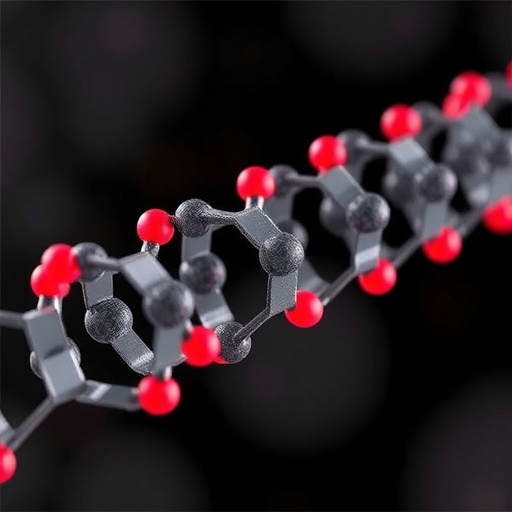
The research team, led by Noor Akbar and Naveed Ahmed Khan of the University of Derby along with colleagues at the International Center for Chemical and Biological Sciences at the University of Karachi, Ruqaiyyah Siddiqui, and other collaborators, approached the problem through the lens of nanomedicine. Their carrier of choice was the multi-walled carbon nanotube, a hollow cylindrical nanostructure made of concentric graphene cylinders held together by van der Waals forces. Carbon nanotubes possess exceptional electrical, mechanical, thermal, and chemical properties, and their nanometer-scale diameters combined with micron-scale lengths give them an enormous surface area for chemical reactivity. Crucially, they can penetrate cell membranes and be functionalized with bioactive molecules, which is precisely what makes them attractive as drug delivery vehicles, even though their best-known applications have historically been in composite materials, sensors, batteries, and electromagnetic shielding rather than medicine.
The synthesis process began with oxidation. The team dispersed multi-walled carbon nanotubes in a 3:1 mixture of sulfuric and nitric acids and sonicated the mixture for ten hours while keeping the temperature below 50 degrees Celsius. This harsh treatment planted oxygen-containing functional groups, chiefly carboxylic acid moieties, onto the nanotube walls, creating reactive anchoring points. The oxidized nanotubes, abbreviated OMC, were then filtered, washed to neutral pH, and dried under high vacuum. Next came the glucosamine. Using EDC and NHS as coupling agents, standard reagents for forming amide bonds in bioconjugate chemistry, the researchers covalently attached glucosamine, an amino sugar, to the carboxylic groups on the nanotube surface. The amino group of glucosamine reacts with surface carboxylic moieties to form stable amide linkages, and the resulting material, GA-OMC, was collected and dried at 50 degrees Celsius.
With the sugar-decorated nanotubes in hand, the researchers loaded them with two drugs selected for different reasons. Ethacridine lactate is a well-established topical antibacterial agent with broad-spectrum activity, but its clinical use is limited by cytotoxicity and inefficient delivery. Sulfamethoxazole is a clinically relevant systemic antibiotic that served as a test of whether the nanocarrier could enhance the efficacy of an existing therapeutic while reducing its toxicity. Drug loading was accomplished by dissolving each drug at 1 milligram per milliliter and adding the solutions dropwise to suspensions of GA-OMC, followed by 24 hours of stirring at room temperature and centrifugation at 13,000 rpm to remove unbound drug. The interactions between the drugs and the nanocarrier are predominantly non-covalent, involving electrostatic attraction, ion-dipole forces, hydrogen bonding, and pi-pi stacking between aromatic rings.
A battery of characterization techniques confirmed the success of each synthetic step. Thermogravimetric analysis, performed from room temperature to 800 degrees Celsius under nitrogen, revealed distinct weight losses corresponding to surface modifications: pristine nanotubes lost only 2.39 percent of their mass up to 450 degrees Celsius, while oxidized nanotubes lost 16.44 percent and the glucosamine-functionalized material lost a further 10.62 percent attributable to decomposition of the attached organic sugar moiety. Fourier-transform infrared spectroscopy verified the chemistry, showing a new amide carbonyl peak near 1687 inverse centimeters in the functionalized material, confirming covalent bond formation, along with shifted drug-characteristic peaks in the loaded formulations that indicate successful drug-carrier interactions. Scanning electron microscopy showed smooth sidewalls on pristine nanotubes transformed into rugged, defective surfaces after functionalization, with the tubes also becoming shorter through successive processing. Ultraviolet-visible spectroscopy delivered perhaps the most clinically important numbers: encapsulation efficiencies of 85.37 percent for ethacridine lactate and 93.69 percent for sulfamethoxazole, meaning the carrier captured the overwhelming majority of drug offered to it. Dynamic light scattering measured hydrodynamic diameters between roughly 127 and 429 nanometers, moderate polydispersity, and stable negative zeta potentials between minus 17 and minus 23 millivolts, confirming that the nanoconjugates resist aggregation in suspension.
The biological results are where the story becomes genuinely striking. The team tested the materials against seven clinically isolated, multidrug-resistant strains spanning both major bacterial classes: the Gram-negative Escherichia coli K1, Salmonella enterica, Serratia marcescens, and Pseudomonas aeruginosa, and the Gram-positive Streptococcus pneumoniae, Streptococcus pyogenes, and Bacillus cereus. In standard colony-forming assays, individual nanotubes, oxidized nanotubes, and free glucosamine showed negligible activity. But conjugation changed everything. The sulfamethoxazole-loaded nanoconjugate, SMX-GA-OMC, boosted inhibition far beyond what the free drug achieved, reaching 75.47 percent inhibition against E. coli K1, 77.58 percent against Salmonella, 89.79 percent against Serratia, and, remarkably, 100 percent against Bacillus cereus, where the free drug managed only 68.33 percent.
The ethacridine lactate conjugate, EL-GA-OMC, performed even better. Against every tested strain, it achieved complete, 100 percent bacterial eradication, matching the positive control gentamicin, while the free drug reached between 76.5 and 91.96 percent inhibition. Half-maximal inhibitory concentration analysis added quantitative rigor to these observations. Against E. coli K1, the EL-GA-OMC nanoconjugate reached 50 percent inhibition at just 10.20 micrograms per milliliter, nearly four times more potent than the free drug at 39.20 micrograms per milliliter. Against Streptococcus pneumoniae, the nanoconjugate achieved an IC50 of 10.74 micrograms per milliliter compared with 33.84 for free ethacridine lactate. The sulfamethoxazole conjugate similarly lowered its IC50 against E. coli K1 from 113.07 to 46.14 micrograms per milliliter. Statistical analysis confirmed these differences were highly significant.
Just as important as the enhanced killing was what the nanoconjugates did not do: damage human cells. Using human cerebral microvascular endothelial cells, HBEC-5i, the researchers ran lactate dehydrogenase release assays to quantify cytotoxicity after 24 hours of exposure. Free ethacridine lactate alone was clearly toxic, lysing 45.37 percent of cells. Yet when the same drug was delivered on the glucosamine-functionalized nanotubes, cytotoxicity plummeted to just 14.41 percent. The sulfamethoxazole conjugate registered 12.82 percent, and cell viability remained above roughly 80 percent for all nanoconjugates tested. This decoupling of antibacterial potency from host toxicity is precisely the property that makes a drug delivery platform clinically interesting.
The findings echo earlier reports that functionalized carbon nanotubes can serve as effective antibiotic carriers, including studies showing that levofloxacin-loaded nanotubes exhibit robust antibacterial activity with minimal toxicity, and nanotube-based systems carrying fluoxetine and isoniazid that improved outcomes against Mycobacterium tuberculosis while modulating resistance-related genes. What distinguishes the new work is the combination of a biologically familiar sugar, glucosamine, as the surface functionalization, the near-perfect encapsulation efficiencies, and the demonstration of complete eradication across multiple resistant Gram-positive and Gram-negative strains alongside documented low cytotoxicity.
The authors note that further work remains before such systems approach the clinic, including conventional MIC and MBC determinations, time-kill assays, comparisons with physical drug-nanotube mixtures, drug-release kinetics, and pharmacokinetic evaluation. Safety across the full life cycle of carbon nanomaterials also remains an active area of regulatory and toxicological scrutiny. Nevertheless, the study offers a compelling proof of principle that a simple amino-sugar grafted onto one of nanotechnology’s most iconic materials can transform two imperfect antibacterial agents into formulations that kill resistant bacteria at sharply reduced doses while sparing human cells. In a decade in which superbugs are projected to claim millions of lives annually, that combination of potency and selectivity is exactly what the field has been searching for.
Subject of Research: Glucosamine-functionalized multi-walled carbon nanotubes as antibiotic delivery vehicles for combating multidrug-resistant bacteria
Subject of Research: Biology
Article Title: Glucosamine functionalized multi-walled carbon nanotubes as potential antibacterial molecules
Article References: Akbar, N., Gul, J., Siddiqui, R., Yasmeen, S., Awan, A. N., Jabri, T., Shah, M. R., & Khan, N. A. (2026). Glucosamine functionalized multi-walled carbon nanotubes as potential antibacterial molecules. International Microbiology. https://doi.org/10.1007/s10123-026-00889-y
Image Credits: AI Generated
DOI: 10.1007/s10123-026-00889-y
Keywords: Antibiotic resistance, Carbon nanotubes, Nanoconjugates, Glucosamine functionalization, Drug delivery, Ethacridine lactate, Sulfamethoxazole, Antibacterial activity, Cytotoxicity, Multidrug-resistant bacteria, Nanomedicine, IC50
Cite Scienmag News
APA MLA Chicago
Drew Townsend. (September 8, 2026). Glucosamine-coated carbon nanotubes show promise as antibacterial agents. Scienmag. https://scienmag.com/glucosamine-coated-carbon-nanotubes-show-promise-as-antibacterial-agents/
Copy citation Download RIS
Tags: antibacterial carbon nanotube drug deliveryantibacterial carbon nanotubesantibiotic resistance combat using nanomaterialsbiofilm penetration by functionalized carbon nanotubesbiofilm penetration by nanomaterialsdelivery of ethacridine lactate and sulfenhanced bacterial killing with nanotube-antibiotic hybridsglucosamine-functionalized nanocarriers for drug deliveryglucosamine-functionalized nanomaterials for bacterial eradicationinnovative approaches to overcoming antibiotic resistanceinnovative nanoconjugates for combating superbugsmolecularmulti-walled carbon nanotubes in medicinemulti-walled carbon nanotubes with antibiotic coatingsmultidrug-resistant bacteria treatment strategiesnanoconjugates against superbugsnanotechnology in antimicrobial therapynanotechnology-based solutions to multidrug-resistant bacterianovel approaches to overcoming antibiotic resistancereducing antibiotic toxicity with nanocarrier systemsreducing antibiotic toxicity with nanocarrierssugar-coated nanocarriers for targeted antimicrobial therapysugar-coated nanotubes for targeted bacterial eradication