Bees may be finding an overlooked source of protein in one of the most ordinary features of the Southeastern landscape: the lawn. A study from the University of Georgia reports that centipedegrass, a widely planted warm-season turfgrass, can provide pollen that adult bees collect for themselves and carry back to their nests for developing offspring. The finding challenges the familiar image of pollinators depending almost entirely on colorful garden flowers and suggests that carefully managed lawns could contribute to bee nutrition during periods when other floral resources are limited.
The research, published in the Journal of Insect Conservation, examined the foraging behavior of more than 150 bees representing 28 species across Georgia. The insects included bumblebees, honeybees and sweat bees, groups that differ substantially in body size, social organization and nesting behavior. By observing where bees gathered pollen and assessing how that pollen supported larval development, the researchers investigated whether centipedegrass was merely visited incidentally or functioned as a meaningful food plant. Their results indicated that the grass was being used as a genuine nutritional resource rather than simply as a convenient surface in the surrounding landscape.
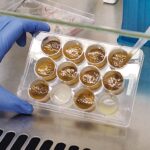
Pollen is especially important because it supplies bees with protein, lipids, vitamins and minerals required for growth and reproduction. Adult worker bees consume some pollen directly, but in social species they also transport it to the colony, where it becomes food for larvae. Nectar provides carbohydrates in the form of sugars and fuels flight, while pollen supports the biological machinery behind development, tissue formation and immune function. The UGA team found that centipedegrass pollen could support the development of bee larvae at levels similar to more conventional nursery plants, including butterfly bushes. That result suggests the grass may help sustain at least the early stages of a new generation.
The discovery is significant because bee habitat is under pressure from multiple directions at once. Expanding urban areas reduce nesting sites and fragment plant communities, while pesticide exposure and the removal of flowering vegetation can narrow the range of available food. Many plants that provide abundant pollen and nectar bloom during a relatively short spring window. By midsummer, some trees and ornamental plants have finished flowering, creating a seasonal nutritional gap. Centipedegrass may help fill part of that gap because its flowering structures can remain available into September, when late-season floral resources are often scarce.
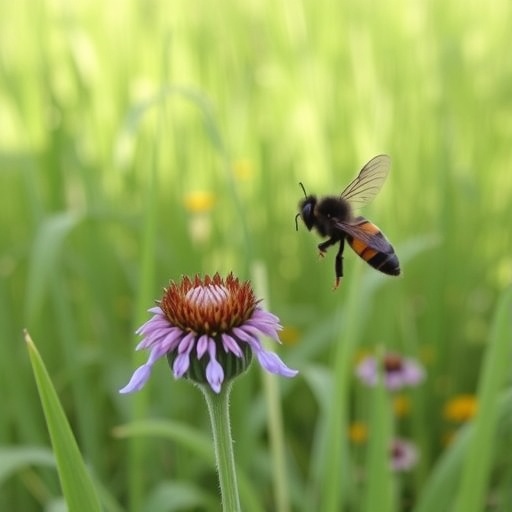
Centipedegrass does not resemble a typical bee plant. Its flowers are small and easily overlooked, emerging from slender stalks rather than forming conspicuous blooms. Yet the researchers found that bees repeatedly foraged on the grass, particularly when its inflorescences had developed enough to expose pollen. The study also showed that bees did not abandon other plants. They often selected centipedegrass growing near flowering vegetation, suggesting that pollinators may use complex suburban yards as mixed food landscapes rather than relying on a single species. Bumblebees were especially adaptable, collecting pollen from sources that included ivy, crape myrtles and vegetable gardens.
The timing of lawn maintenance appeared to influence how useful the grass became. Pollen collection was highest approximately 10 to 12 days after mowing. Cutting the lawn removes or shortens flowering structures, but allowing a brief recovery period gives centipedegrass time to produce accessible blooms and replenish its pollen. The researchers therefore propose that homeowners could maintain a mowing interval of roughly 10 to 14 days, depending on local growing conditions, instead of cutting the grass as soon as it begins to lengthen. The approach does not require abandoning lawn care; it involves adjusting the schedule so that the turf occasionally reaches a stage at which bees can forage.
That recommendation could be particularly relevant in cities and suburbs, where lawns occupy large areas but are often managed primarily for appearance. A single skipped mowing may create a temporary “pollination hub” without transforming a yard into a wildflower meadow. Such small interventions could become more valuable when repeated across many properties, parks and institutional grounds. However, the researchers emphasize that grass pollen should be viewed as one component of a broader pollinator landscape. Bees require diverse food sources, and pollen from different plants can vary in its balance of amino acids and other nutrients. Flowering trees, shrubs, herbs and native plants remain important for maintaining dietary diversity, while undisturbed soil, dead wood and other nesting habitats are essential for completing the bee life cycle.
The study also raises questions about how grass pollen affects bee colonies over longer periods. Demonstrating that larvae can develop on centipedegrass pollen is an important step, but larval development alone does not reveal whether colonies receiving the pollen grow more strongly, survive winter more successfully or produce more reproductive individuals. Future research will need to examine the chemical composition of centipedegrass pollen, compare it with pollen from multiple flowering plants and track colonies across entire seasons. Scientists may also need to determine how mowing height, fertilizer use, irrigation, herbicides and local climate affect both grass flowering and pollen quality.
For now, the research offers a practical shift in how ordinary landscapes can be understood. A lawn is not automatically an ecological dead zone; under certain conditions, it can provide a temporary food resource for insects that are increasingly forced to navigate fragmented habitats. “The goal isn’t to stop mowing,” said Shimat Joseph, an associate professor at the University of Georgia and the study’s corresponding author. Instead, the goal is to manage lawns in ways that leave room for biological processes that are easy to miss. Allowing centipedegrass to flower briefly may give bees access to protein during the hottest months of the year, when their options can be narrowing. In a landscape dominated by human schedules, a modest delay in mowing could give pollinators a surprisingly valuable meal.
Subject of Research: Centipedegrass pollen as a food resource for bees and its role in bee larval development and pollinator-friendly lawn management.
Article Title: Bees forage and utilize centipedegrass pollen
News Publication Date: 18-Jul-2026
Web References: https://link.springer.com/article/10.1007/s10841-026-00793-w
References: Journal of Insect Conservation, DOI: 10.1007/s10841-026-00793-w
Image Credits: Andrew Davis Tucker/UGA
Keywords: Bees, centipedegrass, pollen, pollinators, bee nutrition, larval development, turfgrass, lawn management, biodiversity, conservation, entomology
Tags: Centipedegrass as bee food sourceConservation of pollinators beyond flowersEnhancing pollinator habitats in residential areasImpact of turfgrass on bee foraging behaviorImportance of pollen diversity for beesInfluence of grass species on bee larvae developmentLawn management for pollinator healthPollen collection by bees from turfgrassPollinator support from lawnsRole of non-flower plants in bee dietsSupporting bee populations with grassy landscapesUrban landscape and bee nutrition