CEO, Bac3Gel
When scientists at Bac3Gel hear from potential customers, they typically express a mixture of frustration, curiosity, and skepticism, Sebastião van Uden, PhD, the company’s CEO, tells GEN. Usually, they approach the company after their own culture efforts have failed to produce consistent results, or they are on the hunt for a solution for bacteria “that is hard to grow,” or they are concerned about the costs and duration of current bioreactor experiments.
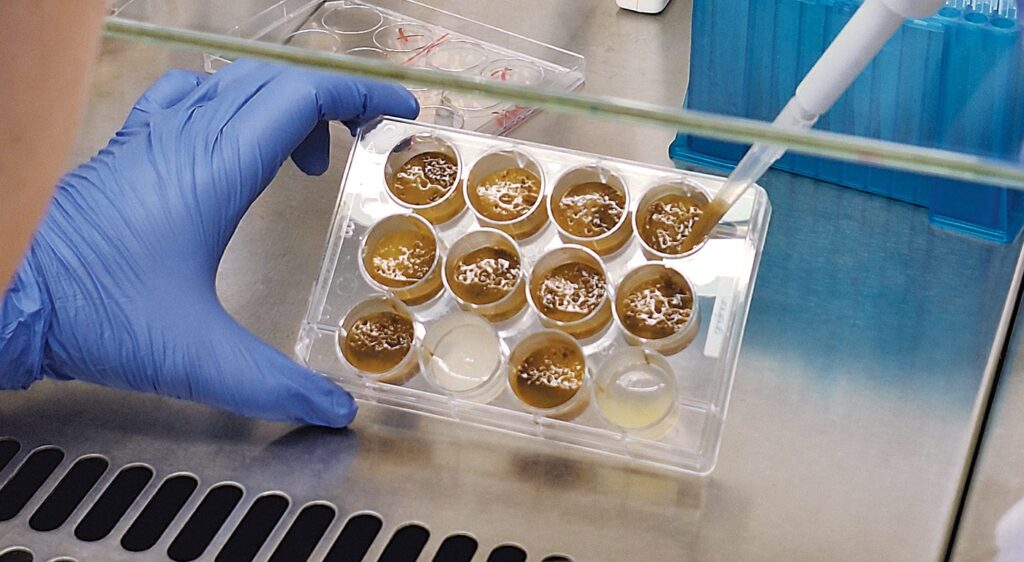
These are issues that the company believes it can address with its proprietary biomaterial platform, which uses a synthetic, organic gel, made from food-grade ingredients, to reproduce the structural and chemical properties of human mucus. The gel is designed to support the growth of highly complex microbial communities in the laboratory setting and is used for applications in academia, biotech, and pharma research and nutrition. Importantly, the gel can be customized to grow microbial communities that are found in different environments including the gut, lung, skin, and vagina.
The company claims that its technology addresses key industry pain points, including hard-to-culture bacteria as well as the high cost and low throughput of existing bioreactors. According to numbers shared with GEN, the company’s gel can enable growth of up to 92% of a microbiome sample’s species, which is a significant improvement over the 2–3% that is achievable with standard methods.
Bac3Gel is adopting a three-step market strategy that starts with research tools, moving into the food supplement space in partnership with existing corporations, and finally developing live biotherapeutics. It is the most prudent path for the early-stage startup, van Uden says. “Our business strategy lies in [moving] step-by-step, increasing risk while we expand in markets.”
Like most biotech companies, Bac3Gel is exploring ways to deploy artificial intelligence (AI) that make sense for its portfolio. One avenue is to leverage the large datasets that it has generated to create digital twins of the human body that allow it to test how particular strains affect the existing microbiome population or how particular probiotics impact people in different geographies with unique diets. “This is something very interesting, and we started working on it,” van Uden says. “I think AI has a place here in the microbiome.”
Prebiotic substrates for phenotyping
As consumables product manager at Biolog, Juan Sanchez, has a good overview of the company’s microbiome portfolio. In fact, “I actually introduced our first microbiome target product,” he tells GEN. “We had other products that could be used for this type of research, but this one is really for the gut microbiome.” Specifically, these are three different plates with prebiotic substrates that at their core are designed to help scientists who are studying human or animal gut microbiomes simplify their work.
Product Manager, Biolog
The so-called PreBioM™ line of microplates is designed for phenotyping gut microbiomes by testing their ability to metabolize various prebiotic substrates. Plates come pre-loaded with 90 different prebiotic substrates, removing the need for scientists to handle the plate formulation and testing on their own. And though the product was designed for the gut microbiome initially, it is applicable to other mammalian microbiomes such as oral and skin. “We remove all of the trouble from the researcher having to guess which substrates are relevant, what concentrations should these substrates be at,” Sanchez says. “We did all of that work for them.”
Primary customers for PreBioM plates are scientists in universities, university hospitals, and pharmaceutical companies that are developing live biotherapeutics. “The live biotherapeutic space is really one direction where the microbiome research has been evolving to,” Sanchez says. “Before it was just making probiotic pills, but now they are a lot more specialized.”
And that brings up a new challenge: the need to standardize not just the final product but also what goes into producing the product. This is another area where Biolog stands out. “We’ve actually been making media for growing the bacteria that will be used for the live biotherapeutic in bioprocess bags,” he tells GEN. This product, TruPRAS™, is the only commercial media manufactured under true pre-reduced, anaerobically sterilized conditions, according to Biolog.
The evolving live biotherapeutics market is also driving greater interest in customized media offerings, Sanchez notes. In fact, it is “one of the bigger trends for live biotherapeutics that I’ve seen coming up,” he says.
Building immune tolerance
“The big bold vision that we’ve always had at Siolta Therapeutics is that we can actually stop diseases before they start,” Nikole Kimes, PhD, tells GEN. Kimes co-founded the company with Susan Lynch, PhD, a professor in the department of medicine and director of the Colitis and Crohn’s Disease Microbiome Research Core at the University of California, San Francisco (UCSF).

Co-founder and CEO
Siolta Therapeutics
Kimes, who serves as the company’s CEO, joined Lynch’s lab at UCSF back in 2014 at a time when scientists were learning a lot about how allergic disease develops. “What we kept seeing was that early life risk factors were the most highly associated with disease development downstream,” she says. “We started to look into the gut microbiome early in life” for “signatures that were consistent across kids who went on to develop either atopic dermatitis, food allergy, asthma [or] any of the IgE-mediated atopic diseases.” Their idea was to create a cocktail of beneficial microbes that could be used to treat infants whose signatures suggested they were at greater risk of disease. In theory, by replenishing the gut microbiome, they would be able to support immune tolerance rather than immune inflammation.
Their research led them to examine the microbial communities of infants in different cohort studies globally, looking for signals that indicated they lacked beneficial microbes. “What we’re really interested in is the functionality, what role are they playing?” Kimes explains. This is an important point because two people might have drastically different strains in their microbiomes that have functionally similar roles. They also looked at the functional capacity of the microbes that conferred healthy benefits to their hosts. This way, they identified a subset of potential candidates for the cocktail that would have the greatest efficacy and be easy to manufacture.
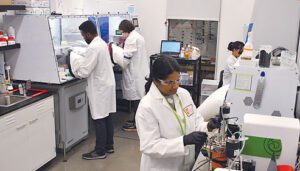
The team at Siolta has spent the last nine years building out its Precision Symbiotics PlatformTM, which includes all the computational tools, biobanks, and assays needed to develop its therapeutics. “We started the company out of necessity,” Kimes says. At the time, “there was nobody out there developing preventative drugs from a novel modality” because “it was considered too challenging to do. We thought it was too much of an opportunity to not try.”
The company has now completed a Phase II proof-of-concept clinical trial of its live biotherapeutic in 238 newborn infants with a familial history of allergic disease. “We have great data showing that this cocktail of organisms, when given over the first year of life, is reducing atopic dermatitis and food allergy at one year of age.” By age two, “we actually see reductions across atopic dermatitis, food allergy, and even asthma.”
An edge in the obesity market
For years, the ketogenic diet has been effectively used to treat drug-resistant epilepsy and other metabolic conditions by pushing the body to burn fat as an energy source. Bloom Science is turning to the microbiome to develop therapeutics for neurological and metabolic disorders that work in much the same way without dietary changes. “Our core technology and program is actually based on what we like to say is reverse engineering the ketogenic diet,” says Chris Reyes, the company’s CEO and founder. “We looked at the ketogenic diet as our reference point” and asked, “How does it work? What are the key bioactive molecules that have been shown or are being focused on to explain this effect?”
Founder, CEO, Bloom Science
Underpinning the company’s therapeutic pipeline is a proprietary platform dubbed IrisRx™. Leveraging this platform, it has developed live biotherapeutics that treat obesity, Dravet syndrome, Alzheimer’s disease, and amyotrophic lateral sclerosis. Its lead candidate, BL-001, is currently in Phase Ib testing for obesity. Early signals indicate that the biotherapeutic is well tolerated with no serious adverse events, and patients with overweight had statistically significant placebo-adjusted weight loss.
“We took a very traditional drug discovery and development approach,” Reyes explains to GEN. After identifying strains of bacteria that could replicate the diet, “we created a library of strains within these species and other species, and we screened them like we would an antibody library or a small molecule library looking for optimal functional fit.” The company is also working on engineering specific improvements to some strains to further optimize them for different indications.
If Bloom’s first candidate is successful, BL-001 could become an alternative to GLP-1s. In fact, Reyes believes that even with the success of GLP-1s, the population of people with obesity in the United States is still underserved. “Maybe about a third of the obese population is actually on or has been on GLP-1s,” meaning “two-thirds are not.” He attributes this partly to hesitation among this population due to factors like drug cost and tolerability.
“What we’ve seen is that there’s a huge preference for therapies that have steady weight loss with fewer side effects than rapid weight loss with higher side effects,” he continues. And though it is still in the testing, the Phase I results for its lead candidate are very promising. “We think we’re going to be competitive on the efficacy side with other oral obesity drugs” and “we believe we’ll have a much more tolerable profile.” Also, “we have very preliminary data to suggest that we might be able to identify a responder class based on their starting baseline metabolic state,” he adds, stressing that this research is still in its very early stages.
Macrophages to aid immunotherapies
The constant interaction between the microbiome and the immune system is of particular interest to scientists at Exeliom Biosciences. As Benjamin Hadida, the company’s co-founder and CEO, explains it, “we are trying to modulate the immune system by using some components that come from the microbiome.”
The French biotech company is developing a single asset, dubbed EXL01, that is delivered orally and is currently in Phase II testing in six different clinical studies across three therapeutic areas, Hadida tells GEN. EXL01, the company’s immunomodulator, is a strain of the bacterium Faecalibacterium prausnitzii, which is prevalent in healthy human guts. It is also one of the first to be impacted in systemic inflammation seen with conditions like inflammatory bowel disease or in patients undergoing chemotherapy.
Four of their studies are focused on oncology where the asset is being evaluated in combination with several approved checkpoint inhibitors in gastric cancer, renal cell carcinoma, hepatocellular carcinoma, and non-small cell lung cancer. Essentially, “we’re developing an immunomodulator that acts on the innate part of the immune system,” he explains. “We activate macrophages so that we can make patients more able to respond to immunotherapies.”
The company is positioning EXL01 as an add-on to existing immunotherapies since it targets a different type of immune cell. For patients on these treatments, whether that is in oncology or immune disease, “one of the key issues is the durability of the effect. We work on macrophages so that we keep the response to these treatments sustainable,” he says.
“We took it to the lab and tested it in some models trying to identify the mechanism at play,” he continues. It turns out that this bacterium has a unique component on its membrane that makes it a specific agonist of a key receptor in macrophages. Upon binding, it activates the NOD2-CARD9 pathway that reprograms the macrophages to resist the immunosuppressive tumor environment and keep the T cell pool in shape.
Industry skepticism toward microbiome therapeutics in the last several years has created both challenges and opportunities for companies like Exeliom. “In the oncology world, [there have been a] number of Phase III failures that we’ve seen when [pharmas] try to combine things with checkpoint inhibitors to increase the efficacy,” Hadida says. “Some of them were able to increase the response rate, but they all failed in terms of progression-free survival. What’s interesting is when you look at all these strategies, they are all focusing on the adaptive immune system. None of them tried to act on the innate immune system.” It is a common blind spot that Exeliom is targeting. “People are maybe a bit more open [to] new strategies that look somewhere else,” Hadida says.