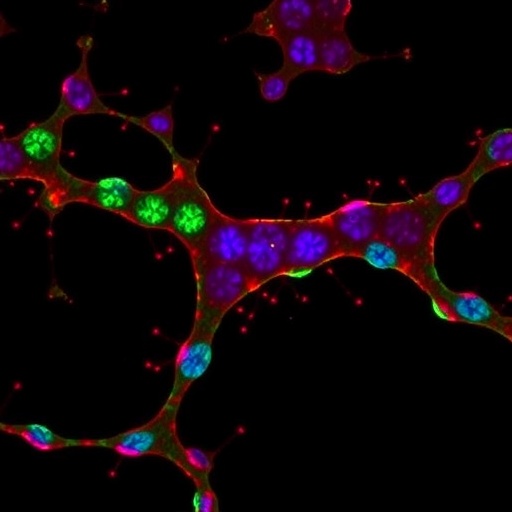
Neuroblastoma, a cancer of the developing nervous system, has long challenged researchers because its behavior can vary dramatically from one patient to another. Some tumors respond well to treatment, while others grow aggressively, spread rapidly, and return despite intensive therapy. A new study published in the British Journal of Cancer examines one of the most important genetic features associated with this disease: changes affecting the long arm of chromosome 17, known as 17q. The research presents chromosome 17q as more than a passive marker of cancer progression, describing it as a functional region where the demands of rapid DNA replication collide with the cell’s need to preserve genomic stability.
Chromosome 17q is frequently altered in neuroblastoma, particularly through the gain of additional genetic material. In cancer biology, such gains can increase the dosage of genes that support tumor growth, survival, or resistance to treatment. Yet the consequences are not necessarily uniform across the entire chromosome. A duplicated region may contain genes with opposing effects: some may help malignant cells divide, while others may create vulnerabilities by placing excessive pressure on the machinery responsible for copying DNA. The study by Hilgert, Depestel, Van Roy and colleagues investigates this functional complexity rather than treating 17q gain as a single, indivisible event.
DNA replication is the process by which a cell copies its genome before dividing. This operation must proceed rapidly but with remarkable accuracy. When replication forks—the molecular structures that move along DNA during copying—slow down, stall, or collapse, cells experience replication stress. Replication stress can arise when cancer cells divide too quickly, when DNA contains difficult-to-copy sequences, or when the supply of nucleotides and other replication components becomes insufficient. If unresolved, stalled replication forks can generate DNA breaks and rearrangements, helping tumors evolve while also threatening the survival of the cells that carry them.
The new work focuses on how genetic elements within 17q influence this balance. A region that promotes proliferation may simultaneously intensify replication stress, creating a biological paradox. Tumor cells benefit from increased growth signals, but they must also develop mechanisms to tolerate the resulting damage. This dependence can become a weakness: cancer cells operating close to the limits of replication may rely heavily on DNA repair pathways and checkpoint systems that normal cells use less intensively. Disrupting those support systems could selectively harm tumor cells, an idea that has become central to the development of targeted cancer treatments.
The researchers describe a “functional landscape” for chromosome 17q, suggesting that the region should be understood through the combined activity of its genes and regulatory elements. Genes do not act in isolation. Their effects depend on gene dosage, cellular context, interactions with other genomic regions, and the stage of tumor development. In neuroblastoma, these relationships may determine whether a 17q alteration produces a viable, treatment-resistant cancer cell or instead creates so much replication difficulty that the cell becomes vulnerable to damage and death. Mapping these relationships offers a more precise view of why the same broad chromosomal change can have different consequences in individual tumors.
This perspective is especially important because neuroblastoma often develops from immature cells of the peripheral nervous system. During early development, these cells naturally undergo tightly regulated programs of growth, migration, and differentiation. Cancer can emerge when those programs are disrupted, allowing cells to continue dividing instead of maturing into specialized nerve-related cells. Additional chromosomal alterations may then reinforce the malignant state. By connecting 17q abnormalities with replication stress and genome maintenance, the study places a major neuroblastoma feature within the wider biology of developmental cancer.
Genomic stability refers to the ability of a cell to copy and preserve its DNA without accumulating excessive mutations or structural changes. Cancer cells frequently compromise this stability, producing an unstable genome that can accelerate adaptation. However, instability has limits. Too little DNA damage may not generate enough diversity for a tumor to evolve, while too much can trigger cell death or permanent growth arrest. The study’s central concept is that 17q alterations may push neuroblastoma cells toward this dangerous threshold, forcing them to balance accelerated growth against the risk of catastrophic replication failure.
The findings could influence how researchers think about treatment strategy. If specific 17q-associated activities make tumor cells dependent on replication-stress responses, therapies aimed at DNA damage checkpoints or repair enzymes might be especially effective in selected neuroblastomas. Such approaches could potentially be combined with existing treatments, including chemotherapy, which already damages DNA but can also harm healthy tissues. The challenge will be identifying which tumors truly depend on particular repair mechanisms and determining how to target those dependencies without increasing toxicity. A functional map of 17q could help move treatment decisions beyond the simple presence or absence of a chromosomal gain.
The study also highlights why cancer genomes should not be interpreted solely through large-scale structural changes. A chromosomal gain may be clinically useful as a prognostic signal, but its biological meaning depends on the genes and pathways it affects. By examining how chromosome 17q contributes to replication stress and genome protection, the researchers provide a framework for understanding why this region is repeatedly selected during neuroblastoma evolution. Their work points toward a future in which genetic alterations are assessed not only as labels of risk, but as clues to the specific pressures that keep cancer cells alive—and the vulnerabilities that may ultimately bring them down.
Subject of Research: Functional effects of chromosome 17q alterations, replication stress, and genomic stability in neuroblastoma
Article Title: A functional landscape for chromosome 17q in neuroblastoma: balancing replication stress and genomic stability
Article References: Hilgert, E., Depestel, L., Van Roy, N. et al. “A functional landscape for chromosome 17q in neuroblastoma.” British Journal of Cancer (2026). https://doi.org/10.1038/s41416-026-03569-w
Image Credits: AI Generated
DOI: 10.1038/s41416-026-03569-w
Keywords: Neuroblastoma, chromosome 17q, replication stress, genomic stability, DNA replication, DNA repair, cancer genetics, tumor evolution, developmental cancer
Tags: balancing replication stress and genome integritychromosome 17q alterationschromosome 17q gain mechanismschromosome 17q gene dosage effectsDNA replication and cancer progressiongenome stability in cancerimpact of chromosome 17q on neuroblastoma prognosisneuroblastomaneuroblastoma genetic markersneuroblastoma tumor heterogeneityreplication stress in neuroblastomatumor aggressiveness and treatment response