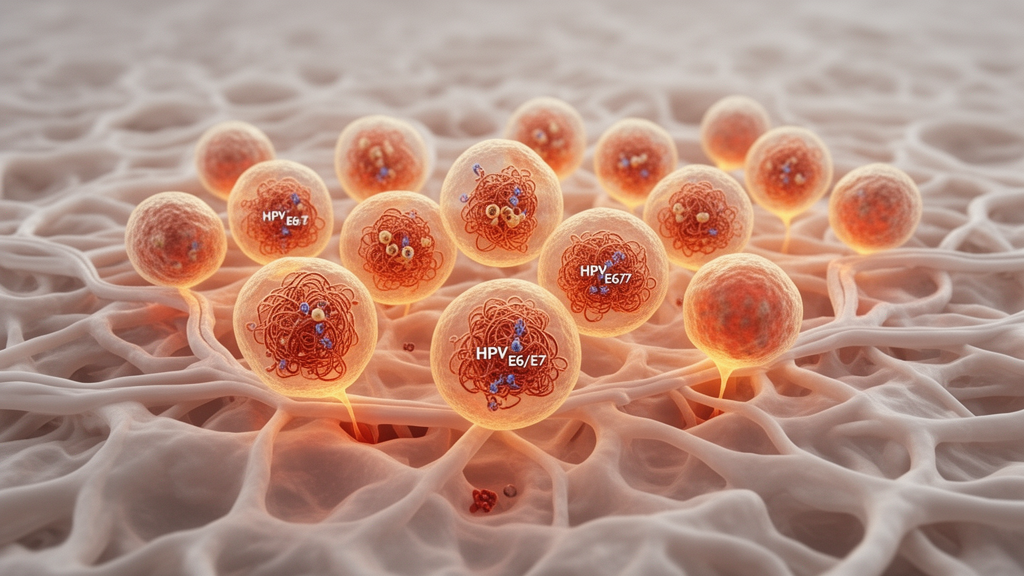
Immunohistochemical staining was positive in 48% of the 50 prostate cancer specimens and 18% of the 50 benign controls, a statistically significant difference (p = 0.0026). Among the cancer cases, positive staining was also associated with higher International Society of Urological Pathology Grade Groups and more advanced pathological stage, but not with serum prostate-specific antigen concentrations. The study examined 100 formalin-fixed, paraffin-embedded prostate tissue specimens: 50 from histologically confirmed prostate cancer and 50 from benign prostatic hyperplasia.
The investigators assessed high-risk HPV E6/E7 protein expression using monoclonal antibodies and evaluated the staining with a semi-quantitative H-score system. Their statistical analysis included chi-square tests, Mann–Whitney U tests, logistic regression and odds-ratio calculations. Prostate cancer tissue had over four times the odds of HPV E6/E7 positivity compared with benign tissue, yielding an odds ratio of 4.21 and a 95% confidence interval of 1.69–10.43.
Analysis of the malignant tumors showed that positive E6/E7 immunoreactivity was significantly associated with higher ISUP Grade Groups (p = 0.0035) and advanced tumor stage (p = 0.004). Multivariable logistic regression showed that higher tumor grade and pathological stage remained independently associated with HPV E6/E7 immunoreactivity after adjustment for PSA. In contrast, the researchers found no significant association between positive staining and serum PSA levels.
The authors cautioned that protein immunoreactivity alone cannot confirm an active HPV infection or establish that the virus caused the development of a prostate tumor. The retrospective design and the geographically specific Sudanese cohort also constrain how broadly the observed associations can be applied. The findings consequently identify a relationship between detectable viral oncoproteins and more severe pathological characteristics in the sampled tissues, rather than demonstrating a causal role for HPV in prostate cancer.
The results add to an unresolved question about the role of HPV in prostate cancer. Although HPV is a known cause of several epithelial cancers, its connection with prostate cancer has not been definitively established, and evidence may vary among populations. Within this cohort, high-risk HPV E6/E7 protein positivity was both more common in malignant tissue than in benign prostatic hyperplasia and associated with higher grade and more advanced stage.
The researchers proposed future studies incorporating molecular HPV detection, viral genotyping and RNA-based analysis to determine whether viral material and transcription are present and to clarify the biological relationship between HPV and prostate tumors.
Subject of Research: Association of high-risk HPV E6/E7 protein expression with prostate cancer grade and stage in a Sudanese cohort
Article Title: Immunohistochemical detection of high-risk human papillomavirus E6/E7 oncoproteins is associated with aggressive clinicopathological features in prostate cancer: a Sudanese cohort study
Article References: Elimam, A., Hadad, I., Mohammed, E., Cacciatore, S., & Ahmed, D. (2026). Immunohistochemical detection of high-risk human papillomavirus E6/E7 oncoproteins is associated with aggressive clinicopathological features in prostate cancer: a Sudanese cohort study. BMC Cancer. https://doi.org/10.1186/s12885-026-16916-0
Image Credits: AI Generated
DOI: 10.1186/s12885-026-16916-0
Keywords: high-risk HPV, prostate cancer, Sudanese cohort, E6 oncoprotein, E7 oncoprotein, immunohistochemistry, tumor grade, pathological stage, benign prostatic hyperplasia, viral oncology, Immunohistochemical, detection