{“title”:”Epigenetic Enzymes Emerge as Powerful New Predictors of Breast Cancer Patient Survival and Treatment Response”,”html”:”Breast cancer remains one of the most formidable challenges in modern oncology, claiming hundreds of thousands of lives globally each year despite remarkable advances in screening and targeted therapies. Now, a comprehensive bioinformatics investigation has brought new clarity to one of the field’s most promising yet understudied molecular players: the lysine demethylase gene family. By systematically mining vast public datasets spanning thousands of patient samples, researchers have mapped how this family of epigenetic enzymes behaves across breast cancer subtypes, revealing striking patterns that link these genes to patient survival, tumor aggressiveness, chemotherapy resistance, and immune system engagement. The findings, published in Discover Biotechnology, position lysine demethylases as both powerful prognostic biomarkers and compelling targets for future drug development.
Lysine demethylases, often abbreviated KDMs, are enzymes that remove methyl chemical groups from lysine residues on histone proteins, the spools around which DNA is wound inside every cell. This seemingly simple act of demethylation has profound consequences for chromatin architecture and gene expression. When KDMs malfunction, the delicate epigenetic balance that governs which genes are switched on or off can be disrupted, contributing to uncontrolled cell proliferation, evasion of programmed cell death, and the development of metastatic behavior. In breast cancer specifically, individual members of this enzyme family have previously been implicated in tumor progression and therapeutic resistance, but a holistic, multi-database portrait of the entire family has been conspicuously lacking.
To construct that portrait, the research team led by investigators at Tabriz University of Medical Sciences harnessed an impressive arsenal of publicly available bioinformatics platforms. They drew upon UALCAN for tumor versus normal expression comparisons, bc-GenExMiner for clinicopathological correlations, the Kaplan-Meier Plotter for survival analyses, cBioPortal for genomic alteration profiling, STRING and Cytoscape for protein interaction network construction, Enrichr for pathway enrichment, MethSurv for CpG methylation survival analysis, GSCALite for drug sensitivity correlations, and TIMER for immune infiltration assessments. All gene names were standardized to HGNC-approved symbols to ensure consistency across the disparate data sources, a methodological safeguard that strengthens the reliability of cross-platform integration.
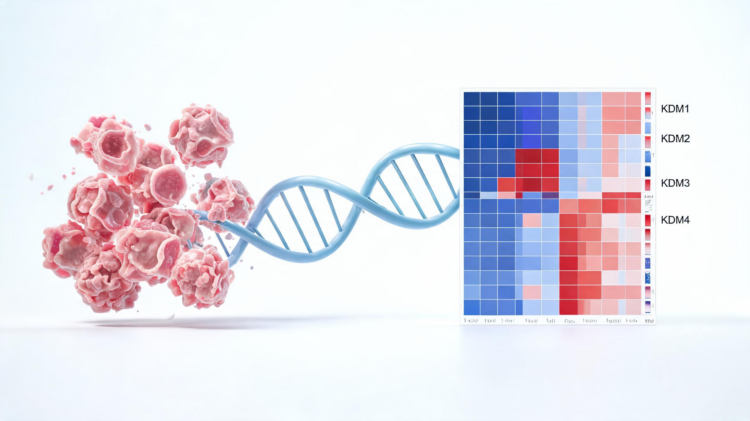
The analysis revealed that KDM genes do not behave uniformly across breast cancer. Instead, they display sharply divergent expression patterns depending on the molecular subtype of the tumor. Genes including KDM1A, KDM1B, KDM4C, KDM4D, KDM4E, and KDM5A were significantly upregulated in triple-negative and basal-like breast cancers, the most aggressive and hardest-to-treat subtypes, while genes such as KDM2B, KDM3B, KDM4B, KDM6A, and KDM6B were markedly downregulated in the same contexts. Pairwise co-expression analysis within the triple-negative cohort identified two distinct modules: an oncogenic cluster anchored by a strong correlation between KDM1B and KDM5A, and a separate suppressor module linking KDM3B with PHF2. This architecture suggests that groups of demethylases may act cooperatively, either fueling or restraining tumor aggressiveness, rather than functioning as isolated molecular actors.
Survival analysis delivered some of the study’s most clinically resonant findings. Higher expression of KDM1B, KDM4A, KDM4B, KDM5A, KDM5C, KDM6A, and RSBN1 was significantly associated with improved overall survival, with KDM5C showing one of the strongest protective effects. In stark contrast, elevated KDM5B expression predicted shorter overall survival and poorer relapse-free survival, marking it as a candidate adverse prognostic marker. Relapse-free survival analysis extended this picture further, implicating elevated KDM5A, KDM5B, and KDM7A in earlier relapse while confirming the protective associations of more than a dozen other family members. Taken together, these data suggest that a patient’s KDM expression signature could one day inform risk stratification and guide the intensity of adjuvant therapy.
Genomic alteration analysis through cBioPortal, drawing on more than one thousand invasive breast carcinoma samples, identified KDM5B as the most frequently altered KDM gene, with amplification emerging as the dominant mechanism of dysregulation in roughly eighteen percent of tumors. Crucially, alterations in KDM5B, KDM2A, and KDM4C were strongly enriched in metastatic disease, aggressive histologic subtypes including infiltrating ductal and metaplastic carcinomas, and hormone receptor-negative phenotypes. Many of these amplifications and missense mutations clustered within functional domains such as the JmjC catalytic core and DNA-binding regions, implying that the alterations are not passenger events but likely enhance demethylase activity in ways that actively promote tumor progression. Protein interaction network modeling pinpointed KDM6A, KDM6B, KDM1A, KDM1B, and PHF8 as the central regulatory hubs within the broader epigenetic landscape of breast cancer.
Perhaps the most therapeutically provocative dimension of the study involves drug sensitivity. Cross-referencing KDM expression with large pharmacogenomic datasets from the Genomics of Drug Sensitivity in Cancer and Cancer Therapeutics Response Portal revealed that most KDM genes correlate negatively with drug sensitivity, meaning their overexpression may actively foster chemotherapy resistance. KDM2B stood out as the linchpin, showing the strongest and most consistent correlations across both datasets. Elevated KDM2B expression was linked to reduced sensitivity to Methotrexate, Doxorubicin, PX-12, I-BET-762, and Belinostat, clinically relevant agents spanning antifolate, anthracycline, redox-targeting, bromodomain-inhibiting, and HDAC-inhibiting classes. Prior experimental work in glioblastoma and other models has shown that KDM2B inhibition impairs cancer stem-like cell survival by inducing DNA damage and apoptosis, providing a plausible mechanistic rationale for how targeting this enzyme could resensitize tumors to standard chemotherapy.
The study also uncovered a striking methylation dimension. Using MethSurv, the researchers identified dozens of individual CpG sites within KDM genes whose methylation status was significantly associated with patient survival, including thirty-five prognostically relevant CpG sites in KDM2B alone and forty-six in KDM4B. This epigenetic crosstalk between histone demethylase genes and their own DNA methylation patterns underscores the layered complexity of cancer epigenetics and hints at potential biomarker applications beyond simple mRNA measurement. Meanwhile, enrichment analysis confirmed that KDM family genes are centrally involved in histone lysine demethylation, chromatin remodeling, 2-oxoglutarate-dependent dioxygenase activity, and metabolic pathways, connecting these enzymes to the metabolic reprogramming that is increasingly recognized as a hallmark of malignancy.
Immune infiltration analysis through TIMER added yet another layer of significance. KDM5A, KDM6A, and KDM7A expression correlated strongly and positively with CD8-positive T cell infiltration, suggesting these demethylases may help shape anti-tumor immunity. KDM2B showed notable associations with dendritic cells, neutrophils, CD4-positive T cells, and B cells, while KDM6A correlated with macrophage presence. Given the central role of tumor immune microenvironment composition in determining response to immunotherapy, these correlations suggest that KDM expression profiles could eventually help predict which patients are most likely to benefit from immune checkpoint inhibitors. The authors are careful to acknowledge the principal limitation of their work: it is entirely computational, relying on public databases without wet-lab experimental validation. Future studies employing in vitro knockdown assays and in vivo models will be essential to confirm these associations and dissect the underlying molecular mechanisms. Nevertheless, by synthesizing expression, survival, mutation, methylation, drug sensitivity, and immune data into a single unified framework, this investigation delivers the most complete picture to date of how the lysine demethylase family operates in breast cancer, and it does so with a clarity that should accelerate the translation of epigenetic insights into genuinely personalized therapeutic strategies.
“,”excerpt”:”A comprehensive multi-database bioinformatics study reveals that lysine demethylase genes show subtype-specific expression, survival, methylation, drug resistance, and immune infiltration patterns in breast cancer, positioning them as prognostic biomarkers and therapeutic targets.”,”subject”:”Bio
The biological significance of lysine demethylation stems from the fact that methylated lysine residues on histone tails can carry distinct methylation states — mono-, di-, or trimethyl — and each state conveys a different transcriptional message. The KDM family reflects this complexity, comprising two mechanistically distinct classes: the flavin adenine dinucleotide-dependent amine oxidases such as KDM1A and KDM1B, and the larger group of JmjC-domain proteins that require iron and 2-oxoglutarate as cofactors. This enzymatic split has practical consequences for drug discovery, since the two classes are inhibited through entirely different chemical strategies, and several small-molecule demethylase inhibitors are already being evaluated in early-phase clinical trials for hematologic and solid malignancies.
The subtype-specific expression patterns observed in this study align with a broader principle in breast cancer biology: epigenetic regulators frequently act in a context-dependent fashion, behaving as oncogenes in one molecular background and tumor suppressors in another. This duality helps explain why broad demethylase inhibition may not be a viable therapeutic strategy, and why a precision approach — one that profiles a patient’s tumor for specific KDM alterations before selecting an epigenetic drug — is likely to be more fruitful.
The strong correlations between KDM expression and immune cell infiltration also connect the family to the emerging field of epigenetic immunomodulation. Chromatin regulators are increasingly understood to control the expression of immune checkpoints, antigen presentation machinery, and cytokine signaling pathways, and combining epigenetic drugs with immune checkpoint blockade has become an active area of clinical investigation. The observed links between KDM5A, KDM6A, and CD8-positive T cell infiltration provide a computational foundation for testing such combinations in breast cancer settings.
It is worth noting that the study’s findings derive entirely from curated patient cohorts within platforms built on The Cancer Genome Atlas and related resources, and the reported effect sizes — such as the hazard ratio of 1.5 for KDM5B — represent statistical associations rather than demonstrated causation. Translating these computationally derived hypotheses into clinical utility will require laboratory validation and, ultimately, prospective testing of KDM-based biomarkers in independent patient populations.
Subject of Research: Integrated bioinformatics profiling of the lysine demethylase gene family in breast cancer
Article Title: Integrated bioinformatics profiling of the lysine demethylase gene family in breast cancer
Article References: Mirzaei, Z., Barati, T., Ebrahimi, A., & Khaniani, M. S. (2026). Integrated bioinformatics profiling of the lysine demethylase gene family in breast cancer. Discover Biotechnology, 3(1), Article 9. https://doi.org/10.1007/s44340-026-00055-0
Image Credits: AI Generated
DOI: 10.1007/s44340-026-00055-0
Keywords: Integrated, bioinformatics, profiling, lysine, demethylase, gene, family, breast, cancer, scientific research
Cite Scienmag News
APA
MLA
Chicago
Copy citation
Download RIS
Tags: bioinformaticsbioinformatics analysis of cancer genesbreastbreast cancer prognosiscancerdemethylaseepigenetic biomarkers for breast cancerepigenetic targets for drug developmentfamilygenegene expression regulation in oncologyhistone demethylases in cancer therapyimmune response modulation by epigenetic enzymesintegratedKDMs in tumor progressionlysinelysine demethylase gene familymolecular subtypes of breast cancerprofilingScientific Researchtreatment resistance in breast cancertumor aggressiveness and epigenetic regulation