More than five years after the COVID-19 pandemic first reshaped global public health, SARS-CoV-2 continues to circulate and evolve, posing a persistent threat to the most vulnerable members of the population. While vaccines have saved countless lives, they depend on a functional immune system to generate protective responses, and this is precisely what many immunocompromised patients cannot mount. For these individuals, antibody therapies delivered directly into the bloodstream have served as a critical line of defense, binding to the virus and neutralizing it before infection can take hold. Yet the virus has repeatedly outmaneuvered these drugs. Each wave of variants, from Alpha through Delta and the many descendants of Omicron, has carried mutations in the viral spike protein that strip away the effectiveness of first-generation monoclonal antibodies, leaving clinicians with fewer and fewer options. A new study published in Science Translational Medicine now describes an engineered solution designed to break this cycle of escape, combining mRNA delivery technology with sophisticated structural protein engineering to create antibodies that constrain the virus’s ability to evade recognition.
The research, led by Anna Wec and colleagues, began with a large-scale search for new neutralizing antibodies. Using high-throughput screening approaches, the team isolated several antibody candidates from llamas, animals whose immune systems are well known in the biotechnology field for producing single-domain antibodies, sometimes called nanobodies, that are smaller and structurally distinct from conventional human antibodies. These llama-derived candidates showed the ability to neutralize two of the most immune-evasive Omicron subvariants identified to date, XBB.1.5 and JN.1, both of which carried dense clusters of spike mutations that had disabled most previously authorized antibody therapeutics. The identification of antibodies capable of recognizing these heavily mutated variants provided the raw material for a more ambitious engineering effort aimed at durability rather than just potency.
From these lead candidates, the researchers constructed bispecific antibodies, engineered molecules that combine the targeting regions of two different antibodies into a single therapeutic protein. The strategic logic behind bispecific design is straightforward: if a therapeutic antibody binds to two separate sites on the viral spike protein simultaneously, the virus must acquire mutations at both locations at once to escape neutralization. The probability of such a combined mutational event occurring without compromising the virus’s fitness is far lower than the probability of escape from a single-site antibody. In effect, bispecific antibodies raise the genetic barrier to resistance, forcing the virus into a corner where the mutations needed for escape come at a cost to its own replication or transmission. This principle has long been appreciated in antiviral drug design, where combination therapies have proven essential for controlling rapidly evolving pathogens such as HIV.
However, bispecific antibodies have historically been difficult and expensive to manufacture. Producing them requires co-expressing two different antibody chains in the same cell and ensuring they assemble correctly into the intended molecule, a process that generates manufacturing complexity and cost far exceeding that of conventional monoclonal antibodies. These burdens have slowed the clinical deployment of bispecific formats, particularly in infectious disease applications where large quantities of drug may be needed and where rapid response to emerging variants is essential. The new study addressed this bottleneck directly by introducing structural modifications that allow multiple bispecific antibodies to be delivered in tandem through a single mRNA construct, sidestepping much of the traditional manufacturing challenge.
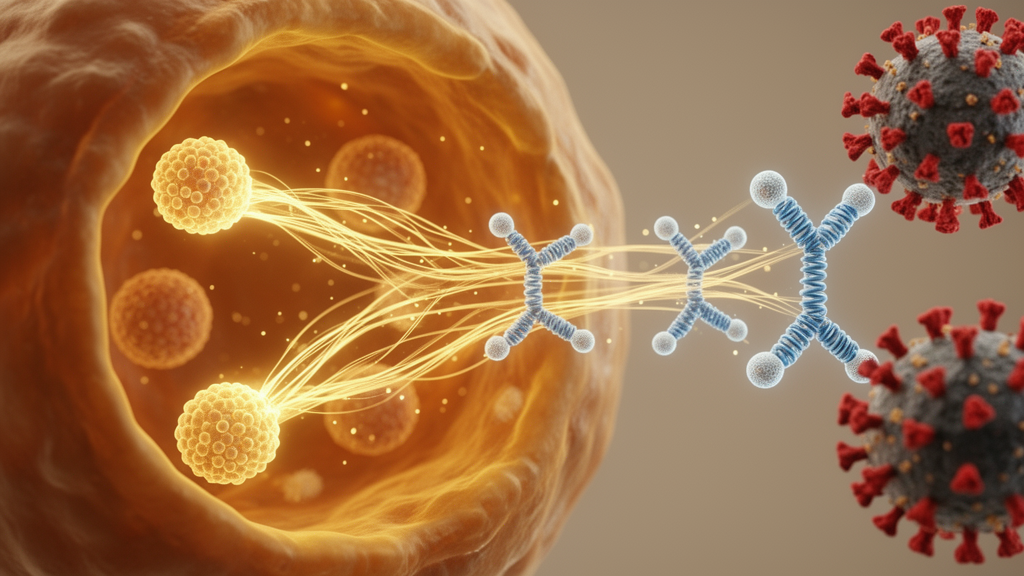
The mRNA approach represents a conceptual inversion of how antibody therapies have traditionally been produced. Rather than manufacturing antibodies in bioreactors, purifying them, and infusing the finished proteins into patients, mRNA therapy delivers the genetic instructions for the antibodies in the form of messenger RNA. Once the mRNA enters cells, the patients’ own cellular machinery translates the genetic code and produces the therapeutic antibodies in situ, releasing them into the bloodstream. This platform proved its worth during the pandemic in the vaccine context, and its application to antibody delivery offers several advantages: the same lipid nanoparticle manufacturing process can be used for virtually any antibody sequence, new variants can be countered by simply updating the encoded sequence, and multiple antibody specificities can be packaged together in a single formulation.
A key technical hurdle in multiplexed mRNA delivery is ensuring that co-delivered antibody components do not interfere with one another. Antibody heavy chains and light chains from different specificities can mispair when expressed in the same cell, generating a mixture of nonfunctional or unpredictable molecules. The researchers solved this problem through what they describe as orthogonal Fc engineering, a set of structural modifications to the antibody constant region that ensures each antibody component assembles only with its intended partner. This orthogonal design principle, borrowed in spirit from genetic code expansion and synthetic biology, allows several distinct bispecific antibodies to be encoded and expressed simultaneously from a single mRNA dose without cross-reactivity, maximizing the breadth of viral coverage that can be achieved with one therapeutic product.
The performance of the engineered platform in laboratory testing was notable. In serum neutralization assays, the mRNA-encoded bispecific antibody cocktail neutralized a broad range of both historical and currently circulating SARS-CoV-2 variants, spanning the evolutionary distance from early pandemic isolates to the latest immune-evasive Omicron descendants. This breadth reflects the combined targeting of multiple conserved and semi-conserved epitopes on the spike protein, a coverage profile that no single conventional antibody has been able to achieve against this virus. In animal studies, the therapy protected mice against infection with the XBB.1.5 variant, providing direct evidence that the mRNA-delivered antibodies reach protective concentrations in vivo and function against a variant that has evaded nearly all previous antibody drugs.
Beyond the immediate application to COVID-19, the structural template established in this work has implications that extend across antiviral medicine and beyond. The authors note that the platform may have applications in other therapeutic areas in which broad antigen coverage, resistance to escape, or simultaneous engagement of multiple disease-associated targets is desirable. Rapidly mutating RNA viruses such as influenza, respiratory syncytial virus, and HIV all present the same fundamental challenge that SARS-CoV-2 has posed: the target is a moving one, and single-target therapeutics are quickly rendered obsolete. A modular platform in which new antibody combinations can be encoded, updated, and delivered via mRNA offers a path toward therapies that evolve in step with their targets, much as seasonal vaccine formulations are updated each year.
The convergence of llama-derived antibody discovery, bispecific engineering, orthogonal assembly design, and mRNA delivery in a single therapeutic platform illustrates how lessons from the pandemic era are being consolidated into next-generation tools. For immunocompromised patients who remain unable to benefit fully from vaccination, the prospect of a durable, broadly neutralizing, and rapidly updatable antibody therapy is clinically significant. While the results reported so far come from serum assays and mouse models, and human clinical testing would be required before any regulatory deployment, the study demonstrates that the escape problem that has plagued antibody therapeutics throughout the pandemic is not an unsolvable one. By designing therapeutics that constrain viral escape rather than merely reacting to it, researchers are shifting the strategic balance in the long-running contest between antiviral drugs and the pathogens they target, offering a template for keeping pace with viruses that refuse to stand still.
Subject of Research: mRNA-encoded bispecific antibody therapies engineered to neutralize SARS-CoV-2 variants and constrain viral escape
Article Title: A new generation of mRNA antibody therapies may tackle ever-evolving SARS-CoV-2 variants
Article References: A new generation of mRNA antibody therapies may tackle ever-evolving SARS-CoV-2 variants. (n.d.). Original publication
Image Credits: AI Generated
DOI: Not provided
Keywords: SARS-CoV-2, mRNA therapy, bispecific antibodies, Omicron variants, viral escape, antibody engineering, llama nanobodies, Science Translational Medicine, immunocompromised patients, XBB.1.5, JN.1, antiviral therapeutics