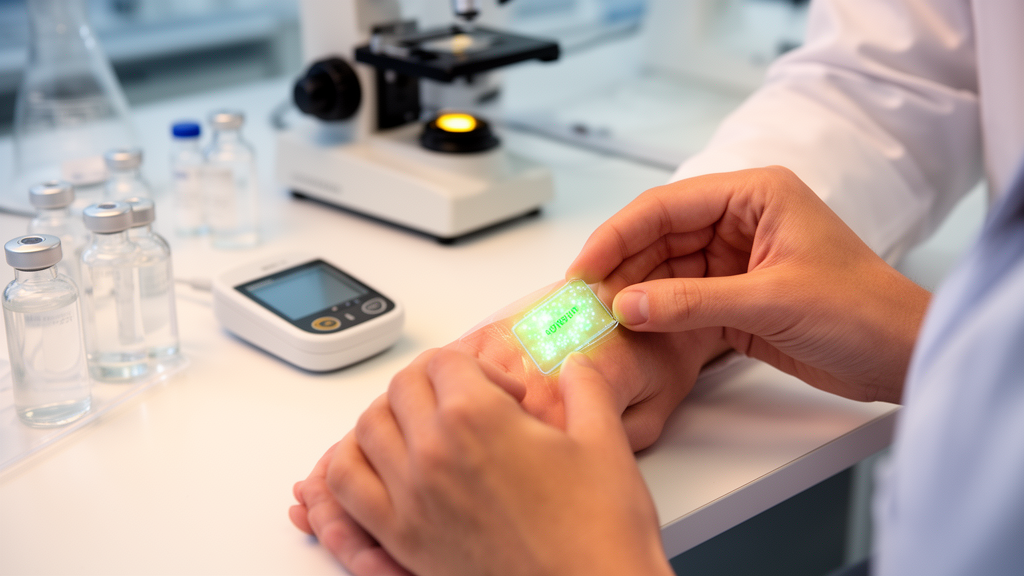
A new review published in Discover Sensors argues that next-generation nanobiosensors, built from gold nanoparticles, graphene, carbon nanotubes, MXenes, and metal oxides, are poised to replace the limitations of finger-prick testing and first-generation enzymatic sensors with continuous, real-time glucose monitoring drawn from sweat, saliva, tears, and interstitial fluid. The review, published on 17 August 2026, synthesises advances reported between 2024 and 2026 and frames the technology as a step toward precision diabetes therapy, in which treatment decisions rest on a continuous stream of individual glucose data rather than intermittent snapshots.
The scale of the problem the technology addresses is enormous. The International Diabetes Federation estimates that as of 2025, more than 600 million people globally will be living with diabetes, a chronic metabolic disorder characterised by persistent hyperglycemia resulting from defects in insulin secretion, insulin action, or both. Current diagnosis and management rely on fasting plasma glucose tests, oral glucose tolerance tests, and glycated hemoglobin measurements, typically involving invasive finger-pricks or venipuncture. These conventional methods cause discomfort, discourage patient compliance, and, critically, fail to capture the dynamic glycemic fluctuations that matter most for preventing acute events such as hypoglycemia and hyperglycemia and for optimising therapeutic regimens.
Biosensors work by combining a biological recognition element with a physicochemical transducer that converts a biochemical interaction into a measurable electronic signal. In the classic glucose biosensor, the enzyme glucose oxidase reacts with glucose to generate hydrogen peroxide, which is then measured electrochemically. Enzymatic electrochemical biosensors remain the clinical gold standard, prized for their high specificity, quick response, and suitability for point-of-care testing. Yet the review catalogues a familiar list of weaknesses: enzyme instability, oxygen dependence, biofouling, limited long-term stability, frequent calibration requirements, and reduced performance in complex physiological environments. These constraints have accelerated the search for designs that do not depend on fragile biological components at all.
Non-enzymatic electrochemical biosensors circumvent enzyme instability by directly oxidising glucose on catalytic nanostructured surfaces. Transition-metal oxides of nickel, copper, and cobalt, along with noble metals such as platinum and gold, serve as effective electrocatalysts in alkaline solutions, while bimetallic nanostructures, metal-organic frameworks, and MXenes are being deployed to enhance conductivity and reduce interference. Without biological components, these sensors offer better thermal and chemical stability and longer shelf life. But the review is candid about the trade-offs: many catalytic systems require relatively high anodic potentials to drive glucose oxidation efficiently, which raises the probability of concurrently oxidising electroactive interferents such as uric acid, ascorbic acid, dopamine, and acetaminophen, compromising analytical specificity when glucose concentrations are low or interfering metabolites are abundant.
Recent advances in nanostructured electrocatalysts have focused on lowering the activation potential required for glucose oxidation. Hybrid nanocomposites, heterostructured catalysts, noble metal-transition metal alloys, defect-engineered metal oxides, and conductive carbon-supported nanomaterials exhibit enhanced electron-transfer kinetics that permit glucose detection at considerably lower operating potentials. Operating within these reduced potential windows significantly decreases non-specific oxidation of endogenous biomolecules while maintaining high catalytic activity toward glucose, improving both analytical selectivity and the clinical reliability of continuous monitoring devices intended for long-term use. The review also stresses that laboratory performance often declines in real physiological environments, where protein adsorption and biofouling progressively block electrode surfaces, and where many transition metal catalysts depend on highly alkaline electrolytes that physiological biofluids, which remain close to neutral pH, simply do not provide.
Optical biosensors offer a complementary, needle-free route. Fluorescence-based systems use fluorescent dyes, quantum dots, or fluorescent proteins combined with glucose-binding molecules such as concanavalin A or boronic-acid derivatives, with intensity or wavelength shifts relating to glucose concentration in tears, sweat, and saliva. Surface plasmon resonance biosensors measure refractive index changes at a metal-dielectric interface when glucose binds, using gold or silver thin films for label-free, high-resolution monitoring. A newer generation of stimuli-responsive optical sensors uses hydrogels modified with phenylboronic acid derivatives that swell or contract when glucose binds, providing a real-time optical signal without enzymatic reactions. These platforms are increasingly being engineered into compact wearable forms, including smart contact lenses and optical patches, and smartphone-based readouts are making non-invasive monitoring practical for everyday use.
Wearable and non-invasive platforms are where the engineering gets most inventive. The review highlights on-skin multimodal biosensors that simultaneously analyse sweat metabolites, including glucose, lactate, and cortisol, alongside physical signals such as skin temperature, blood pressure, ECG, and sweat rate, with wireless communication via RFID, Bluetooth, and NFC and AI-based data analysis. Nanostructured electrodes made of gold nanoparticles and graphene derivatives have improved sensitivity and biocompatibility in wearable continuous glucose monitoring systems, while an on-skin biosensor featuring MXene-based nanocomposites achieved ultra-fast response and stability under physiological conditions. Interfacial adhesion engineering, using silane coupling agents, catechol-inspired dopamine chemistry, and self-healing polymers, now keeps rigid electrodes bonded to soft elastomeric substrates through repeated bending, stretching, and twisting, a prerequisite for devices that must survive daily life.
Sweat-based sensing, one of the most extensively investigated alternatives, comes with a subtlety the review examines in detail: the relationship between sweat glucose and blood glucose is considerably more complex than a direct linear correlation. Glucose reaches sweat through passive diffusion from interstitial fluid into eccrine sweat glands, and its concentration is influenced by glandular transport efficiency, sweat secretion rate, diffusion kinetics, evaporation, and mixing with residual sweat. Identical blood glucose levels may therefore produce different sweat glucose concentrations among individuals, or even within the same person under different environmental conditions. To compensate, modern wearable platforms employ integrated microfluidic architectures that transport freshly secreted sweat to the sensing chamber, and dedicated sweat-rate sensing modules feed calibration algorithms that dynamically normalise glucose concentration according to changes in sweat volume, improving agreement with blood measurements.
The digital layer may prove as transformative as the materials science. Artificial intelligence and machine learning algorithms can process large datasets from continuous glucose monitoring systems to predict hypoglycemic and hyperglycemic events, analyse how glucose levels change over time alongside eating habits and physiological factors, and offer personalised insulin dosing recommendations. Deep learning frameworks also improve signal denoising and counteract sensor drift over time. IoT-enabled biosensors transmit real-time glucose data via Bluetooth and NFC to smartphones and cloud databases, enabling remote patient monitoring and telemedicine. The review’s future-facing chapter envisions closed-loop architectures, an artificial pancreas, in which real-time sensor readings, machine learning algorithms, and wireless communication combine to deliver personalised insulin dosing, alongside multiplexed arrays that simultaneously detect glucose, lactate, ketones, and pH.
None of this is presented as a finished revolution. The review is explicit that important challenges remain, including large-scale manufacturing, clinical validation, regulatory approval, standardisation, long-term reliability, and cost-effective commercialization. Successful clinical implementation will require rigorous multicenter clinical validation, standardised analytical protocols, compliance with regulatory requirements such as FDA and other international approval pathways, and scalable, cost-effective manufacturing, with commercialization depending further on reimbursement policies, affordability, patient acceptance, and long-term safety. As a review, the article synthesises the state of a fast-moving field rather than reporting new experimental results, and its performance claims reflect the published literature it surveys. Still, its central message is clear: the convergence of advanced nanobiosensors with intelligent digital healthcare ecosystems has the potential to improve glycemic control, reduce diabetes-related complications, and establish a new paradigm for precision diabetes management.
Subject of Research: Next-generation nanobiosensors for continuous, real-time glucose monitoring in diabetes management
Article Title: Next-generation nanobiosensors enable dynamic, real-time glucose monitoring for precision diabetes therapy
Article References: Das, R., Singh, M., Acharya, B., Kundu, A., Swain, R. P., & Choppala, A. D. (2026). Next-generation nanobiosensors enable dynamic, real-time glucose monitoring for precision diabetes therapy. Discover Sensors, 2(1), Article 47. https://doi.org/10.1007/s44397-026-00080-y
Image Credits: AI Generated
DOI: 10.1007/s44397-026-00080-y
Keywords: nanobiosensors, glucose monitoring, diabetes, continuous glucose monitoring, wearable biosensors, non-invasive sensing, electrochemical biosensors, optical biosensors, nanomaterials, sweat glucose, artificial intelligence, closed-loop insulin delivery