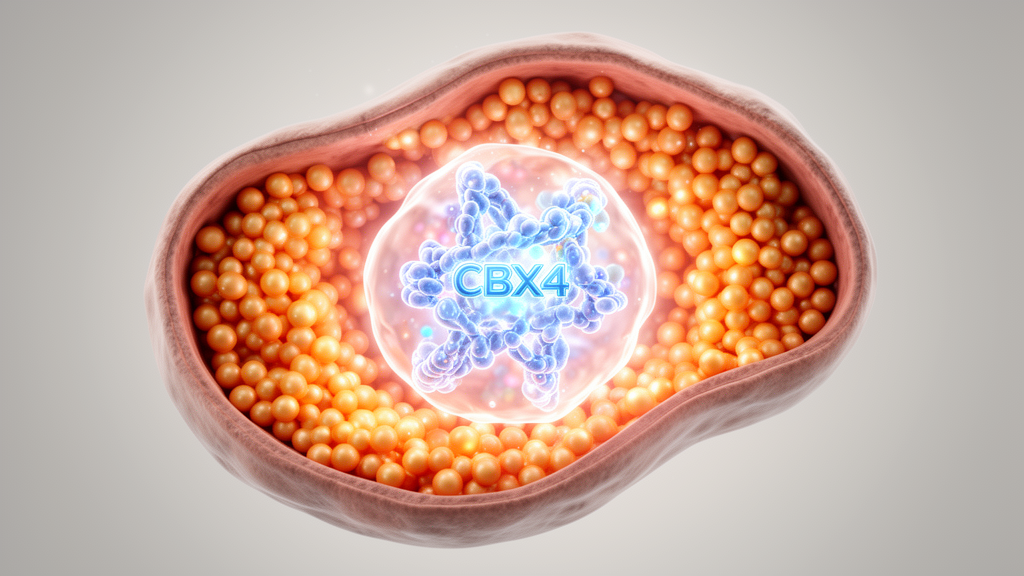
A regulatory mechanism centered on the Polycomb group protein Chromobox 4, or CBX4, preserves insulin-producing pancreatic beta cells against cellular senescence and metabolic decline, according to investigations conducted in cell models and experimental mice. Working across human islet single-cell sequencing datasets, mouse genetics, and cell culture systems, researchers examined why insulin-secreting beta cells deteriorate during aging and under the stress of type 2 diabetes. The authors observed that CBX4 expression progressively declines in islets isolated from middle-aged and older mice, as well as in diabetic mouse models and human beta-cell populations marked by senescent signatures. By maintaining the abundance of the transcription factor NEUROD1, CBX4 coordinates transcriptional programs that sustain calcium influx, protect mitochondrial respiration, and support the robust release of insulin in response to glucose stimulation.
The study began by analyzing publicly available single-cell RNA sequencing datasets from the Human Pancreas Analysis Program, which profiled pancreatic islets obtained from healthy human donors and patients diagnosed with type 2 diabetes. Dimensionality reduction grouped the human beta cells into ten transcriptionally distinct clusters, and application of the SenMayo senescence gene signature pinpointed three distinct clusters representing senescent cellular populations. Across these senescent clusters, transcript levels of CBX4 were substantially lower than those recorded in non-senescent beta cells. To confirm this pattern across mammalian aging, the team quantified CBX4 protein and transcript abundance in islets isolated from young two-month-old, middle-aged twelve-month-old, and aged eighteen-month-old C57BL/6J mice. In islets from older animals, CBX4 expression showed an inverse correlation with established cellular senescence markers, specifically p16INK4a and p21Cis1, while physiological testing confirmed higher fasting glucose and increased insulin resistance in the older cohorts.
Further laboratory assessments revealed that CBX4 is selectively concentrated within pancreatic endocrine tissue rather than surrounding digestive structures. In four-month-old male and female mice, quantitative measurements established that CBX4 protein and messenger RNA levels were approximately 24-fold higher in isolated pancreatic islets compared to adjacent exocrine tissue. Fluorescence-activated cell sorting separating beta cells from alpha cells confirmed that CBX4 was predominantly enriched within the beta-cell fraction. When cellular senescence was experimentally induced in the MIN6 mouse beta-cell line or in isolated mouse and human islets using hydrogen peroxide or the chemotherapeutic agent doxorubicin, CBX4 expression fell significantly alongside reciprocal increases in p16INK4a. Similar downregulation of CBX4 was observed in metabolic disease models, including db/db diabetic mice and wild-type mice maintained on a high-fat diet for twenty weeks, establishing a consistent correlation between CBX4 deficiency and islet senescence.
To establish whether losing CBX4 directly causes cellular decline, the investigators deployed both short interfering RNA in cell lines and an inducible beta-cell-specific knockout mouse model. Transfecting MIN6 cells with specific small interfering RNA reduced Cbx4 transcript levels by approximately 70 percent, triggering marked upregulation of p16INK4a and p21Cis1 alongside an accumulation of senescence-associated beta-galactosidase activity. Cellular respiration profiling revealed that Cbx4 knockdown impaired mitochondrial oxygen consumption rates and reduced the cellular ATP-to-ADP ratio, leading to significant deficits in glucose-stimulated insulin secretion, total insulin content, and insulin gene expression. Conversely, introducing a Cbx4 expression plasmid achieved a roughly 200-fold elevation in transcript levels, which expanded the pool of insulin secretory granules, elevated the ATP-to-ADP ratio, and enhanced biphasic insulin secretion across isolated mouse islets.
In vivo genetic studies reinforced these findings through RIP-Cre-mediated conditional deletion of Cbx4 exons 1 and 2 in mice. In these beta-cell-specific knockout animals, Cbx4 expression was almost completely abolished within pancreatic islets while remaining essentially unaffected in non-pancreatic metabolic organs like liver, kidney, and adipose tissue. Animals maintained on a standard diet displayed heightened senescence-associated beta-galactosidase staining in pancreatic sections as early as four months of age, an effect that intensified further by eighteen months. Seahorse respirometry of islets from eighteen-month-old knockout mice confirmed diminished basal oxygen consumption rates in response to glucose, accompanied by decreased ATP production, a four-fold reduction in mature insulin granules under transmission electron microscopy, blunted dynamic insulin secretion during islet perifusion, and clear glucose intolerance during metabolic tolerance tests.
The phenotypic consequences of CBX4 deficiency intensified when animals were challenged with metabolic stress in the form of a 60 percent high-fat diet. Knockout mice fed this diet displayed accelerated increases in body weight, higher fasting glucose, elevated insulin resistance indices, and earlier emergence of senescent islets, where the proportion of beta-galactosidase-positive cells reached 34.5 percent compared to 23.5 percent in control animals after twenty weeks. To assess therapeutic reversibility, the researchers delivered adeno-associated virus serotype vectors encoding Cbx4 under the control of the Insulin 2 promoter through retrograde pancreatic intraductal infusion into diet-induced obese mice. This targeted gene transfer produced a roughly 12-fold increase in islet Cbx4 levels within seven days. Re-establishing CBX4 expression alleviated cellular senescence markers, reduced inflammatory senescence-associated secretory phenotype cytokines such as interleukin-6, interleukin-8, and interleukin-1-alpha, restored mitochondrial respiration, and markedly improved systemic glucose tolerance and insulin sensitivity.
To identify the molecular partners executing CBX4-mediated protection, the investigators performed co-immunoprecipitation followed by liquid chromatography-tandem mass spectrometry in MIN6 cells. Among 348 enriched interacting proteins, the lineage-defining transcription factor NEUROD1 emerged as a prominent candidate. Subsequent binding assays using recombinant purified proteins synthesized in bacterial expression systems demonstrated a direct, concentration-dependent physical interaction between CBX4 and NEUROD1. Bimolecular fluorescence complementation verified that this interaction occurs primarily within the cell nucleus. Although genetic deletion or ectopic expression of Cbx4 altered NEUROD1 protein abundance in both MIN6 cells and primary islets, NeuroD1 transcript levels remained unaltered, demonstrating that CBX4 stabilizes NEUROD1 through post-translational regulation rather than transcriptional activation.
Structural dissection showed that CBX4-mediated stabilization depends specifically on its first SUMO-interacting motif, designated SIM1. Utilizing systematic CBX4 deletion mutants, including chromodomain alterations and motif deletions, researchers found that deleting SIM1 abolished both the physical interaction with NEUROD1 and the catalytic conjugation of SUMO1 to NEUROD1 at lysine 38. Computational mapping combined with site-directed mutagenesis identified lysine 38 as the primary target residue for SUMOylation. Concurrently, database searches and immunoprecipitation assays identified the ubiquitin ligase NEDD4, which targets NEUROD1 for proteasomal degradation by attaching ubiquitin chains to the exact same lysine 38 residue. By adding SUMO1 to lysine 38 and driving the assembly of liquid-liquid phase-separated nuclear condensates that recruit NEUROD1 while excluding NEDD4, CBX4 prevents ubiquitin-mediated degradation and prolongs NEUROD1 protein stability.
Genome-wide Cleavage Under Targets and Tagmentation profiling demonstrated how preserved NEUROD1 drives downstream transcriptional protective programs. In cells overexpressing Cbx4, NEUROD1 binding was enriched at promoter regions near transcription start sites, showing prominent enrichment in gene pathways governing insulin secretion and calcium-dependent exocytosis. Integrative genomics and chromatin immunoprecipitation revealed divergent regulation of two primary promoter targets: NEUROD1 directly bound to the Insulin 2 promoter to stimulate insulin transcription, while simultaneously binding to the promoter of Camk2n1 to repress its expression. Because Camk2n1 encodes an endogenous inhibitor of Ca2+/calmodulin-dependent protein kinase II, suppressing its transcription maintained CaMKII phosphorylation, elevated glucose-stimulated cytosolic and mitochondrial calcium influx, and preserved mitochondrial membrane potential.
The study also identified upstream mechanisms governing the age-related loss of CBX4 itself. While pharmacological inhibition of histone H3 lysine 27 trimethylation did not alter CBX4 abundance in beta cells, promoter screening and electrophoretic mobility shift assays identified STAT5A as an upstream transcriptional activator that directly binds the Cbx4 promoter. STAT5A expression declined in islets from aged animals, diabetic db/db mice, and cells exposed to oxidative stressors. Ectopic expression of Stat5a in beta cells via adeno-associated virus infusion restored CBX4 expression, suppressed senescence markers, and countered diet-induced dysfunction. The authors noted that future investigations should explore the biophysical properties and dynamics of NEUROD1 nuclear condensates in greater detail and validate these therapeutic axes across broader cohorts of human donor islets stratified by donor age and metabolic status.
Subject of Research: Pancreatic beta-cell senescence and regulation of insulin secretion by CBX4 and NEUROD1
Article Title: CBX4 stabilizes NEUROD1 through SUMO-ubiquitin crosstalk to delay β-cell senescence
Article References: Su, L., Liu, Y., Hu, Q., Chen, H., Qin, Y., Xu, C., Gao, K., Zhou, Y., Yang, Y., Liu, J., Pan, Y., Zhang, Y., Huo, F., Zhou, X., Liu, H., Jin, L., & Zhang, F. (2026). CBX4 stabilizes NEUROD1 through SUMO-ubiquitin crosstalk to delay β-cell senescence. Nature Communications, 17(1), Article 10589. https://doi.org/10.1038/s41467-026-77536-7
Image Credits: AI Generated
DOI: 10.1038/s41467-026-77536-7
Keywords: CBX4, NEUROD1, pancreatic beta cells, cellular senescence, type 2 diabetes, insulin secretion, SUMOylation, NEDD4, ubiquitination, mitochondrial bioenergetics, calcium signaling, CAMK2N1, CaMKII, STAT5A, biomolecular condensates, islet biology, glucose tolerance