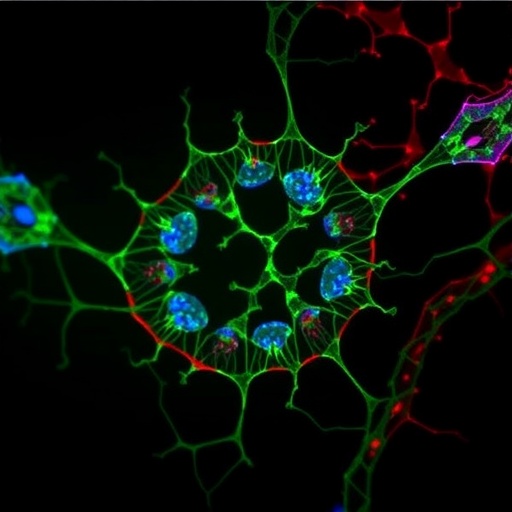
In the fast-evolving landscape of neurobiology, a groundbreaking study published in Experimental & Molecular Medicine has unveiled critical insights into the molecular mechanisms governing peripheral nerve regeneration. The research, spearheaded by Kim and colleagues in 2026, dissects the nuanced roles of QKI protein isoforms, specifically QKI-6 and QKI-7, in directing Schwann cell lineage progression—a pivotal process for effective nerve repair. These findings mark a significant leap in our understanding of nerve regeneration, a domain with profound implications for treating neurodegenerative diseases and nerve injuries.
Peripheral nerves, vital conduits of sensory and motor information, face constant risk of injury due to trauma or disease. Unlike the central nervous system, peripheral nerves boast a remarkable capacity for self-repair, largely attributed to the dynamic behavior of Schwann cells. Schwann cells undergo lineage progression—a transformation journey from immature progenitors to mature myelinating or non-myelinating cells—that facilitates axon remyelination and functional recovery. However, the precise molecular switches that orchestrate this progression have remained elusive until now.
The QKI (Quaking) family of RNA-binding proteins has garnered attention for their diverse regulatory roles in RNA metabolism, including splicing, stability, and translation. Kim et al.’s study reveals that among the QKI isoforms, QKI-6 and QKI-7 wield distinct, isoform-specific functions in Schwann cells. This selectivity deepens the complexity of post-transcriptional control in nerve regeneration, indicating that these isoforms are not functionally redundant but instead finely tune Schwann cell fate and behavior.
A detailed molecular dissection within the study demonstrates that QKI-6 primarily promotes the transition of Schwann cells towards a lineage compatible with remyelination. By enhancing the expression of myelin-related genes, QKI-6 supports the re-establishment of the myelin sheath around axons, a critical factor for rapid nerve impulse conduction. The upregulation of these genes suggests that QKI-6 acts as a pivotal enhancer of the regenerative microenvironment following peripheral nerve injury.
Conversely, QKI-7 is shown to influence Schwann cell proliferation and dedifferentiation. This isoform appears to maintain Schwann cells in a more plastic, progenitor-like state, which is essential during the initial phases of nerve repair when cells must proliferate and migrate to the injury site. Such functional divergence between QKI-6 and QKI-7 underscores a sophisticated regulatory axis, where temporal and spatial expression of these proteins modulates the balance between regeneration readiness and differentiation.
Applying advanced genetic techniques, the research team utilized knockdown and overexpression models in vivo, particularly in rodent sciatic nerve injury models, to delineate the regenerative capacities modulated by these isoforms. The outcome was striking: animals with QKI-6 overexpression exhibited accelerated remyelination and improved functional recovery measured by electrophysiological and behavioral assays. Meanwhile, QKI-7 modulation influenced early proliferative responses crucial for scaffold formation but had less impact on eventual remyelination efficiency.
These findings open new therapeutic avenues that could exploit isoform-specific modulation. By selectively enhancing QKI-6 activity, treatments may drive Schwann cells to bolster remyelination, thereby reducing recovery time and improving outcomes for patients suffering from nerve injuries. Conversely, transient amplification of QKI-7 might prime the nerve environment during acute injury phases, facilitating Schwann cell mobilization and repair preparation.
The insights offered by Kim et al. also provide a valuable framework to interrogate molecular pathologies underlying peripheral neuropathies and demyelinating conditions such as Charcot-Marie-Tooth disease and Guillain-Barré syndrome. If dysregulation of QKI isoforms contributes to impaired Schwann cell function in these diseases, targeted therapies might restore normal Schwann cell dynamics and halt disease progression.
Beyond peripheral nerve biology, the isoform-specific functions of QKI proteins invite broader consideration in other regenerative contexts and tissue types. RNA-binding proteins, with their capacity to orchestrate complex post-transcriptional regulatory networks, may operate similarly in neural stem cells or oligodendrocyte progenitors in the central nervous system. This study thus paves the way for exploring QKI isoforms as master regulators in diverse regenerative processes.
Crucially, the study integrates multi-omic analyses, including transcriptomics and proteomics, to map the downstream targets and interacting partners of QKI-6 and QKI-7. These investigations illuminate a web of regulatory networks involving lipid metabolism, cytoskeletal organization, and cell adhesion molecules, all integral to Schwann cell function and nerve repair. Understanding these networks is indispensable for designing multifaceted interventions that reflect the biological reality of nerve regeneration.
From a methodological standpoint, the application of advanced RNA immunoprecipitation and cross-linking techniques enabled precise identification of the RNA substrates bound by each QKI isoform. This precision affords a nuanced view of how alternative splicing and mRNA localization are governed during Schwann cell differentiation—a research paradigm that could extend to various neurobiological inquiries.
Importantly, Kim and colleagues emphasize the temporal dynamics of QKI isoform expression post-injury, noting a carefully choreographed shift from QKI-7 dominance in early post-injury phases to increasing QKI-6 levels during remyelination. This transition suggests that effective nerve repair hinges on the timely regulation of QKI isoforms, further highlighting potential therapeutic windows for intervention.
The translational potential of these findings cannot be overstated. Peripheral nerve injuries affect millions worldwide, often leading to chronic pain, functional deficits, and diminished quality of life. Current treatment options remain limited and primarily surgical, with no approved pharmacological agents that directly enhance nerve regeneration. The identification of druggable targets such as QKI isoforms offers hope for developing novel, targeted therapies.
Moreover, the study identifies small molecule modulators as promising candidates for selectively manipulating QKI isoform activity. Future research geared towards high-throughput screening and drug development could harness these modulators to optimize Schwann cell-mediated repair, moving towards clinical applicability.
In sum, Kim et al.’s work constitutes a landmark advance in regenerative neurobiology. By elucidating the isoform-specific roles of QKI-6 and QKI-7 in Schwann cell lineage progression and peripheral nerve regeneration, this study reveals an intricate molecular dance governing nerve repair. The potential to translate these discoveries into transformative therapies heralds a new era in treating nerve injuries and related neuropathies, promising renewed hope for patients and clinicians alike.
Subject of Research: Schwann cell lineage progression and peripheral nerve regeneration mediated by isoform-specific roles of QKI-6 and QKI-7
Article Title: Isoform-specific roles of QKI-6 and QKI-7 direct Schwann cell lineage progression and enhance peripheral nerve regeneration
Article References:
Kim, HS., Kim, J.Y., Lee, JY. et al. Isoform-specific roles of QKI-6 and QKI-7 direct Schwann cell lineage progression and enhance peripheral nerve regeneration. Exp Mol Med (2026). https://doi.org/10.1038/s12276-026-01708-0
Image Credits: AI Generated
DOI: 01 May 2026
Tags: experimental molecular medicine neuroregenerationmolecular regulation of nerve remyelinationperipheral nerve injury recovery processesQKI isoforms in neurobiologyQKI protein isoforms and axon repairQKI-6 role in Schwann cell regenerationQKI-7 function in peripheral nerve repairRNA metabolism in Schwann cellsRNA-binding proteins in nerve regenerationSchwann cell differentiation pathwaysSchwann cell lineage progression mechanismstherapeutic targets for neurodegenerative diseases