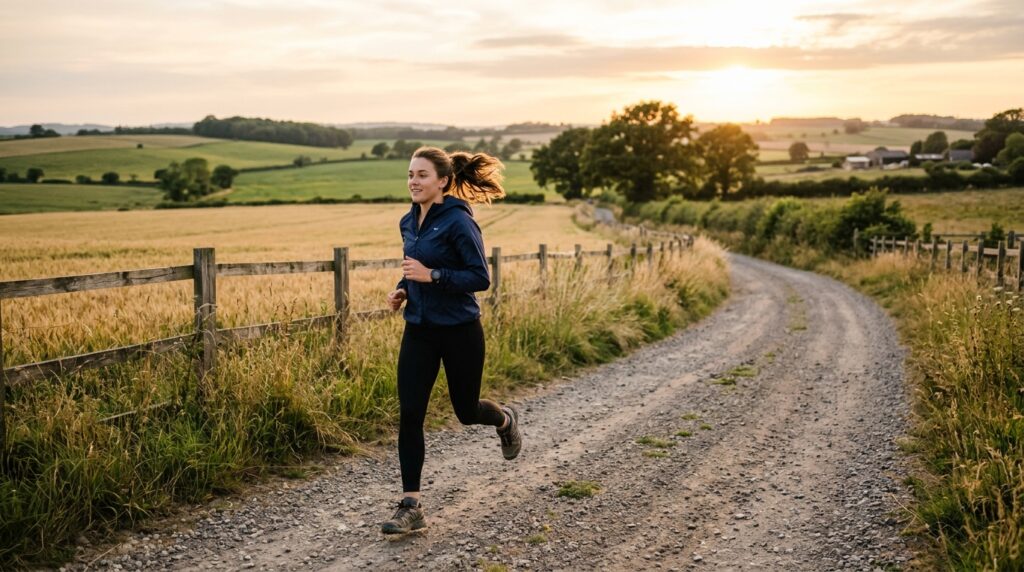
Young rural women face multifaceted environmental barriers to maintaining active lifestyles, though rural surroundings also provide notable supports, according to a qualitative research study published in BMC Public Health. Investigators Karen L. Webb and Jongwon Lee set out to examine how environmental factors shape physical activity among young women living in rural settings. While existing public health knowledge acknowledges that environmental contexts, including built and social factors, influence physical movement, less has been understood regarding how young rural women experience these dynamics in their daily lives. The primary aim was to understand both perceived barriers and facilitators to active living.
To explore these environmental influences, the researchers utilized a descriptive qualitative study design centered on the firsthand perspectives of young rural women. Data collection involved nineteen participants who completed individual semi-structured interviews concerning their daily physical activity and their surrounding environment. Webb and Lee then evaluated the interview responses through inductive thematic analysis, an analytical method that derived patterns directly from the participants’ reported experiences regarding the everyday conditions that facilitate or impede an active lifestyle.
From the inductive qualitative analysis, the authors identified four overarching themes: the built environment, the natural and geographic environment, the structural environment, and the social environment. Throughout the interview discussions, participants mainly described barriers to physical activity rather than positive facilitators. When discussing the built environment and natural surroundings, the women highlighted poor infrastructure, limited access to exercise facilities, and weather-related issues as substantial obstacles that disrupted or prevented physical activity routines in their communities.
Beyond built facilities and geographic factors, participants identified significant impediments rooted in the structural and social environments. Structural barriers prominently included challenges related to transportation and the financial costs connected to pursuing active lifestyles. In addition, participants pointed to social environmental factors and safety concerns, explaining how issues surrounding safety and social contexts constrained their daily opportunities for physical movement. These combined reports demonstrated that rural challenges extend across infrastructural, geographic, financial, and social domains.
The study findings further revealed that while rural environments can constrain physical activity for young women, they also offer support for active living. Webb and Lee emphasized that these findings highlight the need to address pervasive barriers while actively leveraging existing support in rural communities. BMC Public Health shared the peer-reviewed research early to provide faster access to the accepted study, which carries a permanent digital object identifier ahead of the final version of record. The authors concluded that the insights gained may help guide targeted strategies to promote physical activity among young rural women.
Subject of Research: Environmental influences on physical activity among young rural women
Article Title: Environmental influences on physical activity among young rural women: a qualitative study
Article References: Webb, K. L., & Lee, J. (2026). Environmental influences on physical activity among young rural women: a qualitative study. BMC Public Health. https://doi.org/10.1186/s12889-026-30079-4
Image Credits: AI Generated
DOI: 10.1186/s12889-026-30079-4
Keywords: physical activity, rural health, young women, built environment, social environment, qualitative research, thematic analysis, public health, Environmental, influences, physical, activity