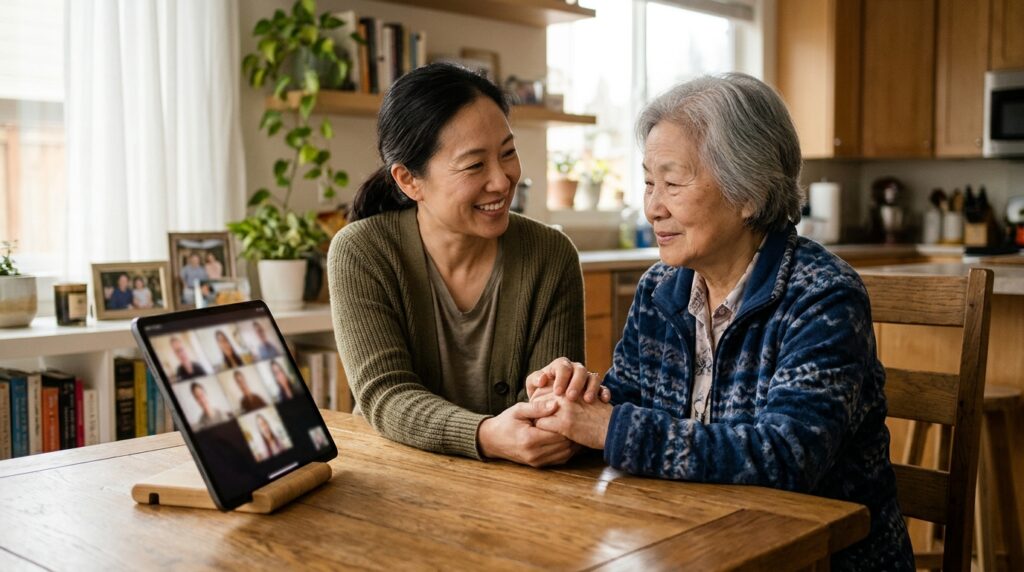
Chinese-American family caregivers of people with dementia reported a greater sense of control and competence in their caregiving roles, alongside more positive views of caregiving, after taking part in a seven-week digital support program, according to findings from researchers at George Mason University. The peer-reviewed study, published on October 13, 2026, in Alzheimer’s & Dementia: Behavior & Socioeconomics of Aging under the digital object identifier 10.1002/bsa3.70115, evaluated an updated Chinese-language support intervention titled “Wellness enhancement for caregivers 2.0: feasibility, acceptability, and preliminary 12-month outcomes for Chinese American dementia caregivers.” In the research assessing WECARE 2.0, scores measuring positive caregiving experiences rose 96 percent following the program, nearly doubling from an average baseline of 12.62 to 24.76 on a 36-point scale. Furthermore, scores measuring positive caregiving experiences remained statistically significantly higher than baseline among the 36 caregivers who completed the study’s 12-month follow-up assessment.
The researchers underscored that few studies have focused on Chinese-American dementia caregivers, despite the specific challenges members of this population face. Language barriers and a lack of familiarity with United States support services can make it hard for these caregivers to find help. At the same time, cultural expectations about caring for older relatives may place much of the onus on family members. Developed to address these specific needs, WECARE—short for Wellness Enhancement for Caregivers—takes a practical approach by delivering short lessons digitally. The WECARE 2.0 support program was developed by Professor Y. Alicia Hong of the Department of Health Administration, Policy, and Informatics at George Mason University and colleagues.
During the WECARE 2.0 study, participating caregivers received brief lessons through the WeChat platform. The digital curriculum provided guidance on handling difficult caregiving situations, communicating with family members and health professionals, managing stress, and finding local services. In addition to the short digital lessons, optional online group meetings gave caregivers an opportunity to connect with others facing similar challenges. Reflecting on the design and purpose of the intervention, lead author Yi-Wen Li, a Health Services Research PhD student, stated: “Our findings suggest this may be a promising way to make caregiver support more relevant and easier to fit into daily life.” Li added: “We can’t take away the difficulties of caring for someone with dementia, but helping caregivers feel more capable and find something positive in their role is meaningful.”
The pilot study included 48 Chinese-American dementia caregivers, most of whom were women, with an average age of 64. Researchers surveyed the participants before and after the seven-week program, and then surveyed them again 12 months after the study began. The feasibility and acceptability of the program were reflected in participant engagement and feedback. Of the 48 caregivers enrolled in the study, 94 percent completed the first follow-up assessment administered immediately after the seven-week intervention, and 75 percent completed the one-year assessment. In addition to high completion rates across the follow-up periods, participants gave the digital support program high ratings for satisfaction and usefulness.
The survey results revealed nuanced outcomes across various dimensions of caregiver wellbeing. Caregivers reported a significant improvement in their sense of control and competence after the program, although the baseline-to-12-month change was not statistically significant. In contrast, scores measuring positive caregiving experiences demonstrated sustained improvements, rising from a baseline average of 12.62 to 24.76 on the 36-point scale and remaining significantly higher than baseline at the 12-month follow-up among the 36 caregivers who completed it. Despite those gains in positive views and immediate sense of competence, researchers found no statistically significant changes in depressive symptoms, caregiving burden, or life satisfaction among participants overall.
Subgroup analyses provided additional exploratory observations for future research. Caregivers who entered the study with elevated depressive symptoms or limited English proficiency showed encouraging changes in several measures. However, the researchers noted that the research could not establish whether these groups benefited more than others. The investigators also highlighted critical methodological limitations of the pilot project. Because the pilot was small and had no comparison group, researchers cannot determine whether WECARE 2.0 caused the improvements observed among participants.
Additional study authors on the publication include Kang Shen, a Health Services Research PhD student, and Lily Wang, a professor in the Department of Statistics, both from George Mason University; Ye (Ashley) Gao of William & Mary; Huixing Kate Lu of the Chinese Culture and Community Service Center; and Weijing Shi and Rui Huang from CaringKind. Building on these preliminary findings, Hong received a new $3 million grant last year from the National Institute on Aging to further refine the support intervention. The resulting program, WECARE 3.0, includes a mobile app and an accompanying website available in English and Chinese. It will be tested through a randomized controlled trial among 200 dementia caregivers.
Subject of Research: Feasibility and preliminary outcomes of the WECARE 2.0 digital support program for Chinese-American dementia caregivers
Article Title: Positive views of caregiving nearly double for dementia caregivers after support program
Article References: Positive views of caregiving nearly double for dementia caregivers after support program. Original publication (Bibliographic details unavailable.)
Image Credits: AI Generated
DOI: Not provided
Keywords: dementia caregiving, Chinese-American caregivers, WECARE 2.0, digital health intervention, caregiver support, George Mason University, WeChat, health services research, Positive, views, caregiving, nearly