In a groundbreaking advancement that could redefine sustainable chemical manufacturing, researchers at the Dalian Institute of Chemical Physics (DICP) of the Chinese Academy of Sciences have unveiled a novel plasma-driven approach to synthesize high-value cyanohydrins directly from nitrogen (N₂) and methane (CH₄) under remarkably mild conditions. This pioneering work, recently published in Nature Synthesis, introduces an innovative plasma-cascade mechanism that breaks through traditional synthetic limitations. It presents an environmentally friendly and energy-efficient alternative to conventional processes that rely heavily on toxic intermediates and energy-intensive feedstocks.
Cyanohydrins, a valuable class of compounds characterized by the presence of a nitrile and hydroxyl group on the same carbon, serve as pivotal intermediates for the manufacture of pharmaceuticals, including antidepressants and antiviral agents, as well as synthetic polymers. Their industrial synthesis conventionally depends on a multi-step protocol entailing the production of ammonia and hydrogen cyanide (HCN), both of which contribute substantially to the environmental footprint and involve significant safety hazards due to their toxicity and high reactivity. Consequently, the quest for a safer, more sustainable, and streamlined synthetic route has inspired intense research efforts for decades.
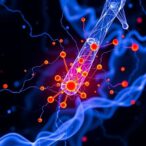
The team led by Professors Deng Dehui, Yu Liang, and Huang Rui has surpassed these long-standing hurdles by cleverly harnessing non-thermal plasma chemistry to initiate radical cascades, sparking a transformative reaction sequence. Non-thermal plasma, an ionized gas comprising energetic electrons without significantly heating the bulk gas medium, creates a reactive environment rich in radical species such as methyl (·CH₃), hydrogen (·H), and electronically excited nitrogen molecules. Through this high-energy yet low-temperature plasma excitation, otherwise inert molecules such as N₂ and CH₄ become chemically activated, enabling them to directly participate in complex bond formation steps that are traditionally inaccessible under mild conditions.
The core innovation involves the direct synthesis of cyclohexanone cyanohydrin (Cy(OH)CN) by reacting nitrogen and methane in the presence of cyclohexanone, mediated by plasma-generated radicals. According to the study, hydrogen radicals generated within the plasma first activate the carbonyl (C=O) group of cyclohexanone, driving the formation of hydroxy-cyclohexyl radical intermediates. These intermediates subsequently engage in carbon-carbon coupling with methyl radicals derived from methane, yielding α-CHₓ cyclohexanol derivatives. The crucial formation of a carbon-nitrogen (C–N) bond then arises via interaction with electronically excited nitrogen species, which, with the assistance of hydrogen radicals, undergo cleavage of the formidable nitrogen-nitrogen triple bond (N≡N). This cascade ultimately culminates in the highly selective production of cyclohexanone cyanohydrin while generating ammonia as a valuable co-product.
Remarkably, this plasma-cascade process achieves an exceptional selectivity of 95.8% toward Cy(OH)CN, with a yield of 23.9% and a formation rate of 0.60 mmol per hour. These metrics represent a substantial leap in efficiency, especially considering the relative inertness and abundance of the initial reactants—nitrogen and methane—under mild operational parameters. The process deftly eschews the need for costly and hazardous intermediates like ammonia and hydrogen cyanide, minimizing both environmental impact and safety concerns, and thus embodying principles of green chemistry.
The implications of this breakthrough extend beyond mere synthetic novelty. It exemplifies a paradigm shift towards the direct, atom-efficient utilization of small-molecule feedstocks, especially abundant gases conventionally viewed as chemically inert or challenging to activate. By exploiting plasma-driven radical chemistry, the DICP team has opened a new vista for the rational design of synthetic methods that reconcile sustainability with industrial practicability.
In addition, the method offers a compelling template for the production of other high-value carbon-nitrogen-oxygen (C–N–O) compounds. The modularity of plasma activation and radical-mediated pathways could inspire future applications where direct functionalization of hydrocarbons and atmospheric nitrogen is desired. This presents exciting prospects for mitigating reliance on fossil fuel–derived intermediates and reducing the carbon footprint of chemical manufacturing on a global scale.
The intricacy of the reaction mechanism was elucidated through extensive experimental analysis coupled with advanced spectroscopic and kinetic studies, revealing the dynamic interplay between plasma-generated radicals and molecular substrates. The control over radical generation and subsequent cascade reactions underscores the sophistication of the system, enabling high-fidelity bond construction amid reactive species’ complexity. This balance between radical reactivity and selectivity is a hallmark achievement in plasma chemistry and reactive intermediate manipulation.
Furthermore, the production of ammonia as a co-product aligns with broader sustainability goals, as ammonia itself is an essential chemical feedstock and fertilizer component. The co-generation of ammonia alongside target cyanohydrins from the same feedstocks hints at the economic attractiveness and resource efficiency of the plasma-cascade method, potentially integrating multiple chemical manufacturing streams into single, streamlined processes.
Professor Deng stated, “Our study establishes a new green reaction pathway for the direct one-step synthesis of cyanohydrins from nitrogen and methane with high selectivity, offering a new strategy for the direct and efficient utilization of inert small molecules under mild conditions.” This statement encapsulates the transformative potential of the research, envisioning a future where sustainable chemistry harnesses the full potential of earth-abundant molecules through innovative plasma technologies.
On a practical front, the process operates under ambient or near-ambient temperatures and pressures, significantly reducing energy input relative to conventional high-temperature catalytic systems. The non-thermal plasma conditions also circumvent catalyst deactivation issues, often encountered in traditional heterogeneous catalysis involving nitrogen fixation or methane activation. This robustness and operational simplicity may facilitate scalability and industrial adoption.
Overall, this research epitomizes the synthesis of fundamental discovery and applied innovation, placing non-thermal plasma-enabled radical cascade reactions at the forefront of sustainable chemical manufacturing. It holds promise for accelerating the transition towards green production methodologies in the pharmaceutical and materials sectors, aligning industrial practice with environmental stewardship.
As industries worldwide grapple with the imperative of carbon neutrality and resource efficiency, such inventive approaches to activating inert molecules and constructing complex organic frameworks may become cornerstones of next-generation chemical processes. The DICP team’s work vividly illustrates how the strategic convergence of plasma physics, radical chemistry, and molecular engineering can unlock new chemical frontiers with profound implications.
Subject of Research: Not applicable
Article Title: Direct plasma synthesis of a high-value C–N–O compound with inert N₂ and CH₄
News Publication Date: 21-Apr-2026
Web References:
https://doi.org/10.1038/s44160-026-01055-y
References:
Not applicable
Image Credits: Dalian Institute of Chemical Physics (DICP)
Keywords
Chemical engineering, plasma chemistry, radical cascade, nitrogen fixation, methane activation, cyanohydrins, green synthesis, cyclohexanone cyanohydrin, sustainable chemistry, non-thermal plasma, radical intermediates, ammonia co-production
Tags: alternative to toxic chemical feedstockschemical synthesis without ammoniaeco-friendly cyanohydrin productionenergy-efficient organic synthesisgreen chemistry advancementshigh-value pharmaceutical intermediatesinnovative nitrile compound synthesismild condition chemical synthesisnitrogen and methane chemical conversionplasma-cascade reaction mechanismplasma-driven cyanohydrin synthesissustainable chemical manufacturing methods