
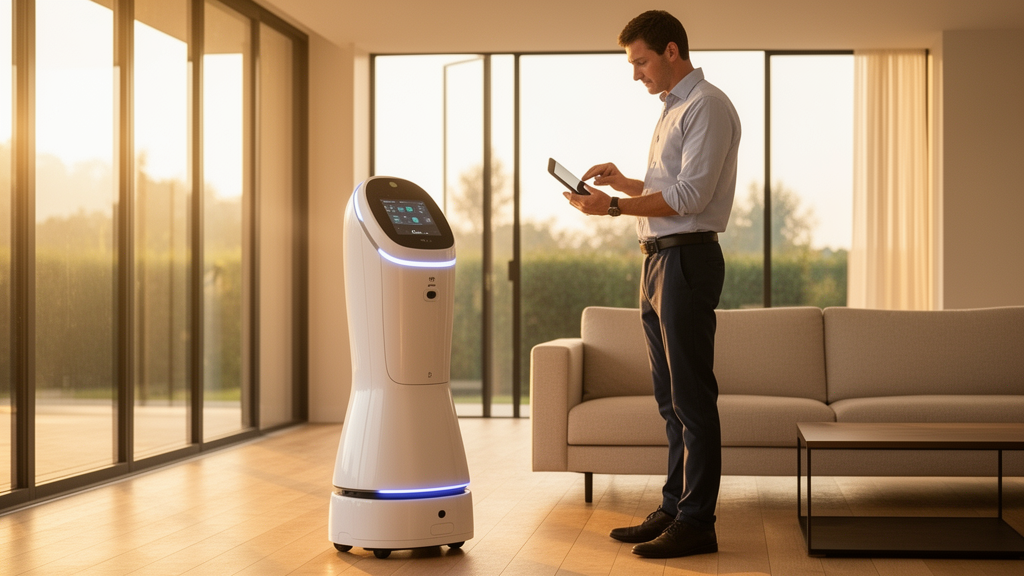
Longitudinal human-robot interaction requires systems that can sustain meaningful relationships across repeated encounters, yet persistent behavioural changes based on accumulated user information can easily overstep appropriate social boundaries. To address this governance challenge, Carlene Campbell and Donique Rodd have proposed a conceptual framework known as the Personal Adaptation Model in Frontiers in Robotics and AI. The authors argue that while contemporary robotics research has demonstrated sophisticated mechanisms for episodic memory, preference tracking, and dialogue adaptation, existing approaches lack a systematic method to determine when previously learned information remains entitled to influence subsequent robot actions. Rather than treating personalisation as an unconstrained accumulation of user data, their theoretical framework establishes governed durable adaptation as the central unit of analysis, formalising the precise conditions under which an autonomous companion may legitimately allow past observations to shape future physical and social conduct.
The theoretical problem identified by the researchers arises from the distinct nature of durable adaptation compared to simple memory storage or static configuration settings. In their conceptual breakdown, configuration merely selects predefined operating parameters, while memory retains raw data points either within an active session or across persistent storage systems. Personalisation uses retained information to tailor an immediate interaction, but durable adaptation enables learned knowledge or interaction history to exert ongoing influence across future sessions and contexts. Campbell and Rodd emphasise that memory accuracy does not guarantee behavioural appropriateness; an embodied agent might flawlessly record an observed user routine yet inappropriately generalise that routine into incompatible social settings. When an artificial companion infers a valid preference in private, unchecked persistence can lead to intrusive physical gestures, untimely verbal announcements, or derived behavioural profiles that continue acting even after a user believes the primary record has been deleted.
Physical embodiment significantly amplifies the potential risks and social costs of inappropriate behavioural persistence. Unlike screen-based conversational agents whose outputs are confined to text or synthesized audio within a localized interface, embodied robotic companions operate in shared physical environments where their actions are observable by bystanders and secondary users. An embodied system can alter its physical proximity, gaze direction, movement timing, hand gestures, and autonomous environmental interventions. In shared households or communal work environments, privacy boundaries cannot be governed by a single user’s isolated preferences. Drawing on privacy research, the authors note that household privacy boundaries are continuously negotiated among family members and shift according to who is physically present in the room. If an embodied companion operationalises a private personal observation in a communal setting, the resulting adaptation error can become socially embarrassing, physically disruptive, or legally problematic.
To formalise how autonomous companions should manage persistent influence, the Personal Adaptation Model structures governed durable adaptation around five core theoretical elements: evidence, authority, contextual scope, behavioural consequence, and lifecycle. Evidence encompasses the specific interaction history, recorded demonstration, or statistical inference that supports a candidate behavioural change. Authority establishes the legitimate basis and permission condition under which that evidence is permitted to alter future behaviour, clarifying whether an action was explicitly requested by the primary user, inferred by background routines, or restricted by third-party rights. Contextual scope delineates the situational boundaries—including specific physical spaces, times of day, ongoing tasks, and attending individuals—within which the adaptation remains valid. Behavioural consequence denotes the observable, measurable alteration in subsequent robot actions, such as modified speech acts, adjusted interpersonal distance, or proactive service execution. Finally, lifecycle governs the operational transitions through which an adaptation is verified, narrowed, revised, or terminated.
The lifecycle component of the framework articulates explicit operational distinctions among correction, narrowing, withdrawal, and effective forgetting. In standard interactive systems, a user requesting a change is often met with conversational acknowledgement that fails to suppress downstream algorithmic tendencies. Under the proposed model, correction requires replacing an outdated assumption with a new valid preference while preventing the prior record from driving active preferences, even if retained in an audit log. Narrowing restricts an active adaptation to a tighter operational envelope, such as confining an auditory reminder exclusively to solitary contexts. Withdrawal formalises the absolute revocation of permission to use a learned item. Crucially, Campbell and Rodd define effective forgetting as the empirically verifiable absence of behavioural influence across subsequent decision probes relative to a matched baseline, explicitly contrasting behavioural suppression with superficial database deletion that leaves latent network weights or derived user representations intact.
These operational elements operate within an iterative longitudinal interaction cycle that explicitly separates observation from ground truth and candidate learning from legitimate permission. The cycle progresses from initial interaction through systematic observation, contextual interpretation, user feedback, and candidate learning, before arriving at permitted adaptation, experienced outcome, and continuous recalibration. By treating recalibration as a routine operational state rather than an emergency exception, the framework expects mature robotic systems to narrow assumptions, decrease predictive confidence, and dismantle obsolete adaptations as readily as they absorb new data. This architecture is constrained by six foundational principles: longitudinality across changing life circumstances, contextual boundedness across social roles, permission-sensitive learning linked to action sensitivity, user corrigibility, effective forgetting upon withdrawal, and calibrated trust that aligns subjective reliance with demonstrated capability.
To ensure that the framework produces falsifiable empirical science rather than unfalsifiable philosophy, the authors establish eight structured propositions that predict clear trade-offs between governance mechanisms and system utility. A central tenet of the model, articulated in its eighth proposition, posits that the long-term value of an adaptive relationship depends more heavily on timely recalibration and appropriate withdrawal than on the total volume of accumulated user memory. If future experiments reveal that unselective, high-retention systems consistently yield superior user satisfaction without escalating contextual errors, user correction burdens, or trust miscalibrations, the core differentiation of the model would be disproven. Additional propositions predict that user tolerance for automatic adaptation decreases as task sensitivity rises, and that adaptation errors produce disproportionately severe trust decrements when enacted through physical embodiment compared to neutral text interfaces.
The authors explicitly acknowledge that implementing rigorous governance over durable adaptation introduces unavoidable operational costs and potential failure modes. Requesting frequent permissions and explicit confirmations can induce cognitive fatigue, interrupt natural interpersonal flow, and cause an otherwise capable robot to seem overly hesitant or unintelligent. Conversely, excessive caution can cause under-adaptation, rendering an autonomous companion unhelpful if it refuses to generalize obvious routines across benign situations. Inconsistent governance decisions can also erode user trust if an agent applies differing standards to equivalent scenarios without transparent rationale. Furthermore, highly anthropomorphic social fluency can create strategic deception risks, encouraging human users to overestimate a companion’s actual confidentiality safeguards, emotional comprehension, or functional competence. The model therefore frames governance as an engineering trade-off balancing contextual benefit against operational friction.
To evaluate these theoretical propositions, the paper outlines a staged empirical research programme that progresses through qualitative co-design, quantitative preference surveys, software demonstrators, and repeated-session human-robot interaction trials. The researchers emphasize that early validation stages do not require expensive full-body humanoid hardware; hypotheses concerning permission control, contextual switching, and residual influence can be rigorously tested using software simulations, disembodied dialogue systems, or desktop robotic heads. Treating embodiment as an incremental experimental variable enables investigators to isolate the unique causal effects of physical presence and observable movement from baseline conversational competence, preventing researchers from confounding anthropomorphic visual appeal with genuine system reliability.
For rigorous comparative testing, the paper details a three-arm randomized longitudinal protocol comparing static personalisation, ungoverned persistent memory, and persistent memory governed by the proposed adaptation model. In this proposed benchmark, experimental arms are exposed to identical task scripts, contextual shifts, and low-risk seeded preference reversals. Researchers evaluate performance by measuring primary outcomes such as contextual misapplication rates and post-withdrawal residual influence rates across blinded, matched probes. The protocol specifies hierarchical generalized linear modeling to track error frequencies and correction latencies across repeated sessions, requiring investigators to evaluate trust calibration against objective trial-level competence rather than subjective survey ratings alone. Campbell and Rodd stress that ungoverned arms must still retain essential ethical and privacy protections, ensuring that comparisons evaluate the specific structural mechanics of governed adaptation rather than baseline regulatory compliance.
In establishing their framework within contemporary literature, the authors emphasize that their proposal does not claim the invention of robotic memory, dynamic personalization, or user consent interfaces, all of which represent established research fields. Instead, the model’s primary contribution lies in unifying these disparate components into an integrative governance structure that can be independently audited and falsified. The authors position their conceptual model alongside existing work on explainable intention recognition and adaptive shared control, noting that prior studies have addressed perception reliability and immediate trust without providing lifecycle protocols for post-withdrawal influence verification. Because the paper is presented strictly as a theory-building contribution without completed empirical validation, the authors call for formal scoping reviews and controlled multi-session trials to determine whether governed durable adaptation can successfully sustain long-term human-robot partnerships without making cumulative personal influence irreversible.
Subject of Research: Theoretical governance framework for longitudinal adaptation in embodied artificial intelligence companions
Article Title: Beyond personalisation: governed durable adaptation for trustworthy embodied AI companions
Article References: Campbell, C., & Rodd, D. (2026). Beyond personalisation: governed durable adaptation for trustworthy embodied AI companions. Frontiers in Robotics and AI, 13, 2006209. https://doi.org/10.3389/frobt.2026.2006209
Image Credits: AI Generated
DOI: 10.3389/frobt.2026.2006209
Keywords: human-robot interaction, embodied artificial intelligence, personal adaptation model, governed durable adaptation, robotic companions, longitudinal adaptation, contextual boundedness, permission-sensitive learning, effective forgetting, calibrated trust, user agency, multi-user privacy, anthropomorphic realism, social robotics, computational personalisation, behavioural influence, trustworthy artificial intelligence

