Malignant pleural disease and its frequent complication, malignant pleural effusion, present persistent clinical management challenges in advanced thoracic and metastatic cancers, according to a narrative review published in Pulmonary Therapy. The condition arises commonly from malignant pleural mesothelioma and lung cancer, notably non-small cell variants, as well as metastatic seeding from breast and ovarian malignancies. Within the pleural cavity, fluid accumulation occurs when malignant seeding of the parietal pleural membrane and lymphatic system overwhelms physiological drainage pathways, amplified by vascular endothelial growth factor-driven inflammation and marked endothelial hyperpermeability. Standard clinical guidelines established by British and American thoracic societies recommend symptom-directed drainage and chemical pleurodesis using sclerosants such as talc, alongside systemic anticancer therapies comprising chemotherapy and immunotherapy. However, while these established measures provide palliative relief from breathlessness, they exert negligible influence on local disease progression within the thoracic cage.
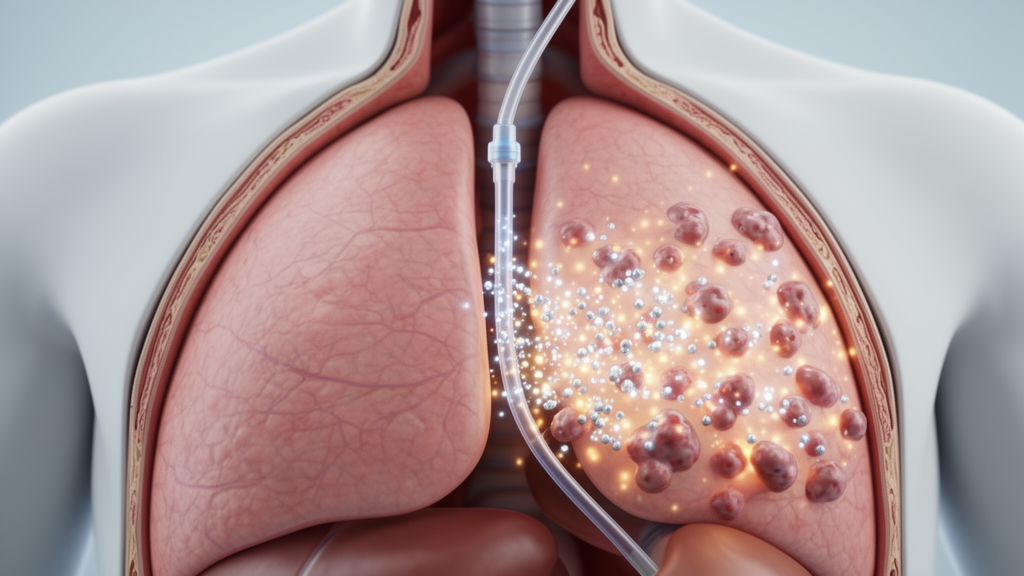
The therapeutic rationale for delivering antineoplastic agents directly into the pleural space rests on pharmacokinetic principles established more than four decades ago. Early mathematical simulations conducted in a standard seventy-kilogram human demonstrated that intracavitary drug administration yields extensive local retention, sustaining intracavitary concentrations well above concurrent plasma levels while minimizing systemic circulation absorption. Subsequent pharmacokinetic investigations contrasting intrapleural and intraperitoneal routes confirmed prolonged drug retention inside the thoracic cavity. Specifically, hyperthermic intrapleural administration of doxorubicin, mitomycin C, and cisplatin produced greater intracavitary drug exposure than intraperitoneal delivery, generating local bioavailability ten to twenty times greater than conventional intravenous infusions without escalating adverse systemic toxicity profiles. Clinically, direct thoracic access is established through chest tubes, indwelling pleural catheters inserted under local anesthesia, or surgical trocars utilized during minimally invasive video-assisted thoracic operations.
Early historical investigations into intrapleural cytotoxic agents primarily evaluated their potential utility as chemical sclerosants rather than antineoplastic treatments. Early comparative trials demonstrated that intrapleural bleomycin reduced effusion recurrence at thirty and ninety days relative to intrapleural tetracycline, but produced no measurable difference in overall patient survival while incurring substantial financial costs. Similarly, combinations of intrapleural cisplatin and cytarabine yielded an objective response rate of only thirty-nine percent at three weeks post-administration. Recent investigations have revisited local cytotoxic regimens by incorporating drug delivery modifications and alternative administration schedules. In a multicenter trial of eighty-six patients with malignant pleural disease, packaging methotrexate into tumor-derived microparticles combined with systemic chemotherapy improved local pleural effusion control compared to saline controls, although the intervention failed to alter tumor progression or overall survival. A corresponding study corroborated these findings using interleukin-2 as an active comparator.
Alternative localized anticancer agents have demonstrated measurable biological activity against both effusion accumulation and local tumor tissue. Intrapleural administration of p-toluenesulfonamide achieved effusion control alongside reduced thoracic tumor burden in human subjects, sustaining a median progression-free survival exceeding eighty days, while preclinical murine models achieved effusion suppression without requiring pleurodesis. Furthermore, an investigation evaluating sixty-two patients presenting with trapped, non-expandable lungs explored multi-day instillations of intrapleural cisplatin diluted in distilled water. This fractional administration protocol facilitated lung re-expansion, reduced daily pleural drainage volumes by an average of 383.5 milliliters, and yielded a median thoracentesis-free survival of 456 days. Nevertheless, full lung expansion was not achieved in any participant, and objective fluid volume reductions occurred in only 53.2 percent of the evaluated cohort, illustrating the persistent mechanical and biological obstacles governing advanced pleural malignancy.
To enhance drug penetration across pleural surfaces, investigators have developed specialized operative techniques, most prominently hyperthermic intrathoracic chemotherapy. Delivered under general anesthesia following surgical cytoreduction or adhesion resection, this modality circulates several liters of perfusate heated to between 43 and 45 degrees Celsius through chest tubes or thoracoscopic ports for over an hour. Thermal elevation enhances neoplastic cell permeability, promotes cellular apoptosis, and stimulates immune recognition through the release of tumor-associated antigens following cellular lysis. Murine models demonstrate that hyperthermia facilitates cisplatin penetration into malignant tissue, although effective drug concentrations remain largely confined to the peripheral margins of tumor deposits while recruiting innate and adaptive immune cells into the surrounding microenvironment. Clinical implementations across mesothelioma, lung, breast, ovarian, and thymic malignancies have demonstrated acceptable tolerability, with lower rates of chest pain and gastrointestinal toxicities than standard intrapleural chemotherapy instillations.
Clinical evaluations of hyperthermic intrathoracic chemotherapy have produced promising yet heterogeneous outcomes across varied histologies. A systematic meta-analysis reported superior objective response rates and quality-of-life scores with hyperthermic chemotherapy compared to conventional intrapleural chemotherapy in non-small cell lung cancer and mixed cohorts, though these advantages were absent in small-cell lung cancer or carcinomas of unknown primary origin. In comparative studies against indwelling pleural catheters, hyperthermic perfusion demonstrated comparable one-month effusion control that diverged favorably by the third month, accompanied by marked survival advantages among patients concurrently receiving targeted tyrosine kinase inhibitors. In that targeted subgroup, over half of hyperthermic chemotherapy recipients survived to forty-eight months, whereas all catheter-managed patients died within twelve months. However, no survival divergence occurred among patients receiving systemic cytotoxic chemotherapy or palliative care alone, pointing to potential synergy between local hyperthermia and systemic kinase inhibition.
Pressurized intrathoracic aerosol chemotherapy represents another emerging physical delivery platform, adapting laparoscopic intraperitoneal technology to the thoracic cavity. Operating under normothermic conditions, the technique introduces two bubble trocars through the lateral chest wall, establishes carbon dioxide insufflation, and aerosolizes therapeutic agents into microdroplets through a specialized nebulizer. Recent protocols delivered nebulized cisplatin and doxorubicin under driving pressures ranging from 220 to 300 pounds per square inch, equivalent to 1.38 to 2.07 megapascals, at flow rates between 0.5 and 0.7 milliliters per second. Early clinical series led by Mastromarino and Hansen recorded zero thirty-day procedure-related mortality, with local effusion control and pleurodesis established within one month and maintained through six months. Among four evaluated patients, two achieved stable disease or objective responses, while one experienced clinical disease progression, prompting an ongoing phase I trial assessing repetitive pressurized thoracic applications.
Targeted biological therapies and immune checkpoint modulators represent another major area of intrapleural research. Because vascular endothelial growth factor drives pathological fluid extravasation, investigators have combined intrapleural bevacizumab with cytotoxic agents. Meta-analytic evidence revealed superior effusion control and reduced frequencies of nausea, vomiting, and skin rash when intrapleural bevacizumab was combined with intrapleural cisplatin compared to cisplatin alone, with retrospective series indicating prolonged survival in patients harboring specific oncogenic alterations such as ALK fusions. Concurrently, preclinical work targeting interleukin-6 and programmed death-ligand 1 in murine mesothelioma demonstrated that dual monoclonal antibody blockade suppressed effusion volume, prolonged survival, and shifted the pleural microenvironment toward an active pro-inflammatory state characterized by increased CD4-positive and CD8-positive cytotoxic T-cell infiltration, providing preclinical rationale for an ongoing phase I trial evaluating intrapleural tocilizumab.
Direct intrapleural administration of programmed cell death protein 1 inhibitors has yielded varied biological and clinical responses across early trials. In murine carcinoma models and clinical cohorts with non-small cell lung cancer, intrapleural sintilimab stimulated local CD8-positive cytotoxic lymphocyte expansion and induced localized immune gene transcription changes comparable to systemic blockade, achieving sustained effusion control with manageable grade 1 toxicities. Subsequent studies confirmed chemical pleurodesis lasting between thirty-five and seventy days, although therapeutic resistance emerged frequently in patients who had previously failed systemic targeted therapies. This acquired resistance mechanism was mirrored in a trial evaluating intrapleural nivolumab, where pretreated cohorts experienced high rates of recurrent effusion and rapid disease progression, emphasizing that baseline tumor programmed death-ligand 1 expression profoundly dictates local immune checkpoint responsiveness.
Cellular therapies and oncolytic viral vectors have also entered early-stage thoracic clinical trials. Phase I investigations of mesothelin-targeted chimeric antigen receptor T cells, administered intrapleurally following systemic cyclophosphamide and followed by pembrolizumab, produced median overall survival times of 23.9 months in malignant pleural mesothelioma without dose-limiting toxicities. Regional administration induced persistent T-cell clonal expansion, systemic CAR T-cell trafficking, and robust antibody production, whereas systemic T-cell delivery without regional instillation failed to achieve tumor reduction. Concurrently, viral platforms utilizing vaccinia and herpes simplex virus have demonstrated localized and systemic pro-inflammatory cytokine induction, with murine studies confirming that conjugating interleukin-2 to viral envelopes augmented immune infiltration. Separately, intrapleural blockade of mitochondrial peroxiredoxin 3 using an agent unsuited for systemic delivery yielded a seventy percent disease control rate and median progression-free survival near six months in a phase I mesothelioma trial.
Investigative efforts also continue into novel chemical sclerosants and fibrinolytic agents for non-expandable pleural conditions. Preclinical evaluations of synthetic hydroxyapatite microspheres revealed that activation of pulmonary osteoclasts produces strong pleural inflammatory adhesions matching or exceeding talc, with the material gradually metabolized into calcium and excreted renally. Meta-analyses have similarly identified biological sclerosing properties in bacterial extracts such as Mannatide and Staphylococcal enterotoxin C, which exhibit potential additive effects when combined with platinum compounds. For patients developing multi-loculated effusions that obstruct drainage catheters, intrapleural fibrinolytics such as streptokinase and urokinase significantly improve immediate radiographic and physiological lung evacuation, although meta-analyses show no reduction in long-term symptom recurrence. The review authors emphasize that while novel intrapleural approaches present compelling pharmacokinetic and immunomodulatory profiles, existing evidence remains restricted to small single-arm studies and heterogeneous series, necessitating rigorous randomized controlled trials before clinical implementation.
Subject of Research: Intrapleural therapies and local drug delivery modalities for malignant pleural disease
Article Title: Advances on the Intrapleural Management of Malignant Pleural Disease
Article References: Nguyen, D. T. H., Puppo, G., Pinelli, V., & Aujayeb, A. (2026). Advances on the Intrapleural Management of Malignant Pleural Disease. Pulmonary Therapy. https://doi.org/10.1007/s41030-026-00403-9
Image Credits: AI Generated
DOI: 10.1007/s41030-026-00403-9
Keywords: malignant pleural disease, malignant pleural effusion, intrapleural therapy, hyperthermic intrathoracic chemotherapy, pressurized intrathoracic chemotherapy, pleurodesis, talc pleurodesis, cisplatin, immunotherapy, CAR T-cell therapy, PD-1 inhibitors, mesothelin, vascular endothelial growth factor, interleukin-6, oncolytic viruses, peroxiredoxin 3, pharmacokinetics, thoracic oncology