
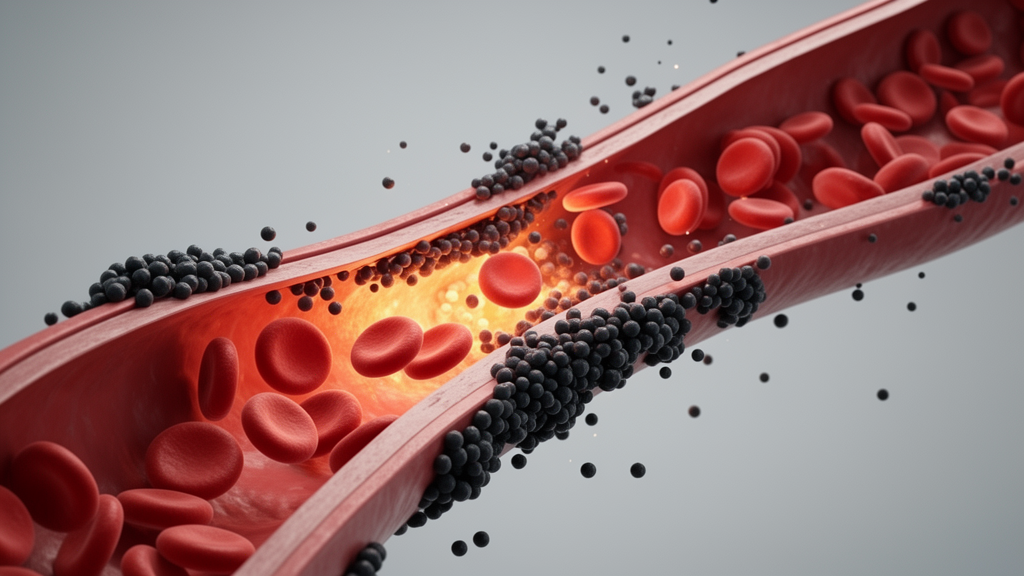
A narrative review published in the Journal of Neuroinflammation synthesizes experimental and population-based evidence to elucidate how exposure to fine particulate matter contributes to ischemic cerebrovascular injury. Across the globe, ischemic stroke remains a leading cause of disability and mortality worldwide. While accumulating epidemiological studies have implicated fine particulate matter, commonly designated as PM2.5, as a significant, prevalent, and modifiable environmental risk factor for cerebrovascular disease, the precise mechanistic pathways through which PM2.5 exposure exacerbates ischemic stroke pathogenesis have remained incompletely characterized despite well-established statistical associations.
To clarify these biological pathways, the review synthesizes findings from experimental studies conducted largely in cell lines and rodent models. This experimental literature indicates that PM2.5 exposure triggers pro-inflammatory cascades and activates oxidative stress pathways. Within the central nervous system, these activated biochemical cascades lead directly to microglial and astrocytic activation. Furthermore, particulate exposure induces endothelial barrier disruption, promotes prothrombotic hemostatic changes, and results in blood-brain barrier compromise, demonstrating how environmental pollutants can disrupt essential cerebrovascular structures.
The review also details how specific chemical constituents of PM2.5 differentially modulate immune and vascular responses. In particular, polycyclic aromatic hydrocarbons and redox-active metals within fine particulate matter exert distinct influences on immune signaling and vascular function.
According to the synthesized findings, these intersecting mechanisms are proposed to operate through the lung-brain axis. Under this conceptual framework, the initial deposition of inhaled PM2.5 within pulmonary tissue propagates systemic inflammation throughout the body. This widespread systemic inflammatory state subsequently drives neurovascular injury and promotes cerebrovascular thrombosis, creating a proposed pathological bridge between initial respiratory particle deposition and subsequent cerebrovascular disease events.
In their conclusion, the authors emphasize that PM2.5 exposure constitutes a modifiable environmental determinant of ischemic stroke risk that may additionally influence stroke severity. The review identifies priority translational targets, emphasizing the urgent need for standardized experimental methodologies, integrative human biomarker studies, and more stringent air quality policies to mitigate the global stroke burden attributable to PM2.5.
Subject of Research: Molecular mechanisms linking fine particulate matter exposure to ischemic stroke pathogenesis
Article Title: From inhalation to ischemia: molecular mechanisms linking particulate matter exposure to ischemic stroke pathogenesis
Article References: Gava, F. F., Scussel, R., Barbosa, C. D. G. M., Machado-de-Ávila, R. A., Barichello, T., & Petronilho, F. (2026). From inhalation to ischemia: molecular mechanisms linking particulate matter exposure to ischemic stroke pathogenesis. Journal of Neuroinflammation. https://doi.org/10.1186/s12974-026-04115-4
Image Credits: AI Generated
DOI: 10.1186/s12974-026-04115-4
Keywords: ischemic stroke, fine particulate matter, PM2.5, neurovascular injury, blood-brain barrier, oxidative stress, neuroinflammation, microglial activation, astrocytic activation, endothelial barrier disruption, lung-brain axis, cerebrovascular thrombosis, polycyclic aromatic hydrocarbons, redox-active metals, hemostatic changes, air quality policies

