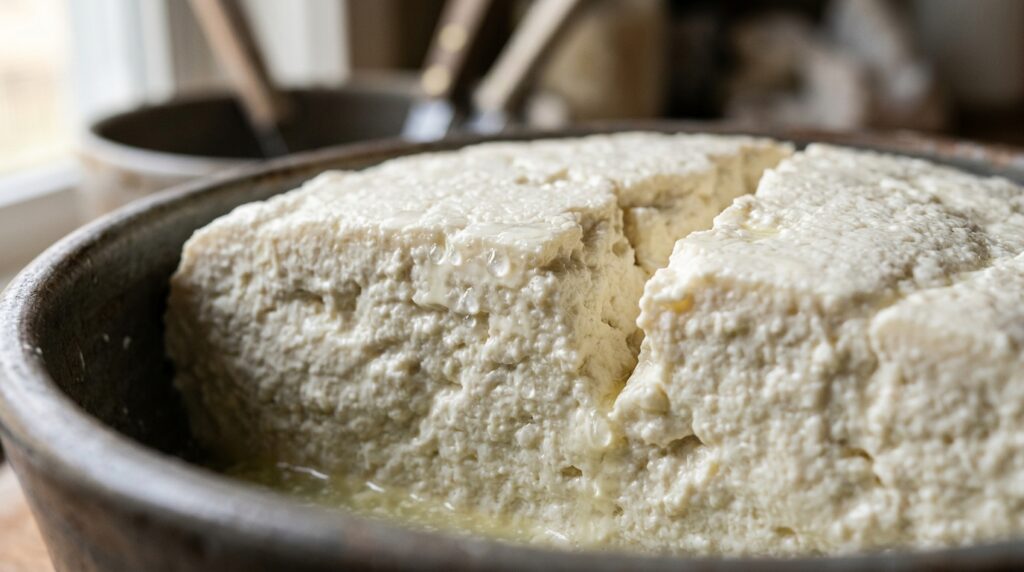
While decades of research have investigated the macroscopic behavior of intact casein micelles, surprisingly little systematic data exists regarding how individual isolated casein fractions perform in food applications. In bovine milk, proteins occur alongside fats, lactose, and minerals, with caseins and whey proteins distributed at an approximate eighty to twenty ratio. Within caseins, four fractions, alpha-s1, alpha-s2, beta, and kappa, assemble in approximate proportions of forty, ten, thirty-five, and fifteen percent into colloidal micelles stabilized by calcium phosphate and surface kappa-casein.
The functional diversity among the four casein fractions stems from their genetic polymorphisms, amino acid sequences, and post-translational modifications. Bovine caseins exhibit at least thirty-nine genetic variants: eight for alpha-s1-casein, four for alpha-s2-casein, fifteen for beta-casein, and twelve for kappa-casein, with molecular masses spanning nineteen to twenty-five point two kilodaltons. Alpha-s1-casein variant B contains one hundred ninety-nine amino acids, eight point five percent proline, and eight phosphorylation sites. Alpha-s2-casein variant A possesses two hundred seven amino acids, eleven phosphorylation sites, and the highest proportion of basic residues. Beta-casein variant A2 contains two hundred nine amino acids, making it the most hydrophobic and flexible fraction with sixteen point seven percent proline and five phosphorylation sites. Kappa-casein variant B contains one hundred sixty-nine amino acids, a single phosphorylation site, up to five glycosylation sites, and two cysteine residues forming stabilizing disulfide bonds. Phosphorylation of serine residues increases negative charge and governs calcium binding, while glycosylation uniquely modulates kappa-casein solubility and steric behavior.
All four casein fractions are classified as intrinsically disordered proteins lacking rigid tertiary folds, existing instead as dynamic conformational ensembles. A Fourier-transform infrared spectroscopy study by Grewal and colleagues compared all four highly purified fractions under identical conditions in PIPES buffer with potassium chloride, uncovering distinct secondary structures. Alpha-s1 and alpha-s2 caseins contained the highest proportions of ordered beta-sheet elements, whereas beta-casein displayed the lowest beta-sheet content and the highest proportion of disordered random coils, aligning with its conformational flexibility. Circular dichroism measurements indicate that alpha-s1-casein is predominantly disordered at pH six point eight with sixty to seventy percent random coils, shifting toward greater alpha-helical and beta-sheet ordering under acidic conditions. Beta-casein remains largely disordered even when acidified, retaining sixty-eight percent random coil content. Heating beta-casein from ten to fifty degrees Celsius induces structural reorganization by expanding ordered elements, while divalent cations like calcium and magnesium promote beta-sheet formation across fractions at the expense of three-ten helices.
Surface charge characteristics, measured as zeta potential across varying environmental conditions, dictate electrostatic repulsion and colloidal stability. Rodzik and colleagues reported that alpha-s1-casein has an isoelectric point near pH four point eight zero, carrying positive charge at low pH and stabilizing between minus twenty and minus thirty millivolts above its isoelectric point, though showing time-dependent fluctuations. Beta-casein exhibits an isoelectric point of four point five five, with zeta potential values ranging from plus thirty-two to minus thirty-five millivolts across pH two to eleven and stabilizing around minus twenty to minus thirty millivolts at pH five. Solution composition strongly influences these values; dialyzing alpha-s-casein shifted its zeta potential from minus eighteen to minus twenty-three millivolts in imidazole buffer. Furthermore, phosphorylation directly determines molecular charge. Chezan and co-authors found that native phosphorylated beta-casein had a zeta potential of minus twenty-three point fifty-five millivolts at neutral pH in sodium phosphate buffer, whereas non-phosphorylated recombinant beta-casein measured plus twelve point ninety-four millivolts. Currently, no published studies report zeta potential measurements for isolated alpha-s2-casein.
Self-association behaviors highlight divergent assembly mechanisms across the four fractions. Beta-casein exhibits detergent-like micellization driven by its hydrophobic C-terminal region, assembling above a critical micelle concentration that depends heavily on temperature. In neutral phosphate buffer, warming from sixteen to forty-five degrees Celsius reduces the critical micelle concentration of beta-casein from zero point fifteen millimolar to zero point zero zero six millimolar as hydrophobic interactions strengthen. Genetic polymorphisms also influence aggregation: variant A1 forms larger micellar structures than variant A2 between twenty and seventy degrees Celsius. In contrast, kappa-casein self-assembly relies on both hydrophobic associations and disulfide bonding via its cysteine residues. Under reducing conditions at pH seven point two, kappa-casein remains monomeric, but forms larger assemblies at pH five point two or upon heating. Purified kappa-casein can also assemble into amyloid-like fibrils at thirty-seven degrees Celsius. Remarkably, alpha-s-casein and beta-casein display chaperone-like activity that inhibits kappa-casein fibril formation by stabilizing soluble intermediates under controlled conditions.
Calcium binding sensitivity marks a fundamental functional divide among caseins, separating calcium-sensitive alpha-s1, alpha-s2, and beta caseins from calcium-insensitive kappa-casein. Calcium interacts primarily with negatively charged phosphoserine clusters, neutralizing electrostatic repulsions and promoting protein bridging. Alpha-s2-casein displays the highest calcium sensitivity, with research showing that approximately ninety-four percent precipitates at just two millimolar calcium chloride at pH seven. In contrast, alpha-s1-casein remains in solution under identical conditions, precipitating only above six point five millimolar calcium. Although termed calcium-insensitive, kappa-casein possesses a moderate-affinity binding site with a dissociation constant of fifteen point six micromolar without precipitating. In beta-casein systems, calcium produces ion-specific aggregation; while magnesium ions prompt small aggregates near fifty-six nanometers, calcium induces large supramolecular assemblies reaching four hundred fifty nanometers. Calcium-mediated charge screening shifts beta-casein zeta potential from minus forty-four point four to minus sixteen point five millivolts, promoting emulsion flocculation at elevated temperatures and accelerating interfacial gelation at calcium-to-protein ratios of five to one and higher.
Solubility profiles and gel-forming capacities show that isolated caseins function differently from native micellar systems. Predicted isoelectric points for non-phosphorylated alpha-s1, alpha-s2, beta, and kappa caseins are four point ninety-one, eight point thirty-four, five point thirteen, and five point ninety-three, but decrease to four point forty-two, four point ninety-five, four point sixty-five, and five point sixty upon phosphorylation. Beta-casein is uniquely temperature-sensitive, exhibiting elevated solubility at refrigerated temperatures between five and fifteen degrees Celsius near its isoelectric point, whereas alpha-s1-casein solubility shows minimal temperature dependence. However, isolated beta-casein forms weak acid-induced gels upon acidification. Chezan and colleagues demonstrated that recombinant and dephosphorylated beta-caseins formed gels faster, at higher pH values, and with greater network strength than native phosphorylated beta-casein, reaching storage moduli around nine point twenty-six pascals.
Interfacial adsorption and emulsifying properties reveal substantial differences between individual fractions, with beta-casein exhibiting superior surface activity. At neutral pH, beta-casein reduces oil-water interfacial tension to nineteen millinewtons per meter, outperforming kappa-casein at twenty-two and alpha-s-casein at twenty-seven millinewtons per meter. Self-consistent field modeling indicates that beta-casein forms a thick, two-layer interfacial structure with extended hydrophilic tails protruding into the aqueous phase, providing strong steric stabilization against flocculation. In contrast, alpha-s1-casein adsorbs as a thinner, loop-dominated layer dependent on electrostatic repulsion, leaving emulsions susceptible to flocculation below pH five point five or at ionic strengths above zero point one molar. At low protein-to-fat ratios, beta-casein emulsions experience droplet creaming after twenty-eight days. Additionally, unadsorbed beta-casein in the continuous phase can induce depletion flocculation between zero point one and zero point five percent concentration, though cosolutes like trehalose help maintain emulsion integrity.
Foaming dynamics display comparable trade-offs between rapid air-water adsorption and long-term bubble stability. De Groot and co-authors evaluated interfacial mechanics using oscillating bubble tensiometry in simulated milk ultrafiltrate containing calcium, finding that beta-casein produced the stiffest interfacial network at thirty millinewtons per meter under low strain, followed by alpha-s2, alpha-s1, and kappa caseins. In competitive adsorption studies, beta-casein displaces alpha-s1-casein over time, establishing an equilibrium two-to-one surface ratio owing to its higher binding constant and greater mean residue hydrophobicity. Although beta-casein rapidly forms voluminous foams at concentrations as low as zero point zero fifteen percent by weight, its dynamic films display low shear elasticity, leading to rapid bubble coarsening and disproportionation. Achieving consistent foam formation generally requires bulk concentrations around zero point fourteen percent under manual agitation. Nevertheless, processing modifications can enhance foam stability; high-pressure treatment at three hundred megapascals thickens interfacial films, while combining beta-casein with propylene glycol alginate creates synergistic electrostatic complexes near the isoelectric point that significantly improve foam volume and longevity.
Proteolytic degradation and future manufacturing innovations define the practical translation of individual casein fractions. In bovine milk, endogenous enzymes like plasmin and cathepsins hydrolyze caseins into hundreds of peptide fragments, predominantly sourced from alpha-s1-casein and beta-casein. This enzymatic breakdown alters techno-functionality, as limited hydrolysis exposes buried functional groups to modify solubility and emulsification. In ripened cheeses like Camembert, beta-casein breakdown frequently releases hydrophobic peptides associated with bitter flavors, while proteolysis simultaneously generates glutamate and glutamine precursors for umami and kokumi-active gamma-glutamyl dipeptides. Genetic polymorphisms in caseins further modulate cheese firmness and sensory profiles. Looking forward, the review emphasizes that industrial utilization faces severe fractionation purity challenges, particularly for alpha-s2 and kappa caseins. Precision fermentation represents a transformative production route, though researchers must determine precise phosphorylation requirements and evaluate whether recombinant caseins can function as isolated monomers or must be reassembled into micellar structures for specific commercial applications.
Subject of Research: Food-relevant functional properties and physicochemical characterization of isolated bovine casein fractions
Article Title: Food-relevant functional properties of the four major bovine casein fractions: A review
Article References: Chezan, D., Fuhrmann, P. L., Domig, K. J., & Dewi, B. P. C. (2026). Food-relevant functional properties of the four major bovine casein fractions: A review. Current Research in Food Science, 13, Article 101618. https://doi.org/10.1016/j.crfs.2026.101618
Image Credits: AI Generated
DOI: 10.1016/j.crfs.2026.101618
Keywords: bovine casein, casein fractions, food science, protein functionality, emulsification, gelation, foaming properties, precision fermentation, Food-relevant, functional, properties, four