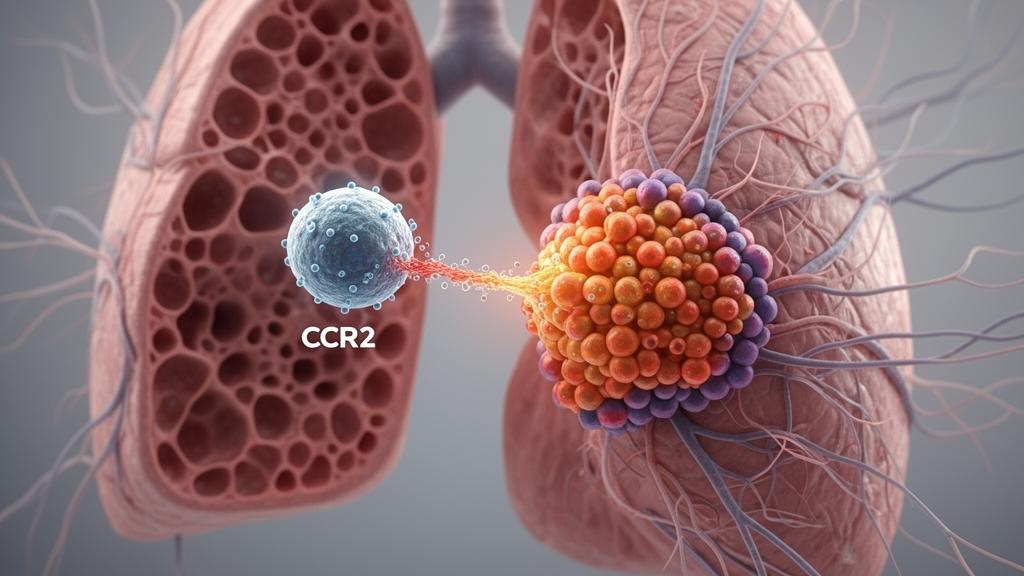
A small case-control study found that the CCR2 variant NM_001123396.4:c.780T>C (p.Asn260=; rs1799865) was more frequent among people with sarcoidosis than among controls, with the main statistical difference reported at p<0.05. The finding suggests that variants in CCR2 may be associated with genetic susceptibility to sarcoidosis, but the authors cautioned that larger patient series are needed to clarify their role. Researchers analyzed DNA from 31 patients followed at the Department of Chest Diseases at Düzce University Faculty of Medicine and 19 controls who presented for reasons other than sarcoidosis.
Sarcoidosis is a systemic granulomatous disease of unknown etiology. The investigators noted that genetic susceptibility and environmental factors are thought to contribute to its development and set out to investigate CCR2 gene variants in participants with the disease. By comparing the frequency of sequenced variants in patients and controls, the study assessed whether particular genetic forms were associated with sarcoidosis.
For the analysis, the team isolated DNA from peripheral-blood samples collected from the 50 participants. Targeted next-generation sequencing was then used to examine variants in the CCR2 transcript designated NM_001123396.4. The procedure detected four variants: c.1044G>A (p.Thr348=; rs3092960), c.156G>T (p.Val52=; rs3918367), c.190G>A (p.Val64Ile; rs1799864), and c.780T>C (p.Asn260=; rs1799865).
The statistical result was driven mainly by the increased frequency of c.780T>C (p.Asn260=; rs1799865) in the sarcoidosis group compared with the control group. Another variant, c.156G>T (p.Val52=; rs3918367), was detected only in the patient group. However, the investigators said that the small number of cases carrying this variant prevented a reliable statistical inference.
The reported results therefore distinguish the principal group difference at p<0.05 from the patient-only observation, for which no reliable statistical conclusion could be drawn. Interpretation is constrained by the study’s scale and design. The analysis included only 31 patients and 19 controls, and it was conducted in a sample drawn from one institutional setting, with controls presenting for reasons other than sarcoidosis.
The authors specifically called for additional studies with larger patient series to better understand how CCR2 polymorphisms may relate to the etiopathogenesis of sarcoidosis.
Subject of Research: CCR2 gene variants and possible genetic susceptibility to sarcoidosis in a 50-person case-control study.
Article Title: Analysis of CCR2 gene variants in patients with sarcoidosis using targeted next-generation sequencing: a case–control study
Article References: Yıldız Gülhan, P., & Eröz, R. (2026). Analysis of CCR2 gene variants in patients with sarcoidosis using targeted next-generation sequencing: a case–control study. Molecular Biology Reports, 53(1), Article 1761. https://doi.org/10.1007/s11033-026-12919-z
Image Credits: AI Generated
DOI: 10.1007/s11033-026-12919-z
Keywords: sarcoidosis, CCR2, genetic susceptibility, case-control study, targeted sequencing, next-generation sequencing, gene variants, granulomatous disease, Analysis, gene, variants, patients