A systematic review evaluating advanced cell therapies for intervertebral disc regeneration shows that cellular interventions, particularly mesenchymal stromal cells combined with supportive biomaterials, demonstrate significant biological regenerative potential in experimental models while facing formidable translational hurdles in human clinical trials. Across eighty-one eligible studies identified from comprehensive literature searches spanning database inception through June 2026, therapeutic approaches targeting the underlying biological cascades of degenerative disc disease achieved notable improvements in extracellular matrix synthesis and tissue healing. However, researchers observed that the hostile microenvironment characteristic of degenerated spinal discs—defined by severe hypoxia, nutrient deprivation, acidic pH, persistent mechanical loading stress, and chronic inflammation—continues to present a critical barrier preventing sustained cell viability, long-term survival, and seamless functional integration.
Degenerative disc disease represents a primary driver of chronic low back pain and stands among the most prevalent musculoskeletal disorders globally, presenting substantial medical and socioeconomic challenges as human populations age. The intervertebral disc consists anatomically of the inner gel-like nucleus pulposus and the outer fibrous annulus fibrosus, structural components that undergo progressive degradation, mechanical wear, and cellular exhaustion over time. Conventional medical interventions for disc degeneration remain largely palliative, relying heavily on conservative symptom management, physical therapy regimens, or invasive surgical options such as spinal fusion. These traditional interventions do not halt, reverse, or biologically address the cellular deterioration of the degenerating disc structure itself, highlighting the necessity for advanced cell-based therapies that directly target the cellular and molecular mechanisms driving tissue decay.
To rigorously assess the international landscape of regenerative cellular strategies, investigators conducted a systematic review following the Preferred Reporting Items for Systematic Reviews and Meta-Analyses guidelines. The researchers performed structured searches across PubMed, MEDLINE, Embase, Scopus, and CINAHL up to June 30, 2026, combining controlled vocabularies and keywords covering degenerative disc disease, stem cells, tissue engineering, biomaterial hydrogels, gene editing, and adjunctive stimulation techniques. The systematic query initially retrieved 694 records, which included 652 database records and 42 manually identified items. After removing duplicate entries, reviewers screened 309 unique titles and abstracts, evaluated 114 full-text publications for detailed eligibility, excluded 33 non-qualifying articles, and ultimately synthesized data from 81 original preclinical and clinical investigations.
Among the investigated therapeutic platforms, mesenchymal stromal cells emerged as the most widely evaluated cellular candidate due to their inherent multipotency, chondrogenic potential, and secretion of bioactive signaling molecules. Studies analyzed in the synthesis demonstrated that mesenchymal stromal cells derived from bone marrow, adipose tissue, and synovial fluid can differentiate toward disc-like cellular phenotypes while promoting the localized synthesis of key extracellular matrix components, notably proteoglycans and collagen. Furthermore, the review noted expanding interest in induced pluripotent stem cells, which offer the theoretical capacity to generate patient-specific nucleus pulposus and annulus fibrosus lineages, alongside primary chondrogenic cells, nucleus pulposus cells, and non-cellular alternatives such as extracellular vesicles and exosomes derived from mesenchymal stem cells.
Preclinical investigations incorporated within the systematic review revealed that cell transplantation alone frequently achieves suboptimal persistence due to the harsh physiological conditions within the degenerated disc. To overcome these limitations, numerous studies evaluated tissue engineering approaches combining cells with three-dimensional biomaterial scaffolds, electrospun nanofiber matrices, and hydrogel-based delivery vehicles. Injectable hydrogels demonstrated an ability to fill irregular cavities within degenerated discs, providing an immediate hydrated three-dimensional microenvironment that mimics native disc mechanics, improves cell retention, and facilitates cell proliferation. When engineered with specific elasticity, degradation kinetics, and embedded bioactive molecules such as transforming growth factor-beta or insulin-like growth factor-1, these biomaterial matrices substantially enhanced extracellular matrix production and structural integration in experimental disc models.
The synthesis also detailed the critical role of immunomodulation in disc repair, emphasizing that persistent inflammatory environments disrupt homeostatic regenerative processes. Mesenchymal stromal cells exert notable anti-inflammatory effects by modulating cytokine networks, decreasing pro-inflammatory signals like interleukin-6 and tumor necrosis factor-alpha while concurrently upregulating anti-inflammatory mediators such as interleukin-10. Experimental studies highlighted the exploration of genetically engineered cells, including CRISPR-Cas9 modified mesenchymal stromal cells designed to continuously secrete targeted anti-inflammatory factors and withstand cytotoxic inflammatory cascades. Additionally, researchers investigated biophysical adjuncts such as mechanical loading, low-intensity pulsed ultrasound, and electrical stimulation, which were shown to guide cellular behavior, accelerate nutrient transport, and stimulate the synthesis of structural matrix proteins.
Clinical trials synthesized within the review provided evidence regarding the safety and early therapeutic potential of cell therapies in human subjects, though outcomes remained variable. Autologous bone marrow-derived cell injections evaluated in early pilot studies demonstrated safety, reductions in patient-reported pain scores, and improvements in radiographic indices of disc condition. Similarly, prospective clinical evaluations investigating allogeneic mesenchymal precursor cells documented durable pain relief and functional improvements over follow-up periods extending to 36 months compared to control groups. Nevertheless, the systematic review observed that existing human trials are predominantly early-phase studies characterized by modest patient sample sizes, limited control arms, diverse administration techniques, and heterogeneous assessment protocols that complicate direct cross-trial comparisons.
Despite encouraging findings across experimental platforms, significant translational and clinical barriers continue to impede widespread adoption of cell-based regenerative techniques. Translating preclinical efficacy to human clinical care requires overcoming graft rejection risks associated with allogeneic cells, establishing standardized cellular isolation and expansion protocols, and developing scalable manufacturing systems capable of reproducible batch production under stringent regulatory guidelines set by agencies such as the Food and Drug Administration and the European Medicines Agency. Moreover, the review highlighted economic and ethical considerations, including high manufacturing costs, equitable patient access, and the necessity of transparent communication regarding the experimental nature of advanced cell therapies.
The authors of the systematic review emphasized several methodological limitations inherent to the analyzed evidence base, including the restriction to English-language publications, potential publication bias favoring positive preclinical outcomes, and marked heterogeneity in study designs that precluded quantitative meta-analysis. Consequently, the review concluded that future research must prioritize rigorous, standardized, randomized clinical trials with extended follow-up durations, advanced biomaterial designs tailored to individual patient anatomy, and the integration of artificial intelligence and 3D bioprinting technologies to validate long-term durability and safety in diverse clinical populations.
Beyond general tissue loss, the review highlighted mitochondrial dysfunction as an emerging cellular driver of disc deterioration under harsh physiological conditions. The acidic, hypoxic, and nutrient-depleted environment inside degenerated spinal segments impairs disc cell mitochondria, which reduces cellular adenosine triphosphate generation, amplifies oxidative stress, and accelerates premature cellular senescence. In response, experimental researchers are evaluating targeted mitochondrial interventions, such as stimulating mitophagy or delivering specialized cytoprotective antioxidants directly to organelles, to preserve cell resilience and energy metabolism. Concurrently, deeper investigations into host immunology demonstrate that introduced cells encounter both rapid innate and slower adaptive immune barriers. Immediate defenses involving host macrophages and natural killer cells can trigger localized inflammation and clear transplanted cells before integration occurs, whereas adaptive responses mediated by T and B lymphocytes can generate donor-directed antibodies. Although mesenchymal stromal cells counteract these pathways by promoting regulatory T cell proliferation and dampening destructive cascades, researchers increasingly employ single-cell RNA sequencing and flow cytometry to map patient-specific immune profiles and clarify individual variations in immune tolerance.
The synthesized literature also cataloged distinct biological therapeutic options beyond traditional culture-expanded stromal cells. Furthermore, re-implanting native nucleus pulposus cells harvested from degenerated discs offered a targeted route to reconstitute the gelatinous central core and restore physiological load distribution. In parallel, adipose-derived stem cells emerged as an attractive cellular reservoir because of their relative abundance, minimal donor-site harvesting morbidity, and demonstrated capacity to differentiate into chondrogenic and nucleus pulposus-like phenotypes while secreting supportive cytokines that aid matrix restoration.
Technological integration involving three-dimensional bioprinting and computational intelligence represents another expanding domain examined across the included literature. Advanced additive bioprinting platforms—specifically extrusion, inkjet, and laser-assisted systems—deposit living cells, supportive biomolecules, and hydrogel bioinks layer by layer to construct anatomically tailored disc implants. By matching the precise geometric boundaries, mechanical stiffness, and degradation kinetics of a recipient’s spinal disc, bioprinted constructs optimize functional integration while serving as realistic preclinical models for testing cellular therapies. Simultaneously, artificial intelligence frameworks and machine learning algorithms synthesize multi-omic data, electronic medical records, and continuous physiological readouts from wearable monitoring devices. These computational tools help model therapeutic responses, predict individualized treatment trajectories, and reduce empirical trial-and-error approaches in clinical regenerative protocol selection.
To overcome the evidence gaps identified across the eighty-one analyzed studies, the systematic review outlined concrete methodological strategies for upcoming research. The authors recommended standardizing study protocols through formal trial registries and adhering strictly to established reporting guidelines, such as the Consolidated Standards of Reporting Trials, to curb publication bias and improve cross-study comparability. Additionally, establishing multilingual research networks will allow systematic reviews to capture relevant evidence published beyond English-language databases. Alongside prospective clinical trials assessing durable safety in heterogeneous patient populations, the review stressed that future studies must incorporate formal health economic evaluations to establish whether advanced regenerative therapies offer viable cost-effectiveness relative to conventional spinal interventions.
Subject of Research: Systematic review of advanced cell therapies and tissue engineering for intervertebral disc regeneration
Article Title: Innovations in advanced cell therapies for intervertebral disc regeneration: a systematic review
Article References: Otukoya, E. Z., Zohrabi, K., Salimi, N., & Alimohammadi, E. (2026). Innovations in advanced cell therapies for intervertebral disc regeneration: a systematic review. Egyptian Journal of Neurosurgery, 41(1), Article 192. https://doi.org/10.1186/s41984-026-00710-y
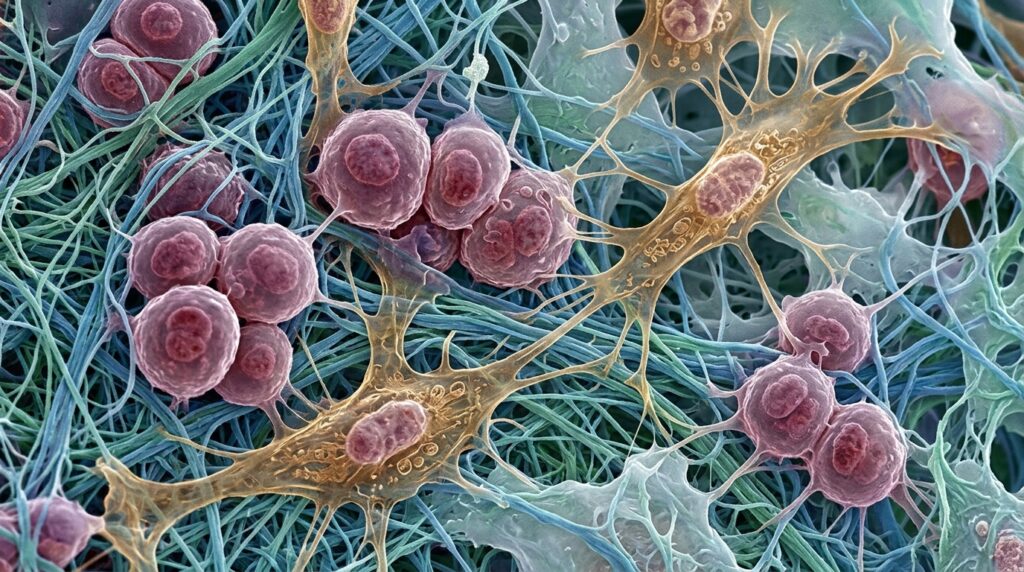
Image Credits: AI Generated
DOI: 10.1186/s41984-026-00710-y
Keywords: intervertebral disc degeneration, advanced cell therapies, mesenchymal stromal cells, degenerative disc disease, systematic review, tissue engineering, biomaterial scaffolds, hydrogels, immunomodulation, nucleus pulposus, annulus fibrosus, extracellular vesicles, induced pluripotent stem cells, biophysical stimulation, regenerative medicine, chronic low back pain