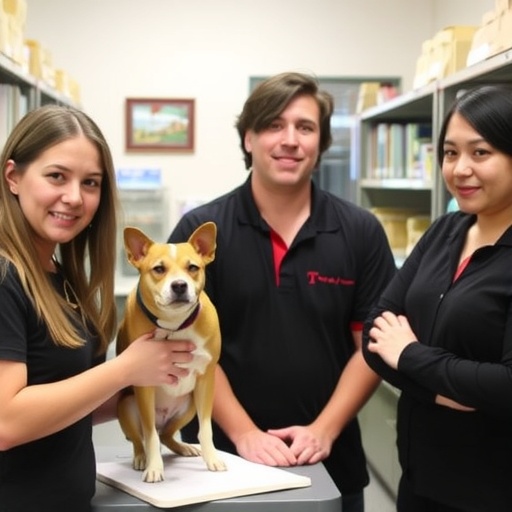
Texas Tech University’s School of Veterinary Medicine reports that fourth-year students Kayden Tanner and Marshall Mays have published international research findings after dedicating hundreds of hours to manuscript development and experimental work.
Tanner’s paper, “Genomics in Equine MEED: Whole-Genome Sequencing and Target Mutation Identification,” was authored by him and selected as a feature article in Animals. The study centers on whole-genome sequencing of horses affected by chronic wasting disease, with sequencing data made public to support downstream mechanistic and therapeutic research.
Using those genomic insights, the team explored how multisystem eosinophilic epitheliotropic disease (MEED)—a severe, progressive condition that often leads to euthanasia within a year of diagnosis—may be driven by underlying cellular mechanisms. The resulting variant catalogs and analytical framework are positioned to guide future hypothesis testing and drug-target prioritization.
Mays’ work, titled “Evaluating the synergistic effects of cisplatin and tamoxifen in canine osteosarcoma cells,” appeared in Frontiers in Veterinary Science. The study evaluates combined treatment effects in canine osteosarcoma cells, aiming to identify interaction patterns that could inform translational treatment strategies for bone cancer.
The projects were supported through mentorship from Thu Annelise Nguyen, associate dean for research and a professor of toxicology, alongside postdoctoral fellow Tomas Lugo. Lugo provided guidance on experimental design, troubleshooting, and computational modeling workflows used to analyze the results.
Crucially, Lugo developed the modeling and computational approach that enabled both publications, earning him corresponding-author recognition on each paper—an achievement not previously recorded for a student at the School of Veterinary Medicine.
Nguyen highlighted how the students transitioned from early-stage participation to independent, inquisitive research execution, noting their schedule discipline, including early morning arrival and continued productivity during holiday break.
She framed the accomplishment as especially meaningful for trainees with limited prior science experience, emphasizing how quickly Tanner and Mays progressed to producing peer-reviewed work.
Beyond advancing equine and canine disease understanding, the research may strengthen their competitiveness for future internships required for their long-term goals in surgical careers.
As Lugo described it, mentoring focused not just on completing tasks, but on helping mentees develop a broader scientific perspective—so that they can translate experimental momentum into grant-ready, long-term research plans.
Subject of Research: Equine genomics and multisystem eosinophilic epitheliotropic disease (MEED); canine osteosarcoma treatment synergy
Article Title: “Genomics in Equine MEED: Whole-Genome Sequencing and Target Mutation Identification”; “Evaluating the synergistic effects of cisplatin and tamoxifen in canine osteosarcoma cells”
News Publication Date:
Web References: https://www.mdpi.com/2076-2615/16/10/1560 ; https://www.frontiersin.org/journals/veterinary-science/articles/10.3389/fvets.2026.1802456/full ; https://www.depts.ttu.edu/onehealth/
References:
Image Credits:
Keywords: veterinary medicine, genomics, whole-genome sequencing, MEED, chronic wasting disease, osteosarcoma, cisplatin, tamoxifen, translational research
Tags: Canine osteosarcoma treatment researchEquine genomics and chronic wasting diseaseGenomic insights in equine healthGenomics and disease mechanism studiesInternational veterinary research journalsMentorship in veterinary scientific researchMultisystem eosinophilic epitheliotropic diseaseSynergistic effects of cisplatin and tamoxifenTranslational research in veterinary oncologyVeterinary research publicationsVeterinary student research achievementsWhole-genome sequencing in veterinary medicine