Human papillomavirus-associated head and neck cancers, predominantly comprising oropharyngeal squamous cell carcinomas, represent an escalating global health burden characterized by distinct clinical, demographic, and biological features. According to global epidemiological data from GLOBOCON, head and neck malignancies accounted for approximately four percent of all cancer diagnoses in 2022, representing 745,000 new cases worldwide. Over recent decades, the global incidence of viral-driven head and neck squamous cell carcinomas has increased by 36.5 percent, with viral etiology contributing to approximately 25 percent of all head and neck malignancies. This association demonstrates striking anatomical variation, underlying an estimated 30.8 percent of oropharyngeal cancers alongside 2.4 percent of laryngeal and 2.2 percent of oral cavity tumors. The epidemiological profile has shifted toward younger cohorts, typically presenting in patients aged 45 to 64 years who lack significant exposure to tobacco or alcohol. Men face a disproportionately higher burden, exhibiting a two- to four-fold increased risk compared to women, while high-risk viral types 16 and 18 account for 84.9 percent of viral-positive tumors.
The viral oncogenic cascade begins when infectious particles penetrate basal epithelial stem cells through microlesions in squamous mucosal tissues, potentially facilitated by host surface receptors including integrin alpha-6, laminin-332, and heparan sulfate proteoglycans. Following internalisation, the viral life cycle remains closely coordinated with epithelial cell differentiation. Initial infection stages rely on early proteins E1 and E2 to support episomal DNA replication and genomic maintenance in proliferating basal layers. As infected keratinocytes differentiate, early viral proteins E5, E6, and E7 sustain proliferative capacity and block apoptotic pathways, while E4 mediates G2 cell-cycle arrest to facilitate viral genome amplification. Complete virion assembly occurs in the upper epithelial strata through expression of late capsid proteins L1 and L2. Chronic infection promotes host genome integration requiring double-strand DNA breaks, inducing severe genomic instability. High-risk E6 activates telomerase reverse transcriptase transcription through complex interactions with E6-associated protein, c-Myc, and NFX1, thereby counteracting telomere shortening and conferring cellular immortality.
Viral oncoproteins E6 and E7 cooperate intimately to disable host tumor suppression and override cell-cycle checkpoints. The E7 oncoprotein binds hypo-phosphorylated retinoblastoma protein, triggering its proteasomal degradation and liberating E2F transcription factors to drive continuous progression past the G1/S transition. Although E7 expression generates oncogenic stress signals that naturally activate cellular defenses such as p53, p16, and p21, concurrent expression of E6 thwarts apoptosis by targeting p53 for degradation via the ubiquitin-proteasome pathway mediated by E6-associated protein. In oropharyngeal squamous cell carcinoma, this biology produces pronounced clinical divergence from cervical cancer and viral-negative malignancies. Oropharyngeal tumors elicit vigorous anti-tumor immune responses featuring more than double the infiltration of virus-specific T cells and reduced regulatory T-cell activity compared to cervical counterparts. However, viral interference with pattern recognition receptors, particularly Toll-like receptors, alongside dysregulated DNA damage repair, hypoxia, and extracellular matrix remodeling, can generate protective microenvironmental niches that foster treatment resistance.
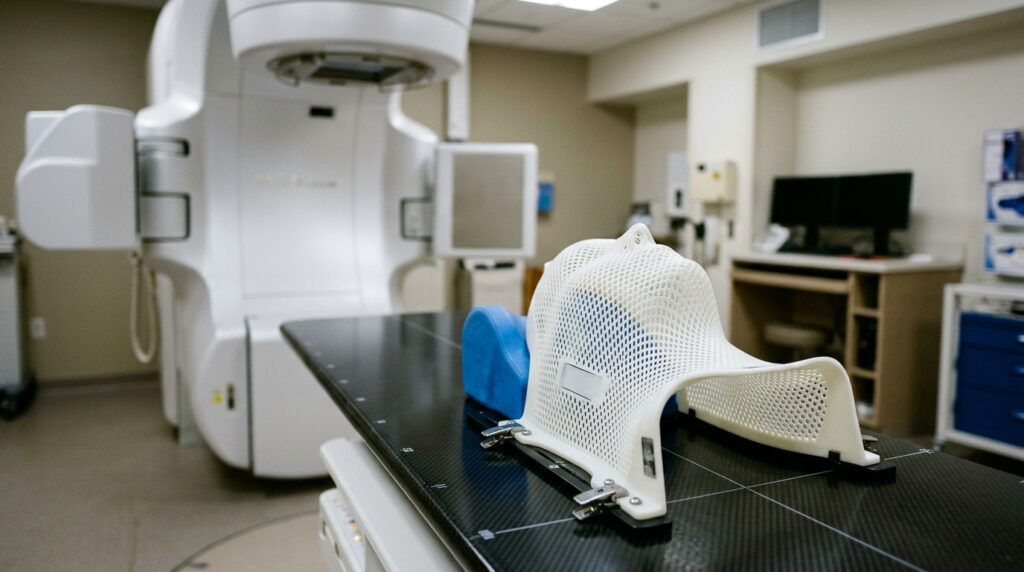
Current international clinical guidelines from the National Comprehensive Cancer Network and European consensus bodies establish distinct staging and management protocols for p16-positive oropharyngeal squamous cell carcinoma. For patients presenting with early-stage disease, consensus recommendations endorse single-modality treatment utilizing either definitive intensity-modulated radiotherapy or transoral surgery with neck dissection. In locoregionally advanced settings, concurrent cisplatin-based chemoradiotherapy delivering 70 to 72 Gray of intensity-modulated radiation therapy remains the standard of care to achieve optimal locoregional control and overall survival. Following surgical resection, adjuvant radiotherapy or chemoradiotherapy is indicated upon identification of high-risk adverse features, including positive surgical margins or extranodal tumor extension. Despite superior overall survival and radiosensitivity compared to viral-negative malignancies, international guidelines explicitly caution against substituting cetuximab for cisplatin outside clinical trials. Furthermore, routine treatment de-escalation remains strictly investigational, as unvalidated modifications to established curative regimens risk compromising disease control in patients who otherwise carry favorable oncological prognoses.
Multiple prospective randomized clinical trials have evaluated treatment de-escalation strategies intended to diminish long-term therapeutic toxicities, yet several pivotal investigations failed to demonstrate oncological safety. In the randomized phase III RTOG 1016 and De-ESCALaTE HPV trials, substituting cetuximab for cisplatin during radiation therapy produced significantly worse cancer control without reducing overall treatment toxicities. RTOG 1016 recorded a 5-year locoregional failure rate of 17.3 percent with cetuximab compared with 9.9 percent for cisplatin, while De-ESCALaTE documented a 2-year recurrence rate of 16.1 percent versus 6.0 percent. Similarly, the randomized phase II/III NRG-HN005 trial examined reduced-dose radiotherapy of 60 Gray combined with either cisplatin or nivolumab against standard 70 Gray chemoradiotherapy in non-smoking patients with p16-positive oropharyngeal tumors. At 2.2 years of median follow-up, estimated 2-year progression-free survival was 98.1 percent with standard therapy, compared to 88.6 percent with reduced radiation plus cisplatin and 90.3 percent with reduced radiation plus nivolumab, failing non-inferiority criteria.
Surgical de-escalation approaches have also confronted substantial safety and functional hurdles in prospective clinical evaluations. The randomized ORATOR2 trial, which compared primary radiotherapy against transoral surgery with neck dissection and pathology-directed adjuvant therapy for early-stage disease, was terminated prematurely following two treatment-related deaths in the surgical arm. Among 61 randomized participants, two-year overall survival reached 100 percent in the radiotherapy cohort compared to 90 percent following surgery, while progression-free survival was 100 percent versus 86 percent, respectively. Concurrently, a cohort analysis associated with the prospective phase III PATHOS trial evaluated early functional recovery in 508 patients undergoing transoral robotic surgery or transoral laser microsurgery. Patients treated with robotic approaches experienced significantly higher nasogastric tube dependency rates at 45.0 percent compared to 7.9 percent for laser microsurgery, alongside modestly inferior swallowing scores. Although transoral robotic surgery combined with selective neck dissection provides effective tumor clearance, its functional advantages diminish substantially whenever adjuvant therapy is required.
In recurrent or metastatic head and neck squamous cell carcinoma, systemic therapy represents the primary therapeutic option, traditionally relying on platinum-based chemotherapy incorporating gemcitabine and cisplatin. Immunotherapy targeting the PD-1/PD-L1 axis has established a crucial role following disease progression on platinum agents. The CheckMate 141 clinical trial validated nivolumab following platinum failure, while KEYNOTE-048 established pembrolizumab as preferred first-line therapy, either as monotherapy for tumors expressing PD-L1 with a combined positive score of at least one or combined with platinum and 5-fluorouracil. Recently, KEYNOTE-689 expanded pembrolizumab approval into the perioperative setting for resectable locally advanced disease. Although the tumor microenvironment of viral-positive malignancies displays heightened immune infiltration, viral status itself did not independently predict therapeutic benefit in pivotal trials, and overall response rates to monotherapy remain between 13 and 19 percent. Survival gains were driven primarily by PD-L1 expression rather than viral etiology, confirming durable benefits across both viral-positive and viral-negative patient cohorts.
To overcome limited response rates and treatment resistance in recurrent or metastatic settings, investigators are developing innovative targeted therapeutics and combination immunotherapies. Therapeutic vaccines, including ISA-101, MEDI0457, and PDS0101, specifically target viral E6 and E7 oncoproteins to elicit robust antigen-specific cytotoxic T-lymphocyte responses. In a phase II clinical trial combining the synthetic peptide vaccine ISA101 with nivolumab in patients with HPV16-positive cancers, researchers observed an objective response rate of 33 percent and a median overall survival of 17.5 months. Additional early-phase evaluations, such as the VERSATILE-002 and CUE-101 clinical trials, are investigating adoptive T-cell transfer and engineered T-cell receptor platforms. Single-cell analyses have further uncovered distinct immune subsets, including tissue-resident natural killer cells designated trNK-1, which correlate with favorable prognosis and enhanced immunotherapy response. Concurrently, molecular inhibitors directed against downstream pathways such as PI3K/Akt and mTOR are being explored, with preclinical evidence demonstrating that dual PI3K and IGF1R inhibition or irreversible pan-HER blockade via afatinib can circumvent acquired therapeutic resistance.
Beyond conventional pharmacology, emerging therapeutic platforms encompass oncolytic virotherapy, photodynamic therapy, gene-directed interventions, and nanomedicine formulations. Oncolytic viruses, notably engineered agents like T-Vec and Reolysin, selectively infect and destroy malignant cells while stimulating systemic anti-tumor immunity, showing promise when combined with checkpoint blockade. Photodynamic therapy offers a minimally invasive alternative for early-stage mucosal lesions and precancerous tissue changes. Experimental gene therapies utilize RNA interference, small interfering RNAs, and short hairpin RNAs to selectively silence viral E6 and E7 expression, while gene editing strategies endeavor to restore endogenous tumor suppressor pathways. Furthermore, nanomedicine provides advanced drug delivery, radiosensitization, and immunomodulatory platforms. Preclinical investigations of tetravalent nanovaccines such as Qbeta-HPVag demonstrate robust anti-tumor activity by activating dendritic cell subsets including cDC1, cDC2, and DC3, thereby driving intratumoral T-cell infiltration. Additionally, magnetic nanoparticle hyperthermia utilizes alternating magnetic fields to generate localized thermal ablation, presenting targeted options for localized disease control.
Despite extensive therapeutic innovation, formidable clinical challenges persist across diagnosis, molecular monitoring, and long-term disease management. Early detection remains constrained by reliance on invasive tissue biopsies, while minimally invasive approaches like salivary diagnostics show sensitivities of 72 to 77 percent and specificities of 90 to 94 percent. Liquid biopsy tracking circulating tumor HPV DNA through droplet digital PCR and next-generation sequencing enables detection of minimal residual disease three to six months prior to radiological progression, yet lacks clinical standardization. Diagnostic complexity is compounded by pathology misclassification, where expert reviews reclassify half of uncommon histological cases. Furthermore, public health surveys reveal that only 30.6 percent of individuals possess HPV awareness, with merely 29.2 percent recognizing its oropharyngeal cancer link. Finally, recurrent disease develops in 20 to 25 percent of patients, frequently marked by acquired mutations in TP53, KMT2D, and PIK3CA, necessitating standardized molecular profiling and rigorous prospective clinical trials.
Subject of Research: Therapeutic strategies and clinical de-escalation challenges in HPV-associated head and neck cancers
Article Title: Recent therapeutic strategies for HPV-Associated head and neck cancers
Article References: Skinderowicz, K., Łuniewska, W., Kuźnicki, J., Makieła, M., Ordon, K., Niezgódka, P., & Choromańska, A. (2026). Recent therapeutic strategies for HPV-Associated head and neck cancers. Medical Oncology, 44(1), Article 19. https://doi.org/10.1007/s12032-026-03526-w
Image Credits: AI Generated
DOI: 10.1007/s12032-026-03526-w
Keywords: HPV-associated head and neck cancers, oropharyngeal squamous cell carcinoma, chemoradiotherapy, treatment de-escalation, cisplatin, E6 and E7 oncoproteins, transoral robotic surgery, immune checkpoint inhibitors, pembrolizumab, nivolumab, circulating tumor HPV DNA, therapeutic vaccines, ISA101, NRG-HN005 trial, RTOG 1016, De-ESCALaTE HPV, ORATOR2 trial, PATHOS study