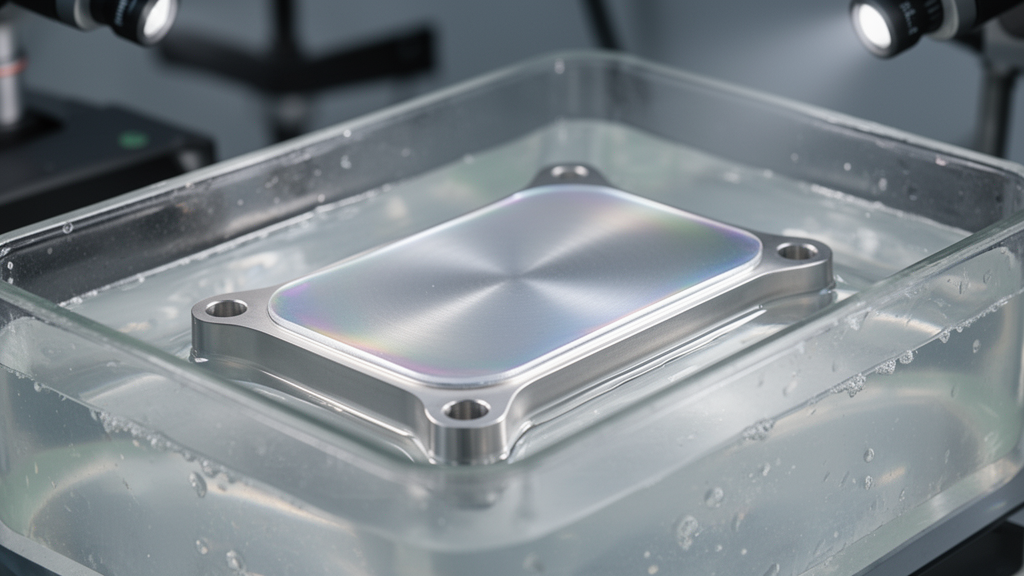
Titanium grade-5 alloy coated with zinc oxide nanoparticles demonstrated reduced surface wear and enhanced corrosion protection during laboratory evaluations, alongside increased cell viability and bacterial inhibition. Researchers evaluated the surface-modified alloy across tribological, electrochemical, and biological domains to assess its protective and functional performance.
The zinc oxide nanoparticles were synthesized through a wet-chemical precipitation method. Following synthesis, the authors conducted structural, morphological, and compositional characterizations using ultraviolet-visible spectroscopy, X-ray diffraction, Fourier transform infrared spectroscopy, scanning electron microscopy, energy-dispersive X-ray analysis, and elemental mapping.
The synthesized nanoparticles were deposited onto the titanium grade-5 (Ti-6Al-4V) substrate using a spin-coating technique. Subsequent characterization of the coated alloy surface via scanning electron microscopy, energy-dispersive X-ray spectroscopy, and elemental mapping verified the compositional details and confirmed the uniformity of the nanomaterial layer.
Mechanical wear resistance was measured across different rotation speeds using a ball-on-disc tribometer method to determine the coating’s effect on mitigating surface abrasion. Under an applied normal load of 30 N at an operating speed of 200 rpm, the zinc oxide-coated titanium substrate reached a minimum wear value of 114.22 micrometres.
Electrochemical potentiodynamic polarization tests indicated that the coated substrate exhibited superior corrosion resistance compared with the uncoated alloy. The zinc oxide-coated specimens demonstrated a 13.6 percent reduction in corrosion current, a 5.3 percent increase in polarization resistance, and a 43 mV shift of the corrosion potential toward more noble values.
Biological evaluations assessed in vitro biocompatibility and antibacterial activity of the coated material. An MTT assay using the NIH-3T3 mouse embryonic fibroblast cell line showed a 22.1 percent increase in cell viability for the coated substrate compared to the uncoated alloy, while antibacterial assessments against Escherichia coli (MTCC-16521) and Staphylococcus aureus (MTCC-3160) demonstrated inhibition of bacterial growth.
Subject of Research: Surface performance of zinc oxide nanoparticle-coated titanium alloy
Article Title: Performance evaluation of zinc oxide nanomaterial coated titanium grade–5 alloy for superior biomedical applications
Article References: Jadon, M. S., Bhanjana, G., Lamba, R., Dilbaghi, N., Mehta, J., Singhal, N. K., & Kumar, S. (2026). Performance evaluation of zinc oxide nanomaterial coated titanium grade–5 alloy for superior biomedical applications. Frontiers in Materials, 13, Article 1944252. https://doi.org/10.3389/fmats.2026.1944252
Image Credits: AI Generated
DOI: 10.3389/fmats.2026.1944252
Keywords: titanium alloy, zinc oxide nanoparticles, wear resistance, corrosion protection, biocompatibility, antimicrobial activity, spin coating, surface engineering, Performance, evaluation, zinc, oxide