Mass spectrometry (MS) has quietly undergone one of the most consequential evolutions in modern drug discovery. Once viewed primarily as a confirmatory analytical tool, it is now reshaping how researchers identify, validate, and optimize therapeutic candidates. Across chemoproteomics, metabolomics, immunopeptidomics, and beyond, MS is increasingly positioned not at the end of the pipeline—but at its beginning, where the most crucial decisions are made.
“Mass spectrometry is no longer just a downstream analytical checkpoint,” says Aaron Robitaille, PhD, the senior director of product & vertical marketing of mass spectrometry at Thermo Fisher Scientific. “It is increasingly serving as a discovery engine.”
This shift reflects a broader transformation across the pharmaceutical industry: from hypothesis-driven experimentation toward data-rich, systems-level interrogation of biology.
Seeing biology more clearly
Drug discovery has always struggled with a fundamental problem: Biology is complex, noisy, and often opaque. Many of the molecules that determine therapeutic success are low in abundance, transient, or entirely unknown. MS addresses this challenge by enabling researchers to observe biological systems with unprecedented depth and specificity.
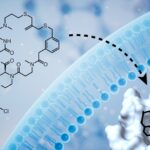
According to Robitaille, MS now supports nearly every stage of early discovery—from target identification and engagement to pharmacokinetics and mechanism-of-action studies. One of its most transformative applications is chemoproteomics, where researchers can directly measure drug-protein interactions within living cells. This enables scientists to evaluate not just whether a compound binds its intended target, but also whether it interacts with unintended ones.
Crucially, MS is moving upstream in the discovery pipeline. “What makes that important is not merely breadth. It is timing,” Robitaille notes. By enabling high-throughput screening with detailed molecular readouts, MS helps eliminate poor candidates earlier—saving time, cost, and effort.
Technological advances are driving this shift. Historically, researchers faced trade-offs between speed and sensitivity, or between targeted and untargeted analyses. Newer platforms are collapsing these compromises. Hybrid acquisition methods, for example, allow targeted and untargeted data to be collected simultaneously in a single experiment, enabling both hypothesis testing and discovery.
The Thermo Scientific Orbitrap Astral Zoom MS exemplifies this convergence. Built around parallelized acquisition and enhanced ion handling, the system delivers high throughput, deep proteome coverage, and precise quantitation—all in one platform. Its ability to process hundreds of samples per day while quantifying thousands of proteins illustrates how MS is becoming both scalable and decision-ready.
Interrogating biology at scale
For Mike Knierman, biopharma workflow manager at Agilent, the expanding role of MS reflects the growing complexity of new therapies. “Drug discovery today spans multiple therapeutic modalities, including small molecules, monoclonal antibodies, oligonucleotides, and cell-based therapies,” he explains. MS provides a unifying analytical backbone across this diversity.
One of the most significant recent developments, Knierman emphasizes, is MS’s ability to interrogate biology at scale. Techniques such as proteomics, metabolomics (See Sidebar), and lipidomics allow researchers to observe how candidate drugs perturb entire cellular systems, rather than isolated targets. This systems-level insight is essential for understanding the mechanism of action and identifying off-target effects early in development.
Emerging measurements—such as protein turnover—are also enabling new therapeutic strategies. These include targeted protein degradation approaches, which require a detailed understanding of dynamic protein lifecycles rather than static abundance.
Agilent’s Revident LC/Q-TOF platform reflects this trend toward intelligent, high-resolution analysis. Designed for accurate-mass performance with built-in diagnostics, the system incorporates features that automate quality control and maintain data consistency. Its ultra-fast detector supports a wide dynamic range without sacrificing resolution, enabling confident identification and quantitation in complex biological samples.
Equally important are workflow innovations. The platform’s Intelligent Reflex capabilities automate routine checks—such as calibration verification and carryover detection—reducing manual intervention and ensuring consistent performance. In drug discovery environments where throughput and reproducibility are crucial, these features help maintain data integrity while accelerating timelines.
Ultimately, Knierman highlights MS as a driver of “biology-driven discovery,” where decisions are guided by comprehensive molecular data rather than limited readouts.
A shift in discovery models
Todd Stawicki, senior global market development manager for pharma, SCIEX, places MS within a broader transformation of drug discovery itself. The industry is moving away from traditional in vivo models toward more complex in vitro systems—such as organoids and tissue-based assays—in an effort to reduce impacts to laboratory animals and rising global regulatory efforts.
This shift dramatically increases the number and complexity of experimental endpoints. “Many or most of these endpoints are best served by mass spectrometry,” Stawicki notes. As a result, MS is becoming indispensable for analyzing the rich datasets generated by these models.
MS is also deeply embedded throughout the discovery lifecycle. In the early stages, it supports proteomics and complements genomic studies. It plays a central role in hit identification and lead optimization, and remains crucial in ADME (absorption, distribution, metabolism, and excretion) and DMPK (drug metabolism and pharmacokinetics) studies.
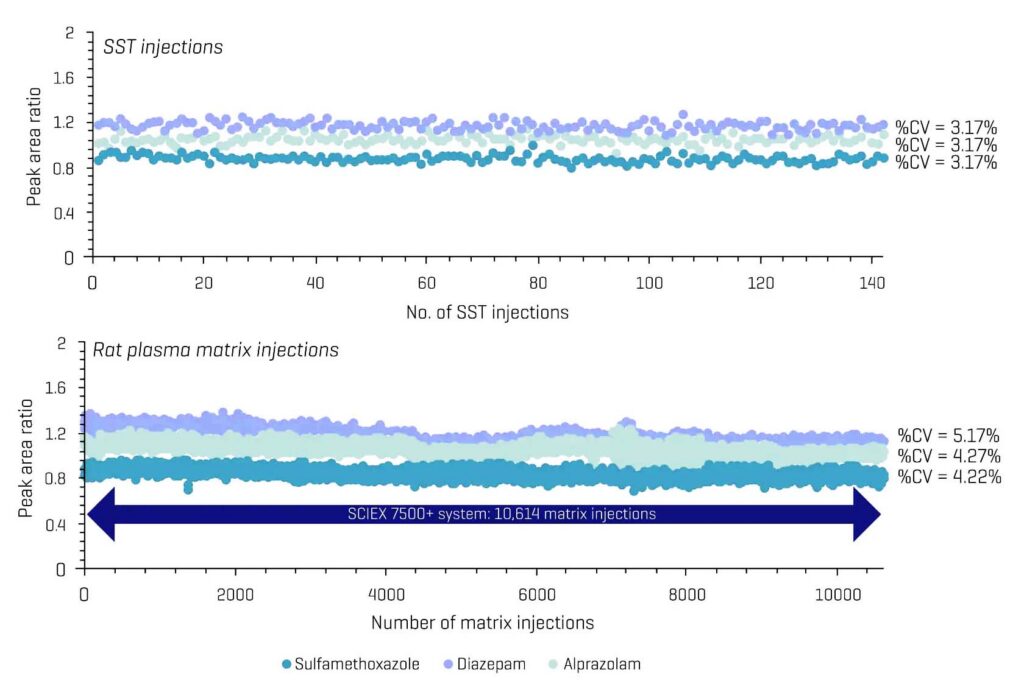
Technological innovation continues to expand MS’s capabilities. Acoustic ejection-based MS, for example, enables rapid, label-free screening, while advanced systems—like the SCIEX 7500+ system—address one of the field’s most persistent challenges: balancing sensitivity with dynamic range.
As new drug modalities become more potent and targeted, they often exist at extremely low concentrations in complex biological matrices. This creates a dual requirement for high sensitivity and a broad quantitation range. The SCIEX 7500+ system meets this need, enabling accurate measurement across diverse tissues and concentration levels.
Robustness is another key consideration. SCIEX Mass Guard technology, for instance, enhances system uptime, ensuring that high-throughput workflows can run reliably over extended periods. In an environment where delays can be costly, this operational stability is as important as analytical performance.
Balancing throughput and insight
Shimadzu’s perspective underscores the importance of versatility in modern MS workflows. “Mass spectrometry has become one of the most versatile analytical tools in drug discovery,” says Lihini Mendis, PhD, LCMS product specialist at Shimadzu Scientific Instruments, noting that it now supports everything from early screening to preclinical development.
A major recent trend is the push toward higher throughput without compromising data quality. Rapid LC-MS methods and triple quadrupole systems are increasingly used to process large sample volumes efficiently, particularly in quantitative workflows such as bioanalysis and DMPK studies.
At the same time, qualitative MS capabilities are expanding. High-resolution instruments, combined with advanced fragmentation techniques, allow researchers to gain deeper structural insights into complex molecules such as lipids and metabolites. This dual capability—quantitative precision and qualitative depth—enables scientists to answer both “how much” and “what exactly” within the same experiment, Mendis explains.
Shimadzu’s portfolio reflects this balance. Single-quadrupole systems provide accessible, high-throughput screening, while triple-quadrupole platforms emphasize stability and reproducibility for quantitative analysis. High-resolution instruments extend capabilities into accurate-mass analysis and structural elucidation, all while maintaining user-friendly operation.
The overarching goal is not complexity for its own sake, but meaningful data that supports confident decision-making. By focusing on workflow efficiency and reliability, Shimadzu aims to streamline the path from data acquisition to actionable insight.
A proteoform-centric vision
While incremental improvements in speed and sensitivity have driven much of MS innovation, Bruker’s recently introduced timsOmni system points toward a more fundamental shift: a move toward protein-centric analysis at the level of intact proteoforms—structurally distinct variants of proteins that arise from genetic mutations, alternative splicing, or post-translational modifications.
The platform introduces a multimodal trapping approach that enables precise control over ion reactions, supporting a wide range of fragmentation techniques. This flexibility allows researchers to tailor experiments to extract detailed structural information from complex biomolecules.
Rather than focusing solely on peptides or simplified representations of proteins, the system emphasizes intact protein analysis. This is particularly important for identifying proteoforms. These variants often play critical roles in disease but are difficult to detect using conventional approaches.
The timsOmni platform enables detailed mapping of such variations, including modifications, such as acetylation and glycosylation, that influence protein function and cellular signaling. By combining high sensitivity with advanced fragmentation methods, it allows researchers to generate comprehensive sequence information and localize modifications with precision.
Importantly, this capability extends beyond discovery into biopharma development and quality control. The ability to characterize therapeutic antibodies and other biologics at the proteoform level has significant implications for both efficacy and safety.
Supporting software further enhances this capability by translating complex spectral data into actionable insights. Advanced algorithms enable de novo sequencing, charge state assignment, and modification identification, making it easier for researchers to navigate the complexity of proteoform analysis.
Accelerating insights
As therapeutic modalities become more complex, the need for faster, more precise characterization tools has never been greater. David Curtin, vice president and general manager, biologics business, Waters Analytical Sciences, Waters Corporation, highlights how emerging platforms are enabling researchers to generate deeper insights earlier in the development cycle—when those insights can have the greatest impact.
As one example, Curtin describes the Xevo CDMS platform as a breakthrough in capability and accessibility. As the first dedicated benchtop charge-detection mass spectrometry system, it enables measurement across a wide spectrum of mega-mass biomolecules. Crucially, it supports “characterization in process development when decisions matter most,” Curtin says, allowing teams to act on high-quality data in real time.
Speed is one of its most transformative advantages. “Xevo CDMS delivers accurate analysis in less than 10 minutes,” Curtin explains. This represents a dramatic improvement over traditional workflows that could take hours, days, or even weeks when outsourced. The result is a shift to same-day decision-making, fundamentally changing how process development is executed and optimized.
Efficiency is another key differentiator. Curtin notes that “the system requires up to 100 times less sample than current methods,” addressing a long-standing limitation in biopharma research. With reduced sample demands, scientists can run more experiments per batch, leading to “lower cost, higher yields, fewer impurities, and faster time to market,” he says.
Beyond operational improvements, the platform unlocks new scientific possibilities. Curtin emphasizes that it delivers direct mass and charge measurements for individual 100-kilodalton to 150-megadalton molecules, including complex structures such as glycosylated proteins, viral vectors like AAV, and lipid nanoparticles. In many of these cases, “CDMS isn’t just a better option; it’s the only option,” Curtin says.
Ultimately, Curtin underscores the broader impact: researchers are now generating “fast, accurate orthogonal data” that validates existing approaches while opening entirely new lines of inquiry. Scientists, he says, are “asking and answering questions they couldn’t tackle before”—a powerful indicator of how this technology is advancing the development of therapies for diseases including cancer, heart disease, and Alzheimer’s.
From data to decisions
Across all these perspectives, a common theme emerges: MS is no longer defined by its ability to generate data, but by its ability to inform decisions. This clarity is transforming drug discovery. By revealing off-target effects, validating mechanisms of action, and identifying biomarkers at early stages, MS helps reduce uncertainty and improve success rates. It allows researchers to prioritize the most promising candidates and eliminate those unlikely to succeed.
As Robitaille puts it, the ultimate value of modern MS lies in “the ability to see meaningful biology early enough to act on it.” In an industry where time, cost, and complexity are ever-increasing, that capability might prove to be one of the most important advances of all.