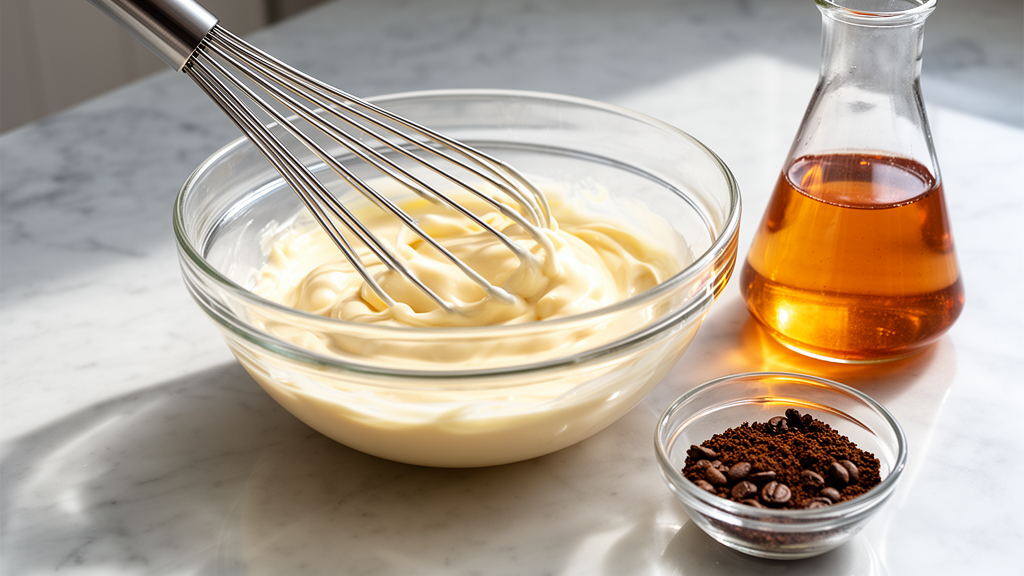
Extracts of bioactive compounds recovered from coffee processing sidestreams significantly improve the oxidative stability of mayonnaise when prepared using a green aqueous deep eutectic solvent, according to an experimental investigation published in Discover Food. The research evaluated antioxidant compounds derived from four distinct Coffea arabica processing byproducts—skin and pulp, husk, silverskin, and parchment—to determine their functional efficacy as natural protective agents in an oil-in-water emulsion system.
To recover the target compounds from underutilized agricultural residues, the authors applied microwave-assisted extraction in conjunction with a glycerol–water aqueous deep eutectic solvent system. Evaluating three separate solvent formulations, the team identified that a mixture containing 61.3% (v/v) glycerol and water produced the highest yields of total phenolic content across the tested coffee residues.
Within this optimal extraction regime, the coffee skin and pulp yielded the greatest concentration of total phenolics at 16.5 mg GAE/g, followed by the husk sidestream at 15.2 mg GAE/g. Profiling of the extracts revealed that chlorogenic acids were the dominant phenolic class, with 5-caffeoylquinic acid (5-CQA) predominating at concentrations spanning from 0.07 to 2.3 mg/g, while caffeine content across the evaluated sidestreams ranged from 5.3 to 13.6 mg/g.
The measured antioxidant activity among the raw materials followed a clear hierarchical sequence, declining from skin and pulp to husk, followed by silverskin, and lastly parchment. This observed antioxidant activity demonstrated a strong statistical correlation with the total phenolic content of the respective sidestreams, characterized by determination coefficients (R²) ranging between 0.8 and 0.9.
When these aqueous deep eutectic solvent extracts were incorporated directly into mayonnaise formulations, the emulsion exhibited marked resistance to lipid degradation. Specifically, primary and secondary oxidation markers—measured via peroxide and p-anisidine values—were markedly reduced (p < 0.001), with the extract formulated from 1.5% skin and pulp yielding the lowest oxidation levels observed during testing.
The addition of the coffee by-product extracts altered the color parameters of the mayonnaise due to natural extract pigmentation, while the product pH remained stable within safe limits between 4.3 and 4.4. Furthermore, key textural properties comprising hardness, adhesiveness, cohesiveness, and elasticity were largely unaffected by extract addition, demonstrating that green deep eutectic solvent extraction can yield functional natural antioxidants for food emulsions.
Subject of Research: Application of coffee sidestream antioxidant extracts in mayonnaise preservation
Article Title: Green extraction of bioactive compounds from Coffea arabica sidestreams with aqueous deep eutectic solvent and their application in mayonnaise as antioxidant agents
Article References: Adoyo, G. O., Owino, W. O., Wafula, E. N., Engelsen, S. B., & Abong, G. O. (2026). Green extraction of bioactive compounds from Coffea arabica sidestreams with aqueous deep eutectic solvent and their application in mayonnaise as antioxidant agents. Discover Food. https://doi.org/10.1007/s44187-026-01300-5
Image Credits: AI Generated
DOI: 10.1007/s44187-026-01300-5
Keywords: Coffea arabica, food science, deep eutectic solvents, antioxidants, mayonnaise, lipid oxidation, phenolic compounds, food emulsions, Green, extraction, bioactive, compounds