
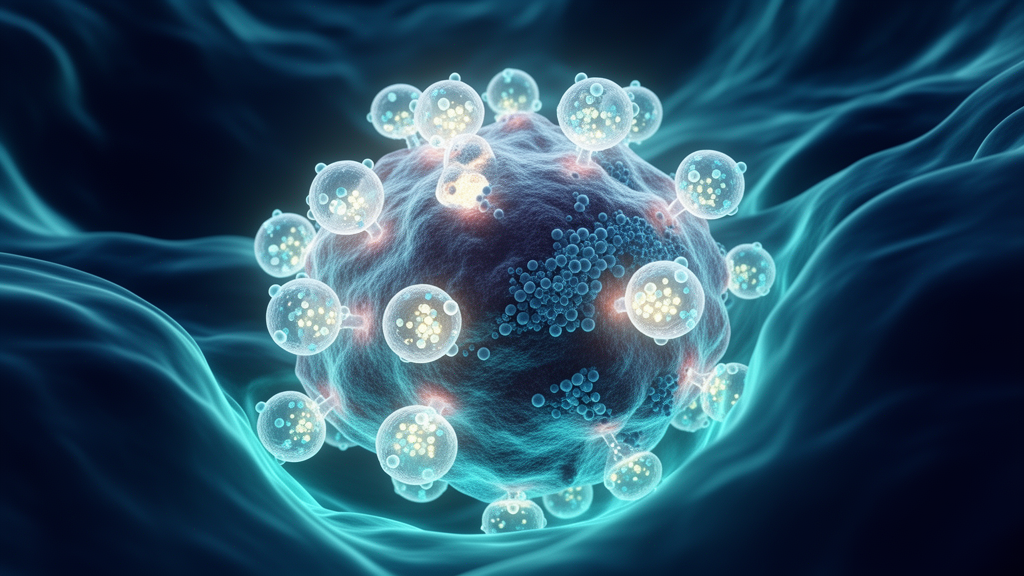
A research team has designed a targeted, pH-responsive nanoparticle delivery system that simultaneously administers dual therapeutic agents to suppress head and neck squamous cell carcinoma and overcome resistance to targeted treatments. Reported in Cancer Nanotechnology, the investigation demonstrated that dual-specificity tyrosine phosphorylation-regulated kinase 1A, known as DYRK1A, functions as an essential upstream regulatory node that sustains the continuous activation of the KRAS signaling network. To counteract compensatory drug resistance mechanisms, investigators synthesized a zeolitic imidazolate framework nanocarrier, designated as INDY plus INK128 at ZIF-8, or II@ZIF-8, which simultaneously encapsulates the selective DYRK1A inhibitor INDY and the mammalian target of rapamycin inhibitor INK128. Evaluations conducted across oral squamous cell carcinoma cell cultures and animal models showed that the dual-agent nanoplatform concentration-dependently reduced cellular proliferation, induced apoptosis, arrested cell division cycles, blocked tumor cell migration, and substantially restrained subcutaneous xenograft tumor expansion without causing premature systemic drug release.
Head and neck squamous cell carcinoma represents a widespread group of epithelial malignancies originating in the mucosal linings of the oral cavity, oropharynx, hypopharynx, and larynx. Pathological progression typically advances through a defined multistep sequence that transitions from mild, moderate, and severe epithelial dysplasia into carcinoma in situ before culminating in invasive malignancy. Epidemiological forecasts project that global disease incidence will increase by thirty percent by the year 2030, corresponding to an anticipated 1.08 million new clinical cases annually worldwide. Modern management relies on multidisciplinary coordination employing surgery, radiotherapy, and cytotoxic chemotherapy for locally advanced disease stages, while molecular targeted interventions have been introduced for recurrent or metastatic presentations. Despite these options, the clinical utility of single-agent targeted therapies remains severely constrained by high frequencies of acquired drug resistance, emphasizing the necessity of clarifying underlying resistance mechanisms and establishing potent combination regimens.
Abnormal pathway hyperactivation drives head and neck tumor progression, with signaling through KRAS operating as a central molecular catalyst. As a key GTPase within the RAS family, the KRAS protein toggles between inactive guanosine diphosphate-bound and active guanosine triphosphate-bound conformations, directing downstream effector cascades that include RAF-MEK-ERK and PI3K-AKT-mTOR pathways to regulate cellular proliferation, metabolic reprogramming, invasion, and metastatic dissemination. Although KRAS gene mutation frequencies vary geographically between three percent and sixty percent in head and neck cancer cohorts, roughly 33.3 percent of patients exhibit KRAS protein overexpression, which directly sustains downstream pathway activation. Crucially, prior research confirmed that monotherapy with mammalian target of rapamycin inhibitors triggers compensatory feedback activation of KRAS, which restores mitogen-activated protein kinase and phosphatidylinositol 3-kinase activity, directly negating the antitumor efficacy of single-agent treatments and demanding coordinated dual-pathway inhibition.
Investigators identified DYRK1A as an actionable target capable of disrupting this adaptive feedback loop. As an evolutionarily conserved dual-specificity serine and threonine kinase, DYRK1A possesses both tyrosine phosphorylation self-activation capabilities and serine/threonine kinase activity, interacting with diverse protein targets via kinase-dependent and kinase-independent mechanisms. Previous clinical and laboratory studies linked DYRK1A dysregulation to neurodevelopmental conditions such as Down syndrome and Alzheimer’s disease, alongside oncological malignancies including hepatocellular carcinoma and glioblastoma multiforme. In head and neck malignancies, inflammatory cytokines and growth factors stimulate PI3K-AKT and MAPK-ERK signaling in proportion to disease severity. Prior investigations established that suppressing DYRK1A dampens KRAS hyperactivation in gastrointestinal tumor models, and molecular docking screenings using AutoDock Vina confirmed that the small-molecule inhibitor INDY securely occupies the ATP-binding pocket of DYRK1A with a binding energy threshold below negative eight kilocalories per mole.
To overcome pharmacological liabilities associated with free small-molecule compounds, including poor aqueous solubility, lack of tissue specificity, and non-target cytotoxicity, the authors fabricated the metal-organic framework nanocarrier II@ZIF-8. Synthesis involved dissolving zinc nitrate hexahydrate in anhydrous methanol at a concentration of fifty millimoles to prepare a zinc precursor, followed by introducing stock solutions of INK128 and INDY under dark room-temperature stirring for thirty minutes to coordinate the drugs with zinc ions. A four-hundred-millimole methanol solution of 2-methylimidazole was rapidly introduced under continuous high-speed stirring at eight hundred revolutions per minute for twenty-four hours, precipitating the zeolitic framework. The resulting nanoparticles were isolated via centrifugation at ten thousand times gravity for fifteen minutes at four degrees Celsius, rinsed thrice with anhydrous methanol, and vacuum freeze-dried for forty-eight hours, yielding a stable powder with controlled dimensions.
Structural characterization through scanning electron microscopy and transmission electron microscopy confirmed that ZIF-8 and drug-loaded II@ZIF-8 formed spherical-like nanoparticles with uniform dispersion. Dynamic light scattering measurements revealed that unloaded ZIF-8 averaged approximately one hundred twenty nanometers in diameter, whereas dual-drug loading increased the average hydrodynamic size to roughly one hundred fifty nanometers, fitting within the targeted range of one hundred to two hundred nanometers. This dimension permits passive accumulation within tumor tissues through enhanced permeation while preventing rapid renal filtration and avoiding poor penetration through dense tumor stroma. In vitro drug release evaluations demonstrated robust pH sensitivity: under acidic conditions of pH 5.5, designed to replicate the tumor microenvironment, INDY and INK128 were rapidly and steadily released, whereas release remained markedly diminished at physiological neutral pH 7.4, confirming high encapsulation efficiency and reduced potential for non-specific systemic leakage.
Bioinformatics analyses using normalized head and neck squamous cell carcinoma transcriptomic datasets substantiated the biological relevance of DYRK1A in tumor tissue compared to normal margins. Setting significance cutoffs at an absolute log-two fold change greater than one and adjusted p-values below 0.05 identified DYRK1A among core differentially expressed genes. Intersecting the CCLE database with mTOR inhibitor-associated gene signatures revealed four overlapping candidates, prominently featuring DYRK1A as a putative synthetic lethality partner. Functional enrichment profiling connected DYRK1A to glucose metabolic processes, glucose uptake regulation, and the phosphatidylinositol 3-kinase and ErbB signaling cascades. Immunohistochemical and mRNA analyses validated that DYRK1A expression was significantly elevated in tumor samples relative to adjacent normal mucosal tissues. However, retrospective Kaplan-Meier survival curves indicated that elevated DYRK1A expression did not correlate significantly with overall patient survival, indicating its primary role as a pathway mediator rather than a solitary prognostic determinant.
Laboratory experiments using Cal27 and SCC25 oral squamous cell carcinoma cell lines confirmed potent synergy when co-administering INDY and INK128. Combining the two agents produced combination index values below one across multiple testing conditions, with a 1:10 ratio of INK128 to INDY demonstrating slightly superior synergistic growth inhibition compared to a 1:20 ratio. Long-term colony formation assays over fourteen days revealed concentration-dependent decreases in colony area following dual exposure, showing significantly greater suppression than either individual agent. Annexin V-FITC and propidium iodide flow cytometry demonstrated that while single-agent treatments induced modest apoptosis, combination treatment significantly elevated the proportion of apoptotic cancer cells. Mechanistic Western blotting and co-immunoprecipitation assays using Flag-tagged KRAS-G12D and Myc-tagged DYRK1A plasmids revealed that DYRK1A physically binds to the KRAS protein, an interaction disrupted by INDY treatment alongside significant reductions in active GTP-bound RAS, phosphorylated AKT, and phosphorylated ERK.
Direct administration of the synthesized II@ZIF-8 nanoplatform produced marked therapeutic responses across cultured Cal27 and SCC25 oral carcinoma models. Cell counting kit-8 viability assays demonstrated concentration-dependent suppression of cellular proliferation at twelve and twenty-four hours across testing doses of twenty, forty, and eighty micrograms per milliliter, with growth inhibition becoming more pronounced over extended exposure times. Cell cycle analyses utilizing propidium iodide staining and ModFit software revealed that II@ZIF-8 triggered cell cycle arrest, significantly elevating the percentage of cells accumulated in the G1 phase while causing a concomitant reduction in the proportion of cells progressing into the S phase. Furthermore, wound healing migration assays showed that scratch closure areas were markedly restricted over twenty-four hours in a concentration-dependent manner, confirming that the encapsulated formulation effectively crippled malignant cell motility and replication in vitro.
In vivo therapeutic evaluations were performed using subcutaneous xenograft tumor models generated by injecting Cal27 and SCC25 cells into the right dorsal flank of nude mice under institutional animal care approval. When tumors reached one hundred cubic millimeters, animals were randomized into four cohorts receiving intraperitoneal injections of II@ZIF-8 at zero, one, two, or four milligrams per kilogram every three days over twenty days. While control tumors expanded rapidly, animals treated with four milligrams per kilogram exhibited profound suppression of tumor growth, showing marked reductions in excised tumor volume and weight. Bromodeoxyuridine immunohistochemistry demonstrated significantly fewer proliferating cells in treated groups, with the four milligram per kilogram dose yielding the lowest proliferation counts. Histological hematoxylin and eosin staining revealed diminished tumor cell density and extensive necrotic areas, while tissue immunostaining confirmed dose-dependent reductions in phosphorylated S6, phosphorylated ERK, and phosphorylated AKT levels.
Collectively, these findings demonstrate that coupling the upstream blockade of the DYRK1A-KRAS signaling axis with downstream mTOR inhibition through a pH-responsive nanocarrier provides an effective strategy to disable compensatory resistance networks in head and neck squamous cell carcinoma. By preventing feedback-driven reactivation of MAPK and PI3K pathways, the dual-loaded nanoplatform achieves synthetic lethality while shielding non-target tissues from non-specific toxicities. Nonetheless, the authors noted important study limitations, observing that efficacy was validated in only two representative cell lines, Cal27 and SCC25. Because clinical head and neck squamous cell carcinoma exhibits extensive molecular heterogeneity, encompassing differences in human papillomavirus status, smoking history, and distinct KRAS mutation profiles, the researchers concluded that subsequent evaluations must expand across larger cell line cohorts and patient-derived xenograft models to establish broader therapeutic applicability.
Subject of Research: Nanocarrier co-delivery of DYRK1A and mTOR inhibitors in head and neck squamous cell carcinoma
Article Title: Targeted DYRK1A/mTOR co-delivery system for head and neck squamous cell carcinoma therapy
Article References: Jiang, L., Huang, C.-C., Zhang, G., & Li, D.-Q. (2026). Targeted DYRK1A/mTOR co-delivery system for head and neck squamous cell carcinoma therapy. Cancer Nanotechnology, 17(1), Article 40. https://doi.org/10.1186/s12645-026-00390-1
Image Credits: AI Generated
DOI: 10.1186/s12645-026-00390-1
Keywords: Head and neck squamous cell carcinoma, DYRK1A, mTOR inhibitors, ZIF-8 nanocarrier, KRAS signaling, Cancer nanotechnology, Drug resistance, Targeted therapy, Targeted, mTOR, co-delivery, system

