Sponsored content brought to you by

Gene therapies are unlocking new drug targets that were previously thought undruggable. Covering modalities like ASOs, siRNA, saRNA, mRNA, and ADARs, each with different mechanisms of action, gene therapies traditionally edit genomic or transcriptomic sequences to correct expression within cells and remove disease-causing variants. Many developers are already dreaming up more creative applications of RNA editing, such as introducing mutations to disrupt interactions between proteins.
As the field expands, we are seeing these gene-altering drugs expand from use in rare monogenic diseases to more common diseases that will benefit large patient populations, with molecules in the clinic addressing cancer, metabolic disorders, and respiratory diseases. Marking this shift is the siRNA inclisiran for the treatment of cardiovascular disease, the global leading cause of death. To reach their full potential and be used for common diseases, gene therapies need to overcome the delivery challenge.
A billion years of evolutionary defenses means that cells are designed to keep invading RNAs from getting to the inside of cells. But without penetrating the cell, gene therapies can’t exert their effects. Without an effective delivery system, RNA degrades quickly, fails to reach the target cells, and has limited therapeutic impact, making a targeted delivery vehicle essential. A good delivery vehicle is one that protects the RNA, directs it to the right site, and ensures it enters the target cells for therapeutic function. This highlights a key reason for the failure of many gene therapies in clinical development.
Many gene therapy developers use viral vectors that exhibit specific tissue tropism as delivery vehicles, meaning they preferentially infect certain tissues to deliver the gene therapy cargo. Often, this does not provide the required precision, leading to off-target effects that can reduce efficacy and increase side effects.
Optimer delivery vehicles are helping to bridge this gap. With the three major hurdles of targeted delivery being (1) delivery to the correct tissue type, (2) penetration of the intended cells, (3) release of an active gene therapy into the cell for effect, Optimer technology has overcome each of them.
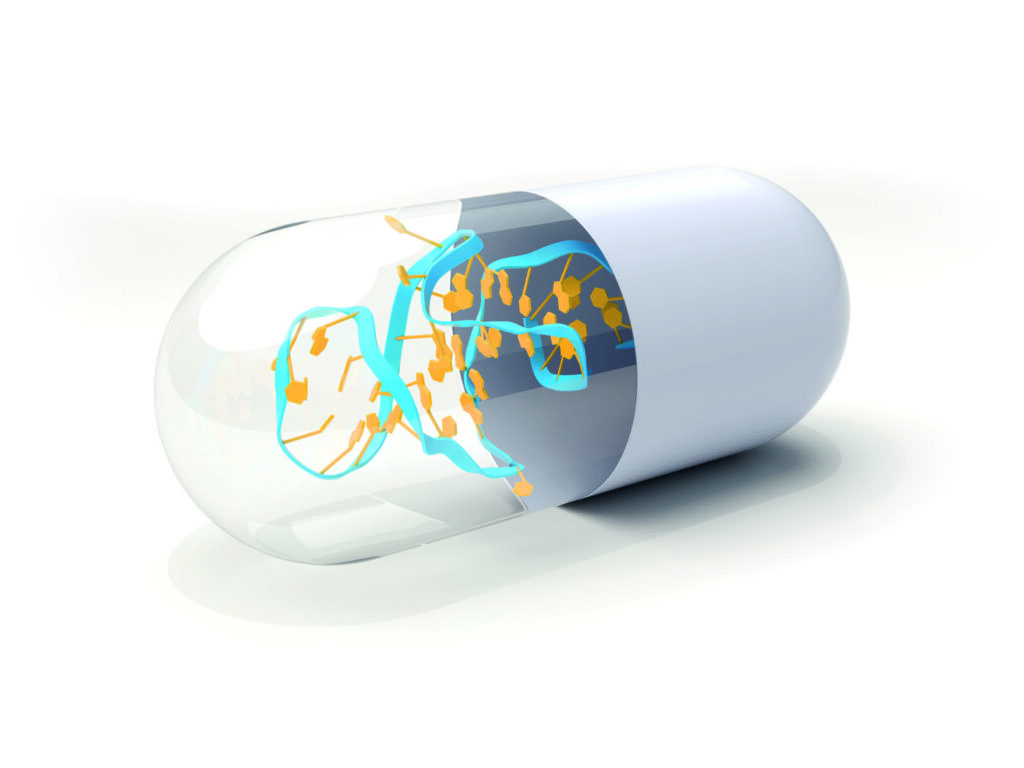
Optimers are small, stabilized RNA molecules engineered to guide gene therapies directly to specific cell types and tissues for action. These molecules bind to cell-surface receptors, triggering receptor-mediated endocytosis and internalizing the Optimer-conjugated gene therapy. Alternatively, they can be conjugated to nanoparticle surfaces to enhance targeted delivery of larger gene therapies, such as mRNA-based treatments.
As they are chemically synthesized, the chemistry of Optimer delivery vehicles is fully controlled, allowing site-directed conjugation of gene therapies. This critical factor enables simple, reliable manufacturing and controlled dosing of the final therapies. Precision targeting of therapies to their site of action improves the efficacy and safety of these drugs, with more drug getting to where it is needed and less off-target effects that cause patient side effects.
Unlike commonly used viral vectors, which pose challenges related to high costs, complex manufacturing, and immunogenicity, Optimers offer a non-immunogenic alternative. Similarly, protein-based non-viral delivery methods, such as antibodies, have also demonstrated immunogenicity concerns that limit repeat dosing. In contrast, Optimers, being RNA-based, are non-immunogenic and safe for long-term administration.
As we continue to see sequencing technologies advance and provide a deeper understanding of gene therapy targets along with more precise targeting and delivery options, they will become increasingly effective. New precision gene therapies are being developed for traditionally difficult-to-target tissues, like across the blood-brain barrier to access the central nervous system, to the center of solid tumors, and for fibrotic diseases. With these advancements, the promise of gene therapy is closer than ever to becoming a mainstream reality in modern medicine.

Learn more in this On-Demand Webinar