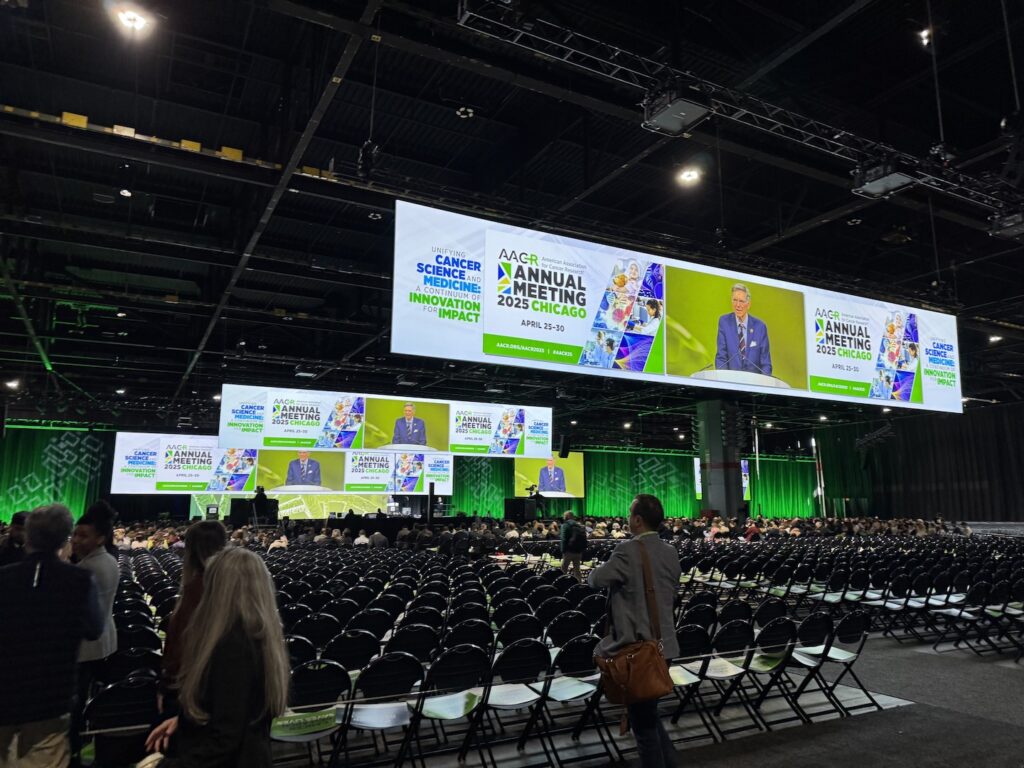
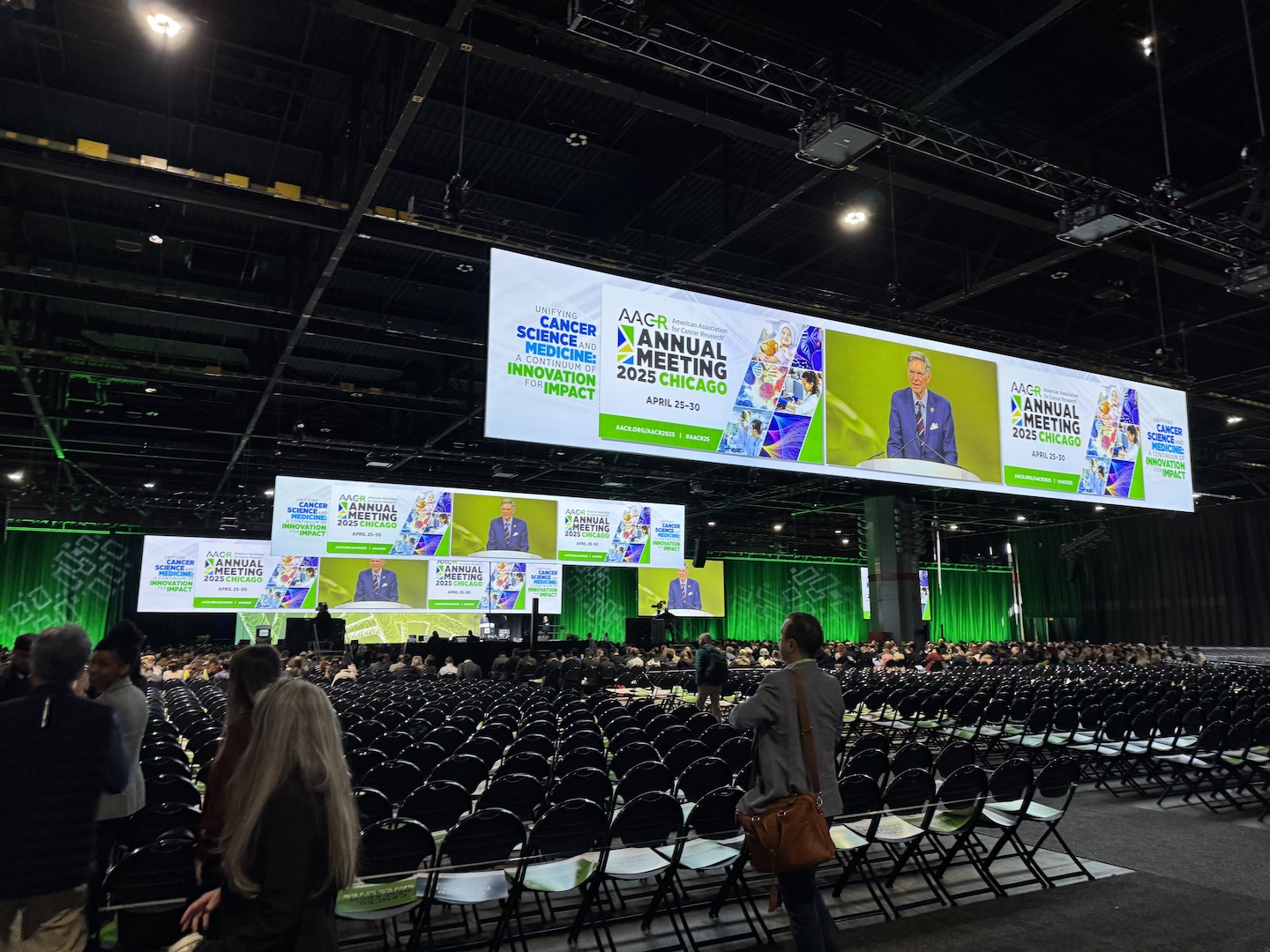
The American Association for Cancer Research (AACR) Annual Meeting kicks off this weekend in San Diego. A whirlwind of sessions, keynotes, fireside chats, posters, and exhibitors, the meeting is THE annual event for the cancer community.
Before the conference, GEN spoke with AACR program chairs Paul S. Mischel, MD, Professor and Vice Chair for Research for the Department of Pathology at Stanford Medicine of Stanford University and Alice T. Shaw, MD, PhD, Chair of the Department of Medical Oncology and the Chief of Strategic Partnerships at Dana-Farber. In this interview, they share their perspectives on the event, what attendees should be looking out for, and what they, personally, are most looking forward to.
This interview has been edited for length and clarity.
GEN: What did you feel were some of the most important themes to include in the conference program?
Shaw: First of all, it’s been such an honor for me to work with Paul as well as our president, Lillian Siu, MD. We had an expert program committee and incredible staff at AACR who all helped shape the program.
This year’s annual meeting feels more meaningful than ever, because of everything going on in the world, including funding challenges, challenging geopolitics, and everything else. It has felt even more important that we have this time to bring together our global community of cancer researchers and investigators.
When Paul and I met last summer, we felt strongly that this meeting was not just about designing an incredibly strong scientific program to showcase the science and all of the innovation, but we wanted to make a point to demonstrate to the audience, and the world, the tangible benefits of scientific research to patients with cancer, and to highlight how all the research we do is done with an eye toward improving the lives of patients with cancer.
We intentionally planned a scientific program with patients and patient impact front and center and have tried to incorporate the patient perspective and even patient voices in some sessions—to emphasize that science drives impact for patients.
Mischel: When we started about a year ago, our conviction—that there probably has never been a more important year for an AACR meeting—grew over the year. This organization is a beacon of light at a time in which there’s been extraordinary progress in cancer, and [there is] the potential to really make a difference in patients’ lives at the face of some very major headwinds. What we’re seeing is a level of enthusiasm and engagement in coming together in the community that’s saying: we won’t be stopped in making a difference for patients with cancer. And there were a number of themes that were central to this meeting.
For example, precision—that you can use information about patients to identify what’s gone wrong and how to develop therapies based upon deep molecular knowledge. Partnership—The growing recognition of how we work together to make a difference for patients. It’s not a winner-take-all strategy. It’s not a race to the top for individuals. It’s a race to the top for people with cancer. And we do it effectively by joining hands to make a difference for patients. And global work—another major theme that we’re really talking about this year, because together we can make a real difference for people with cancer.
We work together with people that span an enormous range of disciplines and expertise. A number of themes came front and center during the year. The technologies to interrogate what’s happening in human beings, whether it’s in their tissue, their blood, or their images—it’s nothing short of breathtaking. The ability to either forestall cancer by detecting if it’s going to happen, or catch it early, or monitor our most effective treatments is really changing the game. New modalities for developing treatments. We’ve heard a lot about harnessing the immune system and about the development of small molecules. There’s all kinds of new chemistry, molecular glues and degraders that are leading the way. And they’re tied to deep investigations into the fundamental biology.
AI is changing the game as well. We are very excited that we’ve brought together perhaps the most interesting AI sessions that you can imagine, that talk about all of the ways that AI can be used—not like an oracle but actually in partnership with helping make a difference for patients, whether it be in the diagnostics or the development of therapeutics. AI is only beginning to be tapped to help us think about how to integrate knowledge across all of these domains. And it goes beyond that because it’s not only about the molecular composition of a person’s tumor, it’s about a human being, what they eat, where they live, what they do, and various other social determinants of health that might increase risks of cancer. A lot of attention is paid in the meeting to that aspect of it as well. So, I think we’re in for an incredibly interesting meeting.
Shaw: One of the themes that came right out from everyone on the program committee was how important it was to highlight AI; I think everyone believes that AI is going to be transformative and it’s going to impact all aspects of cancer research and clinical care in the coming years. We had a number of AI experts on our program committee. They really helped embed AI topics throughout the scientific and also the educational program.
In fact, when Paul and I were planning the opening plenary session, we really wanted one of the opening plenary speakers to be able to speak on AI. So, we have Regina Barzilay, PhD, from MIT, who’s going to speak on her work in the AI space, both in terms of drug discovery and all the way out to clinical applications. We also have an AI-focused plenary session all unto itself as well, to drive home the importance of AI tools and technologies. It is incredible how AI is already being used in terms of foundational discovery and in terms of real-world, clinical data mining and implementation. And Paul already mentioned genomics, precision medicine, biomarker discovery, histopathology, radiology, all of which are already being impacted by AI.
Mischel: One of the things that is perhaps most stunning is this idea that you might be able to prevent cancer. We already see real world examples of that with things like HPV vaccines. The work is advancing so quickly that it might be possible to build vaccines against [something] that might prevent people who are at high risk of developing cancer from getting those cancers. Our colleague and AACR President Lillian Siu, MD, has a presidential symposium focused on that. What I hope that we’re getting across is the real scale and power of the work that’s being presented and the way that it crosses so many disciplines at this meeting.
Shaw: We are going to have a large focus, as we usually do, on molecularly targeted therapies. We have several sessions on the basic research side, but also in the clinical trial sessions around targeting RAS. RAS, of course, is the most commonly mutated oncogene in human cancer and has been undruggable for decades.
In the last five to 10 years, we now finally have small molecule therapies that can target different RAS mutations. In fact, you may have just heard the news about a new RAS inhibitor, daraxonrasib from Revolution Medicines, and pivotal Phase III trial data in previously treated pancreatic cancer. This was an incredibly positive study, doubling overall survival. Not even knowing those results, though, we already had planned quite a lot around RAS.
In that context of precision therapies, I also want to mention that I’m excited about one of our discovery science plenaries on Saturday that is going to focus on minimal residual disease (MRD) in solid tumors. Here the question is, if we have such incredibly effective targeted therapies for oncogene-driven cancers like RAS, EGFR, and ALK, why aren’t we curing more patients who have these types of cancers? We believe that a lot of the reason is because we can’t eliminate every cancer cell. And if we could just understand what allows those residual cells to survive, perhaps we could eradicate those and then be on the road to curing patients who have advanced disease. So, this whole plenary will focus on the science around MRD and how that then leads to clinical applications as well.
Mischel: Fundamental science is deeply central to this process. We frame a lot of things in terms of what it means for patients’ lives. I think an important part of this meeting is also integrating how those discoveries really flow from the work in fundamental science. For example, in the opening plenary, we’re going to be hearing about how tumors change their stripes effectively to become resistant to treatments, the lineage plasticity, this idea that they adopt new states to become resistant. And then what can you do about it?
When people used to be diagnosed with terminal cancer, it meant that they were going to die soon, and now people can be diagnosed with terminal cancer and live for years. That’s stunning. And that is happening because of cancer research and the integration of cancer research all the way from the most mechanistic to the most applied. One of the deepest themes of this meeting comes into this concept of partnership, that we highlight the critical nature of each component and the integration of those components, all the way from fundamental discovery to translation to patients.
GEN: What are some of the biggest scientific challenges you’re seeing right now in cancer biology that you think people will be discussing at the meeting?
Mischel: Cancer is hard because it is evolution on steroids. The mechanism that I study—extrachromosomal DNA, the ability of cancer cells and tumors to change quickly to resist treatment—is all about that. And it comes from us; it’s our cells that have gone bad. We have to find ways to show how they’re different and target those differences. We’re getting better at it through our understanding of science.
Shaw: I am someone who sits between basic research and the clinic, so I do a lot of translational research. What the AACR meeting does well is gets at this key challenge around how we translate basic discoveries into the clinic. We all just want better cancer therapies for our patients. There are many aspects that really make the translation of discoveries difficult, and these will come out in various forms at the meeting. We’ve been talking about how hard it is to understand the biology, and to identify and validate new targets for drug discovery, for cancer treatments in the future.
I have spent some time on the industry side, so I also recognize how challenging it is, even when you have what you think is a perfect target, to drug that target. At the annual meeting, we’re going to talk a lot about different modalities, ways of thinking about going after what we believe are important targets, be it a small molecule or maybe it’s a new degrader or maybe it’s some other very complicated biologic.
I want to emphasize that to use or to identify the optimal modality requires that we understand the biology and the science behind it. The other challenge that I’ve seen in the translational space is around identifying which patients are going to benefit from a new therapy. A good example of where we’ve seen struggles is immunotherapy and identifying novel immunotherapy combinations and which ones have robust activity. But we can’t tell exactly which patients are deriving that benefit. Oftentimes with no biomarker to guide us, we can’t move forward with what could be a promising combination. At the annual meeting, we try to highlight a lot of these correlative or translational biomarker studies from early phase clinical trials.
The last thing I’ll mention is around how we use preclinical models most effectively to predict what’s going to be a promising new therapy. Often, these models are just models; they’re simpler than human cancers. They can’t recapitulate the complexity of human biology, and they can lead us the wrong way. For example, to overestimate how effective a therapy may be. Fine-tuning our models and making them as predictive as possible is a key challenge.
Mischel: Data seems to suggest that very often you might need to combine agents to make differences for patients. And that of course makes enormous sense from a biological standpoint, but it’s much harder to do when you start thinking about how you design the trials to do that. It’s a slow process. And so, there is increasing recognition of the need to figure out how to combine agents and hopefully ways to figure out how practically to begin to test them more effectively and in a more cost-effective fashion.
GEN: What have been some of the biggest advances since the last meeting?
Mischel: I just keep coming back to RAS because it’s such a big deal. An undruggable target that we’re now seeing a huge change in. It’s a huge deal.
Shaw: I would agree with that. And it’s not simply the RAS inhibitor itself. Many of us believe that that is just the start of how we most effectively treat RAS-driven cancers. We need the best RAS inhibitor to serve as an anchor and then we will build these combinations around that which will hopefully be even more effective and allow us to maximally cytoreduce or debulk cancers and then allow us to take in other even higher order combinations.
We have sessions this year all around RAS-mutant cancers. We have a designated session just focused on pancreatic cancer biology, because understanding that biology well is going to be critical to developing these types of combination approaches.
The other thing that’s exciting—and this space is always evolving—is a plenary session on innovative new therapeutic modalities. This session will focus on a couple key modalities that are already transforming the space. Antibody-drug conjugates (ADC), for example. They are basically entering every therapeutic space that we have in cancer [and] understanding of the biology around how you’re targeting certain tumor-selective antigens.
Also, the design of the ADC itself can be very, very sophisticated and can be tweaked to further enhance activity. We’ll have some great talks around the next generation of ADCs that are going to be even more effective and even safer than what we currently have.
And in that same session around innovative modalities, we’ll also have talks around immune cell engagers; also, new data and next generation immune cell engagers that have built upon the early data with the first-generation immune cell engagers. The other very innovative new therapy that we will highlight, even in more detail than last year, is around radioligand therapies—a way to selectively target tumor cells with radiation. Unlike ADCs where the payload is chemotherapy, here the payload is radiation therapy. We’ve already seen really that these radioligand therapies are incredibly important for patients; they are coming out in all different therapeutic spaces. We thought it was important to highlight the latest advances in radioligand therapies, and we also have some education sessions so that physicians and scientists understand the basics around this innovative and exciting modality.
Mischel: The concepts of glues and degraders open the therapeutic landscape in a very different way. In many ways, the landscape has been limited to enzymes that you can inhibit, and not all good cancer targets are going to be enzymes that you can inhibit, and these glues and degraders change what you can do, whether it’s getting rid of them, moving them, giving them new functions. It’s a very powerful technology that is getting ready to make an enormous difference in clinic.
Shaw: In the opening plenary session, George Winter will speak on glues and degraders. I also wanted to highlight the “New Drugs on the Horizon” sessions. We do this every year at the annual meeting. I love these sessions because they are first time disclosures of novel cancer therapies that have just entered the clinic or they’re about to enter the clinic. These talks go deep into the biology of the disease and how the drug was discovered and developed into early clinical plans. Several talks in this session this year are going to feature molecular glue degraders. That will be a nice way to tie together this theme around the degraders and the power of this new modality.
Mischel: One other thing I want to squeeze in is why on Earth are younger people getting cancer, particularly colorectal cancer? That’s really disturbing. We have sessions that are data rich that go right at that, and the answers are interesting.
GEN: Will there be any programming at the meeting that addresses the current state of funding?
Shaw: We’re fortunate that Tony Letai, MD, PhD, the NCI director, is attending and speaking at the meeting in our opening ceremony on Sunday. He’s also participating in a workshop that we’re holding on grant writing and the scientific review process. On Monday, he will give an NCI director’s address and participate in a fireside chat where I’m sure he’s going to get a lot of questions around funding.
There are also sessions within the science and health policy track at the meeting that are going to focus on federal funding of grants. There is even a researcher town hall that’s really going to talk a lot about this.
GEN: Do you have any advice for young cancer researchers that may be attending AACR for the first time?
Mischel: I have two bits of advice. One of them is to know that what you’re doing is incredibly important. You are welcome. You’re one of us, you’re important. Do what you need and go forward because the work that you’re doing is going to matter an enormous amount. The second thing is do not be afraid. Do not think that the senior people at the meeting, the “bigwigs,” are too busy for you. Do not think they do not want to meet you, because they do. You’re the future. Go up, introduce yourself, say hello, tell us who you are.
GEN: What are things you are looking forward to outside of the sessions?
Shaw: I love the AACR annual meeting because it’s such an opportunity not just to learn, but to network and reconnect with friends and collaborators who you may not have seen in a while. I also think it’s a great venue for many of us to have formal sit-down meetings with industry partners and talk through the latest data that were just presented and discuss new collaborations. I personally am looking forward to the 5K race that Paul and I are speaking at. I’m going to try to run the race! One of my sons runs marathons and I thought, well, the least I can do is try and run a 5K.
Mischel: I’m looking forward to having a drink with Alice after the meeting ends and debriefing on putting this meeting together, which has been an absolute pleasure. I wish I were running the 5K race. I’m doing an education session at that time. I’m looking forward to meeting the students. There are these brilliant young people from all around the world and they’re just at the start of their career and they draw inspiration from this meeting, and I really enjoy it when they come up to me and I get to meet them. You see the brilliance and excitement in these people’s faces. And I’m looking forward to that.