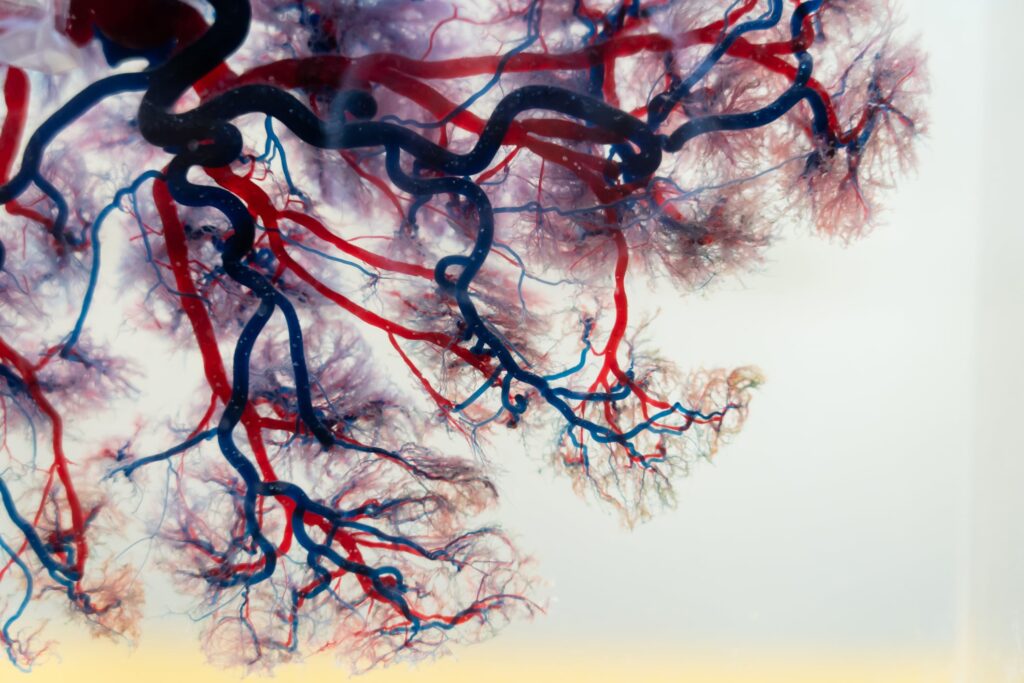
Scientists know that damage to microscopic blood vessels can provide an early warning sign of heart and kidney disease. But current methods for monitoring these tiny vessels are too impractical for widespread screening.
Now, a study led by researchers at the University of Bristol in the U.K. has identified a new way to detect damage by tracking changes in the coating that lines the blood vessels.
The findings, published May 12 in Nature Communications, suggest a simple blood test could be used to identify people at risk for heart and kidney disease, the researchers said.
Currently, monitoring these blood vessels requires invasive biopsies and specialized microscopic techniques because the vessels are too small to be seen directly, the researchers noted in a news release.
“Our results suggest that we can use changes occurring at the surface of red blood cells to identify blood vessel damage before other markers become detectable,” Matthew Butler, M.D., consultant senior lecturer at the University of Bristol and one of the study’s authors, said in the release.
“Most excitingly, we can also rapidly detect when drugs are effective at restoring the blood vessel lining.”
The research focused on glycocalyx. This is a sugar- and protein-rich coating that lines blood vessels that helps regulate what moves in and out of the bloodstream and directs immune cells where they’re needed, according to the release. When it becomes damaged, it can serve as an early marker of disease.
Using advanced chemical analysis techniques, the researchers found that red blood cells and blood vessel walls continuously exchange pieces of this coating when they come into contact, creating a biochemical “imprint” on the blood vessel that reflects the health of the lining.
“This discovery could pave the way for proactive, preventative healthcare, offering the possibility of addressing diseases before they develop,” said Simon Satchell, professor of renal and vascular medicine at University of Bristol, and a study co-author.
The research comes as several medtech companies are marketing and developing blood-based liquid biopsy tests to diagnose and monitor certain cancers, as well as other chronic conditions.
The study was funded by Kidney Research UK and the UK’s Medical Research Council.