
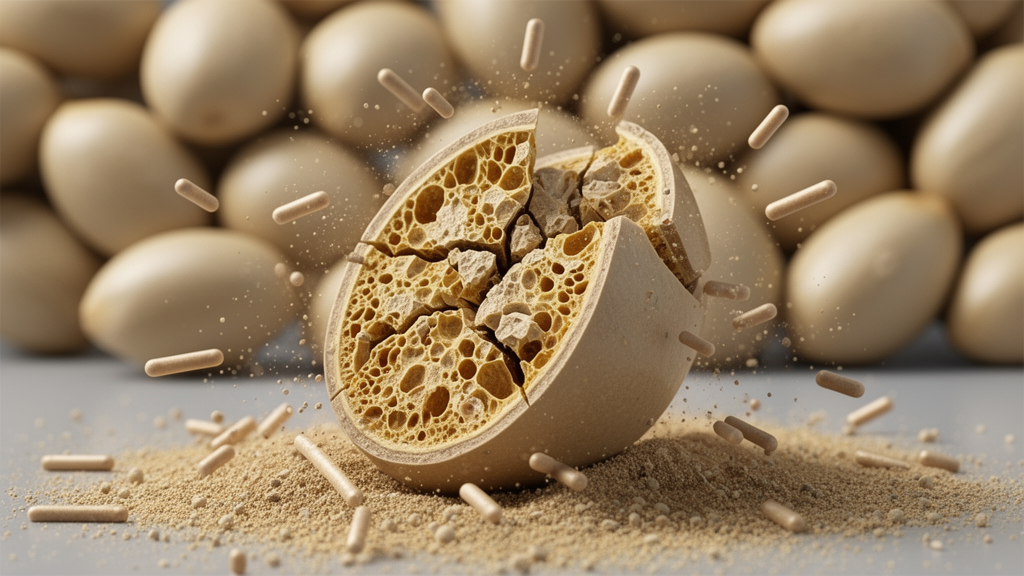
Processing botanical materials through mechanical pulverization can fundamentally alter their physical behavior and the accessibility of their chemical constituents. In an investigation focused on the medicinal and culinary plant Carthamus tinctorius L., commonly known as safflower, researchers evaluated how reducing powder dimensions to the micron scale influences powder microstructure, physical handling characteristics, chemical composition, volatile aroma profiles, and in vitro biological activities. Safflower represents the dried tubular inflorescence of an annual or biennial plant in the Asteraceae family that is widely cultivated and utilized across Asia, North America, and South America. Historically applied in functional food preparation, natural dye extraction, and traditional pharmacopeia, the dried flowers contain an extensive array of functional compounds, including flavonoids, bioactive polysaccharides, quinone chalcones, alkaloids, steroids, organic acids, and polyacetylenes. The study investigated whether systematically breaking the tough cellular walls of the flower through superfine impact milling could liberate these intracellular compounds more effectively than traditional coarse grinding techniques.
To establish a rigorous comparative framework, the investigative team obtained dried safflower raw material harvested from Yili City in Xinjiang Province and divided the samples into four distinct particle size categories. Initial preparation involved air-drying fresh tubular florets under controlled conditions of 25 degrees Celsius and 45 to 55 percent relative humidity until reaching a stable, constant weight. Coarse fragmentation was performed using a high-speed universal mechanical grinder operating at 25,000 revolutions per minute for two minutes. The resulting ground material was sieved through standardized mesh screens to separate two coarse tiers: the SF50 cohort, retained between 50-mesh and 100-mesh screens corresponding to openings of 300 and 150 micrometers, and the SF100 cohort, collected between 100-mesh and 200-mesh screens corresponding to 150 and 75 micrometers. Portions of the SF100 material were then pulverized in a dedicated ultra-micro grinder, also operating at 25,000 revolutions per minute, to generate finer factions. Sieving through 200-mesh and 325-mesh screens produced the SF200 fraction, retained on a 45-micrometer aperture, and the finest SF325 fraction, which passed entirely through the 45-micrometer barrier. To protect temperature-sensitive phytochemicals, grinding operated in 30-second cycles separated by 10-minute cooling intervals, ensuring temperatures remained strictly below 40 degrees Celsius across three independent production batches.
Laser diffraction particle size analysis confirmed that mechanical energy dramatically diminished particle dimensions while expanding the available contact area. The median particle diameter, designated as D50, plunged from 375.33 micrometers in the coarsest SF50 preparation down to 27.8 micrometers in the superfine SF325 powder. Similar downward shifts were observed across the distribution: the D10 metric fell from 142 to 6.24 micrometers, while the D90 threshold decreased from 674 to 75.23 micrometers. As a direct consequence of this fragmentation, the calculated specific surface area expanded nearly tenfold, increasing from 46.15 square meters per kilogram in SF50 to 427.20 square meters per kilogram in SF325. Furthermore, the span value, which measures distribution width, rose from 1.42 to 2.48, demonstrating a slightly broader size dispersion in the ultrafine tiers. Most notably, the calculated cell wall breakage ratio increased from 7.78 percent in the coarse material to 73.75 percent in the SF325 group, confirming that high-speed impact and airflow milling physically ruptured the majority of cellular envelopes.
Microscopic examination using scanning electron microscopy corroborated these physical measurements, revealing stark structural differences between the coarse and ultrafine powders. Conventional milling produced large, irregular particles exceeding 100 micrometers in diameter, featuring intact fibrous cell matrices, rough surface fragments, and occasional spherical structures. In contrast, micrographs of the SF200 and SF325 samples showed particulate fragments smaller than 50 micrometers with more uniform, regular shapes. The electron micrographs also captured partial interparticle agglomeration in the ultrafine fractions. The researchers noted that intensive mechanical impact generates elevated surface energy and exposes fresh particulate interfaces, thereby heightening interparticle attractive forces, such as van der Waals interactions and electrostatic attractions, which cause very fine particles to cluster into loose agglomerates to reach thermodynamic stability. Despite this physical clustering, the exposed microstructural surface area remained substantially higher than that of intact cell packages.
Color analysis revealed that microstructural disruption notably altered the optical properties of the safflower powders, as quantified across standard chromaticity coordinates. With decreasing particle size, the lightness index L* increased significantly from 50.71 in SF50 to 61.49 in SF325. This visual brightening is consistent with the Kubelka-Munk theory, which posits that smaller particles create more light-scattering interfaces per unit mass, thereby enhancing diffuse reflectance. Concurrently, chromaticity shifts were documented along both color axes: the redness coordinate a* increased from 20.45 to 23.91, and the yellowness coordinate b* rose from 18.59 to 30.06. These coordinated increases produced an overall calculated color difference, delta E*, reaching 16.12 when comparing the finest powder against the coarsest baseline. The authors attributed the intensified red-yellow saturation to the mechanical destruction of protective cell walls, which exposed intracellular plant pigments, including flavonoids, anthocyanins, and carotenoids, to the particle surface.
Physical flowability and packing parameters also responded directly to the particle size reduction. Tap density increased progressively from 391.65 milligrams per milliliter in the coarsest SF50 powder to 663.62 milligrams per milliliter in the finest SF325 preparation, indicating that finer particles pack more efficiently into interparticle spaces without leaving large structural voids. The static angle of repose decreased significantly from 50.66 degrees to 44.70 degrees as particle size decreased, while the dynamic angle of slide dropped from 52.79 degrees in SF50 down to 18.59 degrees in SF325. In bulk materials science, lower angles of repose and sliding indicate improved flow properties, as cohesive forces allow particulate aggregates to slide smoothly under gravitational force rather than catching on fibrous edges. This combination of elevated tap density and reduced sliding friction provides practical manufacturing advantages, offering better compressibility and uniformity during capsule filling or tableting.
Hydration characteristics revealed distinct behavioral divergence between water solubility and water entrapment mechanisms. The water solubility index increased significantly from 36.67 percent in coarse SF50 powder to 46.53 percent in ultrafine SF325, driven by the tenfold expansion of specific surface area and the liberation of hydrophilic polar groups previously trapped within intact plant tissues. The swelling capacity of the powders similarly increased from 2.67 milliliters per gram in SF50 to 7.20 milliliters per gram in SF325, with marked differences emerging once particles were reduced below the 200-mesh threshold. Conversely, the water-holding capacity dropped significantly from 7.78 grams of water per gram of powder in SF50 to 4.59 grams per gram in SF325. The authors explained that water retention in coarse plant powders relies heavily on physical capillary entrapment within intact, porous cellulosic voids. Superfine grinding physically collapses this open sponge-like fiber matrix, eliminating the interstitial pockets required to mechanically hold capillary water under centrifugal force, while simultaneously facilitating rapid dissolution.
Fourier transform infrared spectroscopy confirmed that intensive grinding altered physical organization without inducing chemical degradation or creating synthetic artifacts. Spectral profiles collected between 4000 and 400 inverse centimeters displayed identical characteristic absorption bands across all four grinding treatments, including asymmetric carbon-hydrogen stretching at 2923, carbonyl stretching at 1730, aromatic carbon double-bond vibrations at 1517, and carbon-oxygen-carbon stretching at 1240 inverse centimeters. No new absorption peaks appeared, demonstrating that mechanical impact did not generate novel chemical entities or break primary covalent backbones. However, subtle increases in absorption intensity within the carbonyl and ether regions pointed to greater outward exposure of functional chemical groups. In addition, baseline estimations showed a slight reduction in the cellulose crystallinity index, indicating that mechanical shear disrupted ordered crystalline hydrogen-bonding networks in the cell walls, thereby lowering mass-transfer resistance during subsequent liquid solvent extraction.
Gas chromatography-mass spectrometry combined with multivariate statistical modeling demonstrated marked modulation of volatile organic compounds across grinding treatments. Principal component analysis accounted for 60.02 percent of total metabolic variance, with principal component 1 explaining 39.26 percent and principal component 2 explaining 20.76 percent. In the score space, the ultrafine SF200 and SF325 cohorts clustered tightly with quality control samples, whereas coarse powders deviated markedly, reflecting incomplete volatile extraction from unruptured cells. Orthogonal partial least squares discriminant analysis confirmed complete separation among all four particle groups with robust model validation metrics, including an R2X of 0.807, an R2Y of 0.996, and a predictive Q2 of 0.835. Using selection thresholds of variable importance in projection exceeding 1.0 alongside p-values below 0.05, the team cataloged 564 differential volatile metabolites spanning 14 chemical classes. Terpenoids represented 25 percent of these compounds, followed by esters at 16.3 percent, ketones at 10.46 percent, and heterocyclic compounds at 9.75 percent.
Sensory flavor categorization of these metabolites highlighted a structural shift toward sweet, green, and fruity olfactory characteristics. Evaluation of annotated flavor profiles showed sweet notes linked to 75 identified metabolites, green notes to 72, fruity notes to 63, woody attributes to 39, and floral characters to 38 compounds, with additional representation from herbal, fresh, minty, rose, and spicy compounds. K-means clustering identified nine marker metabolites exhibiting continuous gradients across grinding intensities. Five desirable aromatic compounds increased continuously from SF50 to SF325: isobutyl isovalerate, (E)-3-hexen-1-ol acetate, (Z)-3-hexen-1-ol acetate, 4-prime-hydroxyacetophenone, and butanoic acid, 2-methyl-, 2-methylpropyl ester. The researchers noted that cell rupture likely accelerated localized enzymatic hydrolysis by bringing plant glycosidases into direct contact with glycosidic precursors. In contrast, four volatile compounds associated with harsh or pungent odors—specifically D-verbenone, 3-methyl-4-nitrophenol, 3-nonenoic acid methyl ester, and 5-methyl-2-(1-methylethyl)-cyclohexanone—decreased steadily with finer grinding, reflecting mechanical dispersion or localized degradation.
Quantitative liquid chromatography and spectrophotometric assays confirmed substantial gains in the release of major bioactive principles as particle boundaries shrank. The concentration of the primary bioactive marker, hydroxysafflor yellow A, quantified by high-performance liquid chromatography, rose significantly from 12.92 milligrams per gram in coarse SF50 powder to 18.96 milligrams per gram in SF325. Total flavonoid content expanded from 5.38 to 6.98 milligrams of rutin equivalents per gram of dry weight, while total polysaccharide content advanced from 9.02 to 14.48 milligrams of glucose equivalents per gram. This elevated phytochemical yield directly correlated with enhanced in vitro antioxidant and anticoagulant activities. Scavenging rates against the DPPH radical increased systematically across all tested concentrations; at a test concentration of 6 milligrams per milliliter, radical scavenging rose from 78.02 percent in SF50 to 93.24 percent in SF325. Pearson correlation confirmed an exceptionally tight linear relationship between hydroxysafflor yellow A content and DPPH inhibition, yielding a correlation coefficient r of 0.999.
Coagulation assays conducted using pooled rabbit plasma demonstrated parallel improvements in anticoagulant efficacy in vitro. At an extract concentration of 2 milligrams per milliliter, the activated partial thromboplastin time lengthened from 21.67 seconds in SF50 to 36.37 seconds in SF325, while prothrombin time extended from 11.65 to 13.25 seconds, though thrombin time remained unaffected at this lower dose. When the extract concentration was elevated to 10 milligrams per milliliter, all three clotting parameters showed significant prolongation across particle sizes: activated partial thromboplastin time rose from 26.01 to 45.29 seconds, thrombin time extended from 33.56 to 42.78 seconds, and prothrombin time increased from 15.80 to 30.38 seconds. At the highest test concentration of 50 milligrams per milliliter, clotting times reached 64.11 seconds for activated partial thromboplastin time, 54.53 seconds for thrombin time, and 40.33 seconds for prothrombin time in the superfine group. The authors stressed that these gains do not reflect changes to the intrinsic molecular potency of the active molecules, but rather arise entirely from enhanced mass transfer and bioaccessibility achieved by mechanically destroying the plant cell wall matrix.
Subject of Research: Impact of superfine grinding on the physicochemical, volatile, and biological properties of Carthamus tinctorius powder
Article Title: Superfine grinding modulates the volatile profile and enhances physical properties, chemical components and bio-activities of Carthamus tinctorius L. by microstructural destruction
Article References: Guo, T., Li, Y., Li, J., Chen, X., Murtaza, G., Cheng, H., Xiao, X., Shi, L., Gao, R., & Huang, X. (2026). Superfine grinding modulates the volatile profile and enhances physical properties, chemical components and bio-activities of Carthamus tinctorius L. by microstructural destruction. Food, Nutrition and Health, 3(1), Article 8. https://doi.org/10.1007/s44403-026-00054-3
Image Credits: AI Generated
DOI: 10.1007/s44403-026-00054-3
Keywords: safflower powder, superfine grinding, particle size reduction, hydroxysafflor yellow A, flavonoids, antioxidant activity, anticoagulant properties, food processing technology, volatile organic compounds, powder flowability, Superfine, grinding

