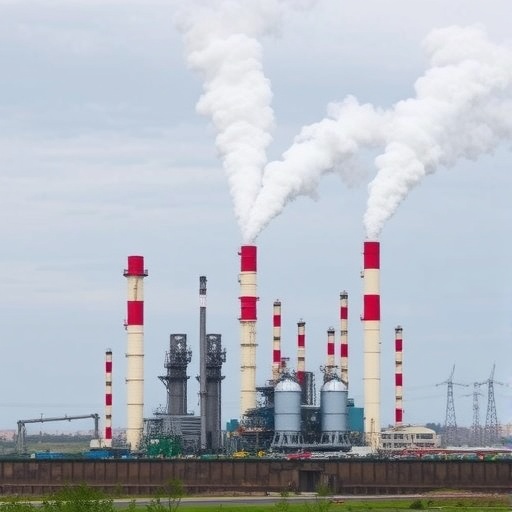
In a groundbreaking study published in Nature Chemical Engineering, researchers Ma, Meng, Lei, and colleagues have unveiled comprehensive decarbonization pathways for the global oil refining sector, pinpointing both technological trajectories and the associated economic implications. This pioneering work provides the most detailed plant-level analysis to date, emphasizing the necessity for tailored mitigation strategies that correspond to site-specific operational characteristics and regional energy infrastructures. As oil refineries remain a major contributor to industrial greenhouse gas emissions, the insights derived from this research are poised to redefine global industrial decarbonization efforts and climate policy considerations.
The oil refining industry is among the most carbon-intensive industrial sectors globally, responsible for a significant share of industrial CO2 emissions. Historically, efforts to curb these emissions have focused largely on aggregate sector-level targets without delving into plant-specific complexities. The new study breaks from tradition by integrating high-resolution operational data across hundreds of refineries worldwide, revealing a complex mosaic of emissions profiles. These variations are driven by factors such as refinery configuration, feedstock quality, energy sourcing, and regional regulatory environments, all of which profoundly affect mitigation feasibility and costs.
Central to the study’s approach is the development of a sophisticated modeling framework that couples detailed refinery engineering processes with decarbonization technologies. This framework incorporates carbon capture, utilization, and storage (CCUS), electrification of heat supply, fuel switching to low-carbon alternatives like hydrogen, and operational efficiency improvements. Notably, the researchers emphasize that decarbonization pathways cannot be one-size-fits-all; refinery-specific techno-economic parameters must guide technology adoption to optimize emission reductions cost-effectively.
The findings suggest that early-stage mitigation efforts can leverage operational improvements and fuel switching, but these alone are insufficient for achieving ambitious net-zero goals. Medium- to long-term strategies must increasingly incorporate CCUS and electrification, which promise the highest emissions abatement potential but come with significant capital expenditure requirements and technical challenges. The authors discuss how integrating renewable electricity sources and developing hydrogen infrastructure will be pivotal in enabling refinery electrification at scale.
One of the study’s most innovative aspects is its granular cost analysis. By quantifying mitigation expenses at the plant level, the work allows policymakers and industry stakeholders to assess investment priorities and identify economically viable decarbonization routes. This level of detail helps uncover regional disparities in costs, which are influenced by local energy prices, infrastructure availability, and policy frameworks. For example, refineries located in regions with abundant renewable energy exhibit markedly lower mitigation costs compared to those reliant on fossil-derived electricity.
The researchers also highlight the critical role of dynamic policy support mechanisms. Carbon pricing, subsidies for clean technology deployment, and infrastructure investments emerge as vital tools to overcome financial barriers inherent in high-capex decarbonization measures. In addition, strategic government-industry collaborations can accelerate technological innovation and create economies of scale, driving down costs further. The study underscores that without robust policy interventions, many refineries may struggle to undertake the transformation required by forthcoming climate regulations.
Furthermore, the study explores the interplay between refinery decarbonization and broader energy transition trends. As the global economy pivots toward electrification and low-carbon fuels, refineries must adapt by diversifying product slates and integrating new process configurations compatible with these shifts. The authors argue that embracing circular economy principles, such as waste heat recovery and carbon recycling, will offer additional emission reduction opportunities while enhancing operational resilience.
Importantly, the research contextualizes refinery decarbonization within the global greenhouse gas budget necessary to limit warming to 1.5 degrees Celsius. Achieving this target demands rapid emission cuts across all sectors, with the refining industry’s sizable footprint necessitating accelerated action. Detailed, plant-specific pathways ensure that emission reductions are strategically allocated, preventing carbon lock-in and enabling more equitable global climate progress.
The researchers also address challenges in data quality and availability, noting that continuous improvement in monitoring and reporting will be essential to refine decarbonization strategies further. Transparent sharing of operational and emissions data among refinery operators and regulators will enhance model accuracy and support adaptive management approaches, making mitigation efforts more responsive to evolving technological and market contexts.
Moreover, this comprehensive study delivers a blueprint for future research directions. Emphasis is placed on improving CCUS technologies, reducing the costs of clean hydrogen production, and exploring emerging innovations such as advanced biofuels and electrified process units. Cross-sectoral integration, particularly with power and chemical industries, is identified as a pathway to unlock synergistic benefits and accelerate overall industrial decarbonization.
The urgency of the climate crisis amplifies the significance of this work. It recognizes that oil refineries, while sometimes viewed as relics of a fossil-fuel-dependent era, have a critical role in shaping a sustainable energy future. Through innovation and strategic investment in decarbonization technologies, refineries can transition from principal emitters to enablers of low-carbon energy systems, contributing to global climate goals without compromising energy security.
In conclusion, Ma et al. provide a meticulously detailed, scientifically robust evaluation of decarbonization pathways for oil refineries worldwide. Their integrated approach bridges engineering innovation, economics, and policy analysis, furnishing stakeholders with actionable insights to drive the energy transition in one of the most challenging industrial sectors. As decarbonization moves from aspiration to implementation, such nuanced analyses will be indispensable in steering the global refining industry towards a sustainable and economically viable future.
Subject of Research: Decarbonization pathways and mitigation costs at the plant-level for oil refineries worldwide
Article Title: Plant-level decarbonization pathways and mitigation costs of global oil refineries
Article References:
Ma, S., Meng, J., Lei, T. et al. Plant-level decarbonization pathways and mitigation costs of global oil refineries. Nat Chem Eng (2026). https://doi.org/10.1038/s44286-026-00394-z
Image Credits: AI Generated
DOI: https://doi.org/10.1038/s44286-026-00394-z
Tags: climate policy for industrial sectorsdecarbonizing global oil refinerieseconomic implications of refinery decarbonizationfeedstock quality in oil refininghigh-resolution refinery emissions dataindustrial greenhouse gas mitigationoil refinery carbon emissions reductionplant-level decarbonization strategiesrefinery configuration and emissionsrefinery-specific energy infrastructureregional regulatory impacts on refineriestechnological pathways for refinery decarbonization