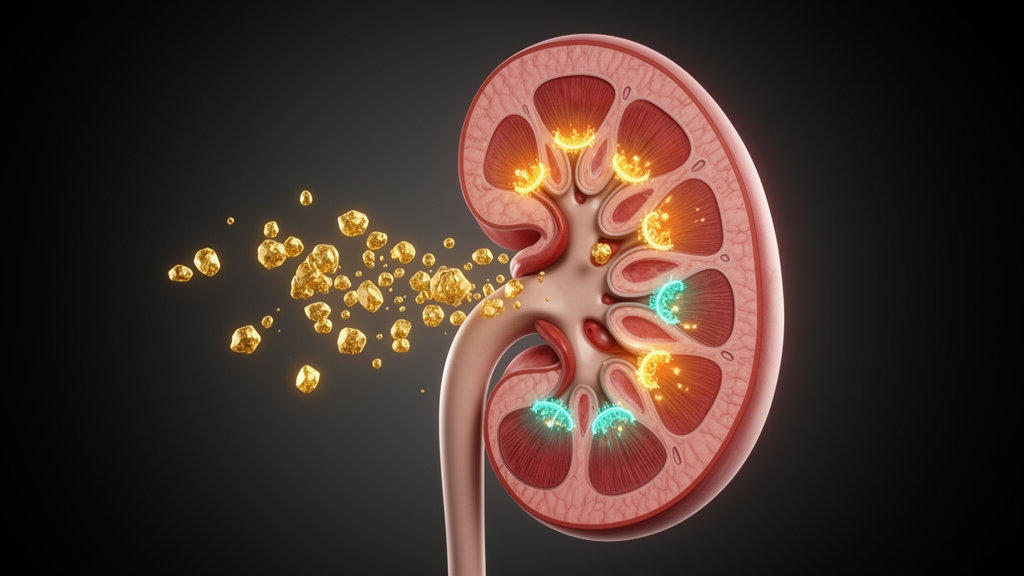
A plant alkaloid long used in traditional Chinese medicine may ease diabetic kidney damage by dialing down the kidney’s main sugar-recycling machinery, according to a new preclinical study published in the journal Chinese Medicine.
The compound has been reported to lower blood glucose and protect the kidneys through many mechanisms, including improved insulin sensitivity, stimulated GLP-1 secretion, and altered gut microbiota, but it remained uncertain whether it could affect glucose reabsorption in the kidney’s proximal tubules under diabetic conditions. Because SGLT-2, which sits on the surface of proximal tubular epithelial cells and reabsorbs roughly ninety percent of the glucose filtered by the kidneys, is the target of a clinically proven drug class, the question carried obvious translational weight.
To answer it, the team combined animal experiments, cell studies, and computational screens. Male db/db mice, a standard model of obesity-linked type 2 diabetes, received once-daily oral treatment for sixteen weeks beginning at eight weeks of age. The groups included untreated diabetic mice, mice given the established SGLT-2 inhibitor empagliflozin at one milligram per kilogram, three doses of berberine at fifty, one hundred, and two hundred milligrams per kilogram, and a combination of one hundred milligrams per kilogram of berberine with empagliflozin. Parallel experiments used human kidney-2, or HK-2, proximal tubular cells exposed to fifty millimolar glucose for twenty-four hours, with an osmotic control of low glucose plus mannitol to separate sugar effects from simple osmotic stress.
The metabolic results were broadly positive but carried a nuance the authors were careful to flag. Berberine lowered blood glucose, attenuated body-weight gain, improved glucose tolerance, enhanced the glucose-lowering response to exogenous insulin during an insulin tolerance test, and reduced triglycerides and LDL cholesterol. Yet the glucose-lowering effect did not follow a clean dose-response pattern: at week twenty-four, mean blood glucose was numerically lower in the low-dose group, 16.51 millimoles per liter, than in the high-dose group, 23.25 millimoles per liter, though the difference was not statistically significant. The authors interpret this as evidence that berberine acts as a multitarget metabolic regulator whose systemic glucose effects cannot be attributed solely to renal SGLT-2 modulation.
On the kidney side, the picture was more consistent. Berberine-treated mice showed reduced urinary albumin excretion, lower blood urea nitrogen and serum creatinine, improved glomerular filtration rate, and, under the electron microscope, attenuated glomerular basement membrane thickening, podocyte foot process effacement, and mitochondrial abnormalities in tubular cells. Urinary glucose excretion trended upward, most clearly at the medium dose, consistent with reduced tubular glucose reabsorption. Empagliflozin, as expected, increased urine output and glucosuria while improving the same renal parameters, serving as the pharmacological benchmark the berberine results were measured against.
The mechanistic core of the study emerged from the molecular analyses. In the kidneys of diabetic mice, immunohistochemistry showed reduced phosphorylation of FOXO1 at Ser256, an inhibitory, Akt-regulated site, along with increased total FOXO1 and SGLT-2 staining and decreased SP1 staining. In high-glucose-exposed HK-2 cells, the same pattern appeared: more total FOXO1, less phosphorylated FOXO1, less SP1, more SGLT-2, and enhanced uptake of the fluorescent glucose analog 2-NBDG. Berberine reversed each of these changes, reducing nuclear accumulation of FOXO1, restoring SP1, suppressing SGLT-2, and cutting glucose uptake, with stronger effects at the higher twenty micromolar concentration.
Several lines of evidence converged to implicate FOXO1 as a proximal target of the compound. Molecular docking against the crystal structure of the human FOXO1 DNA-binding domain predicted a favorable interaction, with a top-ranked binding energy of minus 9.0 kilocalories per mole and Arg157 and Asn158 as the principal predicted contact residues. A cellular thermal shift assay showed that berberine-treated cells retained more soluble FOXO1 at several elevated temperatures than vehicle-treated cells, suggesting the drug alters the protein’s apparent thermal stability. The authors are careful to describe these as qualitative, hypothesis-generating findings rather than proof of direct binding in living tissue.
Functional tests then linked the transcription factors to SGLT-2 regulation. When the researchers forced FOXO1 overexpression in HK-2 cells, berberine’s ability to restore SP1 and suppress SGLT-2 was clearly weakened, placing FOXO1 upstream in the pathway. Reciprocal co-immunoprecipitation showed an endogenous physical association between FOXO1 and SP1 in the cells. Dual-luciferase reporter assays in HEK-293T cells found that FOXO1 overexpression reduced SP1 promoter-reporter activity, while SP1 overexpression reduced wild-type SLC5A2, the gene encoding SGLT-2, promoter-reporter activity, an effect abolished when the predicted SP1-binding site was mutated. Finally, mithramycin A, an antibiotic that interferes with SP-family transcription factors binding GC-rich promoter elements, blunted berberine’s effects on SP1 and SGLT-2, supporting SP1’s functional role.
The authors are notably candid about what the study does not establish. The bioinformatic pipeline, which combined network pharmacology targets with differentially expressed genes from the public datasets GSE26168 and GSE30528, highlighted FOXO1 and SLC5A2 as diabetes-related candidates but did not identify the complete FOXO1/SP1/SGLT-2 axis; SP1 entered the model as a literature-supported hypothesis. The reporter assays were performed in an exogenous system in HEK-293T cells, so they do not prove endogenous promoter occupancy in renal tubular cells, and chromatin immunoprecipitation experiments will be needed to confirm that FOXO1 binds the SP1 promoter and SP1 binds the SLC5A2 promoter in kidney cells. The co-immunoprecipitation data cannot distinguish direct from indirect protein association, and a puzzling discordance, in which SP1 protein changed markedly in high-glucose cells while SP1 mRNA did not, remains unexplained because protein stability was not directly measured.
Safety questions also temper the enthusiasm. The combination of berberine and empagliflozin produced marked metabolic and renal improvements, but aspartate aminotransferase, AST, showed an increasing trend in the combination group. Liver histology appeared normal, yet the authors acknowledge that this cannot exclude mild or subclinical hepatic stress, that AST is not liver-specific, and that additional markers such as bilirubin and alkaline phosphatase were not assessed. They conclude that the present data are insufficient to establish a therapeutic advantage for the combined regimen and that further safety evaluation is required.
Subject of Research: How the plant alkaloid berberine regulates renal SGLT-2 expression through a FOXO1/SP1 axis in models of diabetic kidney injury
Article Title: Berberine attenuates diabetic kidney injury via FOXO1/SP1-associated regulation of renal SGLT-2 expression
Article References: Pan, J., Wang, X., Han, X., Cheng, H., Zhang, F., Chen, Y., Li, C., Wang, X., Cheng, Z., Zhang, Y., Zhao, S., Wang, W., Li, Y., & Li, Y. (2026). Berberine attenuates diabetic kidney injury via FOXO1/SP1-associated regulation of renal SGLT-2 expression. Chinese Medicine, 21(1), Article 225. https://doi.org/10.1186/s13020-026-01533-7
Image Credits: AI Generated
DOI: 10.1186/s13020-026-01533-7
Keywords: berberine, diabetic kidney disease, SGLT-2, FOXO1, SP1, empagliflozin, db/db mice, HK-2 cells, renal glucose reabsorption, network pharmacology, molecular docking, preclinical study