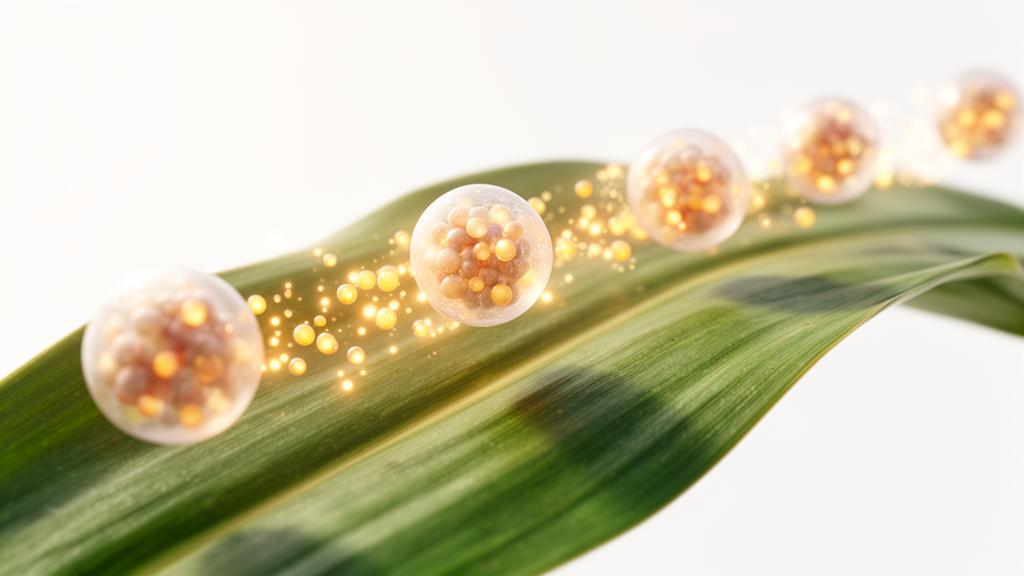
A new review published in Bioscience Nanotechnology argues that the future of sustainable crop production may depend not on new nutrients themselves, but on how intelligently they are delivered. Bhairav Prasad, Ramesh Chandra Dubey and Pankaj Kumar examine how nanocarrier-based delivery systems can enhance the bioavailability, stability and sustained release of bioactive compounds over extended periods, addressing the rapid degradation, inadequate delivery and poor solubility that often limit conventional biostimulants in the field.
The review, published on 13 August 2026, sets out to untangle a conceptual confusion the authors say pervades the literature. Nano-biostimulants, they explain, are substances or microorganisms that enhance plant growth through physiological modulation and help manage abiotic stress, independent of direct nutrient uptake. Nanofertilizers, by contrast, are nutrient-providing systems, while nanocarriers are delivery vehicles. Treating these three categories as interchangeable, the authors contend, has obscured the mechanistic understanding of how nano-enabled systems actually influence plant responses.
The case for nanocarriers rests on the distinctive physics of materials at the 1–100 nanometre scale. Nanomaterials offer a high surface-area-to-volume ratio, surface charge, enhanced reactivity and tunable porosity, making them suitable carriers for delicate bioactive compounds. Their small size facilitates efficient adhesion to the leaf surface, enhanced penetration through the cuticle, and improved interaction with root tissues and rhizospheric microorganisms. In smart nanocarriers, the active molecule is trapped within an inorganic, lipid or polymeric nanostructure and released through diffusion, carrier degradation, or triggered mechanisms such as changes in pH, enzymatic activity or moisture in the rhizospheric environment.
Stimuli-responsive release is a central theme of the review. Many nano-biostimulants respond to environmental factors such as temperature, pH, moisture and reactive oxygen species, which modulate the release of their cargo. In pH-responsive systems, changes in environmental pH alter the ionization state of functional groups in the carrier material, causing polymer swelling, contraction or degradation that modifies matrix permeability and diffusion pathways. Biopolymer-based core–shell nanostructures have demonstrated pH-triggered release via changes in polymer network architecture, enabling sustainable agrochemical delivery over several days. Enzyme-triggered release uses plant or microbial enzymes such as cellulase or esterase to cleave embedded linkers, synchronising delivery with biological activity at disease onset or during root exudate exchange. ROS-responsive designs target stress hot spots, where reactive oxygen species concentrations are generally high, selectively triggering release of specific fertilisers or pesticides.
Surface properties offer another tuning knob. Biodegradable core–shell nanostructures produced by coaxial electrospray have shown tunable release behaviour by adjusting surface hydrophobicity: increasing hydrophobicity slows water penetration into the carrier matrix and decreases the diffusion rate, while a more hydrophilic surface accelerates matrix hydration and cargo release. This mechanism was adopted for the controlled release of encapsulated CuSO4 and NPK fertilisers, maintained for up to seven days in response to pH and enzymatic stimuli. The authors note that such systems integrate environmental sensing with controlled physicochemical transformations, enabling delivery of agrochemicals at the right place, at the right time and at the right dose.
The review surveys a range of carrier platforms with distinct trade-offs. Polymeric nanoparticles such as PLGA can be fabricated to enable slow hydrolytic erosion, improving the persistence of biostimulants and nutrients in the root zone and reducing leaching; their release rate can be adjusted by modifying the lactic-acid-to-glycolic-acid ratio, particle size and molecular weight, although high production costs and specialised fabrication techniques may limit large-scale agricultural deployment. Lipid-based systems such as liposomes and solid lipid nanoparticles protect active ingredients and increase foliar uptake, but generally exhibit lower environmental stability and are more susceptible to oxidation, aggregation and premature leakage under field conditions. Biopolymer carriers such as chitosan, cellulose and alginate derivatives are generally biodegradable and cross-link via ionic interactions with plant tissue.
Chitosan features prominently as a carrier with intrinsic biological activity. As a natural polysaccharide, it functions as a molecular elicitor, stimulating stress-related signalling pathways mediated by nitric oxide, hydrogen peroxide and calcium ions. The review cites a lecithin-chitosan nanocarrier formulation of Arthrospira platensis protein hydrolysate applied to tomato, which was found to stimulate growth and increase plant height by up to 45.9 per cent during the vegetative phase, while boosting flavonoid, chlorophyll, carotenoid and epigallocatechin in leaves and lycopene in fruit. A chitosan–microalgae nanoparticle formulation significantly reduced drought stress and improved wheat seedling germination rate and biomass accumulation under both moderate and severe drought stress. However, the authors caution that chitosan nanocarrier stability can be strongly influenced by environmental pH and ionic strength, potentially limiting field performance under variable soil conditions.
Hydrogel nanocomposites emerge as a dual-purpose platform, acting as micro-reservoirs that buffer water and nutrients. The review reports that nanocomposite hydrogels have shown higher soil–water retention in tomato, rising from roughly 55–56 per cent to 78–79 per cent, approximately double the swelling capacity in wheat, reduced irrigation requirements by 15 per cent in legumes, and increased plant biomass by 30–40 per cent under drought conditions. Nano-hydrogels loaded with phytochemicals, micronutrients or biostimulants have offered 36–80 per cent protection against the fungal pathogen Fusarium wilt and reduced post-harvest pathogen contamination by up to about 90 per cent in some cases. Alginate-derived hydrogels used for micro-encapsulation of pyroglutamic acid have shown promising results in increasing drought tolerance in vegetables, increasing the effectiveness of the biostimulant tenfold, although they are not stable for long periods and degrade easily in soil.
At the plant–soil interface, the review describes how nano-biostimulants can improve the mobilisation and solubilisation of nutrients such as zinc, phosphorus and iron present in complex, plant-unavailable forms. Nano-zinc and nano-silica particles increase soil enzymatic activity, including urease, phosphatase and dehydrogenase, enhancing organic matter decomposition and nutrient recycling. At the rhizospheric level, these materials may modulate phytohormone production, particularly auxin, affecting lateral root formation, root elongation and root hair differentiation, and their antioxidant potential helps mitigate drought, heavy metal, salinity and heat stress by scavenging reactive oxygen species and enhancing antioxidant enzymes including superoxide dismutase, ascorbate peroxidase, catalase and peroxidases. Some nano-biostimulants also act as signalling molecules, triggering systemic induced resistance and promoting expression of genes linked to plant defence pathways, hormonal regulation and secondary metabolite production.
Field evidence is presented cautiously but encouragingly. A recent global meta-analysis reported an average crop yield increase of approximately 10 per cent following nano-enabled fertiliser application, along with reductions in methane, nitrous oxide and carbon dioxide emissions, and several multi-location trials have reported reductions in fertiliser requirements of 20–40 per cent without compromising yield. In cereal crops such as wheat, maize and rice, yield improvements ranging from 20 to 55 per cent have been reported under optimised nano-formulations. Yet the authors stress that large-scale adoption requires further validation under diverse agro-climatic conditions, with long-term field studies needed to assess nanoparticle persistence, environmental fate, interactions with soil microbiota, food safety and regulatory compliance. They also flag ecotoxicological concerns: some metal-based nanomaterials may accumulate in the environment and adversely affect soil microbiology, and oxides of metal-based nanomaterials such as copper and zinc may inhibit beneficial bacteria involved in nitrogen fixation and phosphorus solubilisation. Current agricultural regulations, the review notes, often fail to differentiate nano-enabled products from conventional agrochemicals, and no globally harmonised standard exists for characterising nanomaterials in agriculture. Bridging these regulatory, manufacturing and safety gaps, the authors conclude, is essential before smart nanocarrier biostimulants can move from laboratory promise to farm-scale reality.
Subject of Research: Smart nanocarrier-based delivery systems for sustained release of nano-biostimulants in sustainable agriculture
Article Title: Next-generation nano-biostimulants: smart nano carrier mediated delivery system for sustainable crop production
Article References: Prasad, B., Dubey, R. C., & Kumar, P. (2026). Next-generation nano-biostimulants: smart nano carrier mediated delivery system for sustainable crop production. Bioscience Nanotechnology, 2(1), Article 23. https://doi.org/10.1186/s44331-026-00031-9
Image Credits: AI Generated
DOI: 10.1186/s44331-026-00031-9
Keywords: nano-biostimulants, nanocarriers, controlled release, sustainable agriculture, chitosan, PLGA, liposomes, hydrogels, stimuli-responsive release, nutrient use efficiency, soil health, plant stress tolerance