
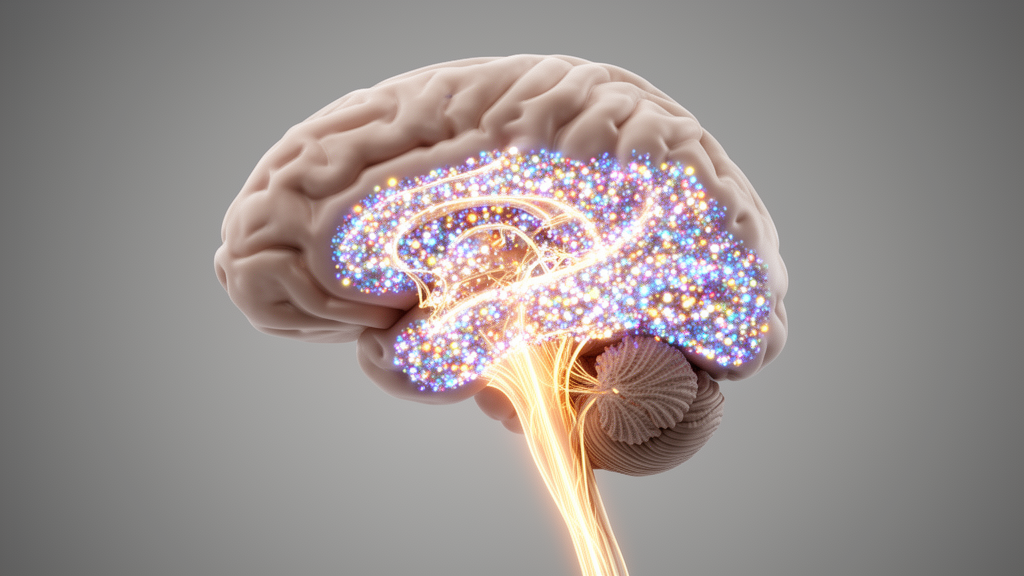
Noninvasive transcutaneous auricular vagus nerve stimulation restored behavioral performance and shifted hippocampal protein dysregulation toward a near-normal state in a mouse model of vascular cognitive impairment, according to research published in Molecular Brain. The study investigated the molecular candidates that underlie the restorative cognitive effects of this neuromodulation approach following transient cerebral hypoperfusion.
Vascular cognitive impairment represents a major cause of dementia that currently has limited treatment options. While transcutaneous auricular vagus nerve stimulation has previously demonstrated cognitive benefits in earlier work, the precise molecular mechanisms driving those functional improvements had remained unclear.
To investigate these mechanisms, researchers Seunghwan Choi, Jae Hyun Park, Chan Su Kim, and Sun Kwang Kim established an animal model using transient bilateral common carotid artery occlusion. This surgical procedure induced cerebral hypoperfusion in mice to examine how subsequent vagus nerve stimulation influenced both behavioral performance and molecular expression profiles.
Behavioral assessments confirmed that transient bilateral common carotid artery occlusion impaired cognitive function in the experimental mice. In contrast, the application of transcutaneous auricular vagus nerve stimulation successfully restored behavioral performance, counteracting the functional deficits produced by the ischemic injury.
To uncover the molecular changes occurring in the brain, the investigators performed a proteomic analysis specifically focused on the hippocampus. This tissue evaluation identified 58 proteins that were significantly altered in mice subjected to transient bilateral common carotid artery occlusion compared with sham control animals.
The hippocampal proteomic screen further revealed that 16 proteins were significantly modulated by transcutaneous auricular vagus nerve stimulation when compared directly with the occlusion group. Rather than simply suppressing or amplifying the overall injury response, a core set of responsive proteins displayed a distinct normalization-like pattern toward baseline levels.
The study authors concluded that transcutaneous auricular vagus nerve stimulation may alleviate vascular cognitive impairment by correcting hippocampal protein dysregulation induced by transient cerebral hypoperfusion. The authors noted that these identified protein targets represent candidate molecular mechanisms that require further experimental investigation in future studies.
The research was published on July 25, 2026, as an open access micro report in volume 19, article 75 of Molecular Brain. By utilizing a mouse model of transient bilateral common carotid artery occlusion, the investigators specifically examined how transient cerebral hypoperfusion alters hippocampal tissue and how noninvasive stimulation influences that injury environment. The experimental design established clear comparative benchmarks, first contrasting occlusion against sham controls to identify 58 altered proteins, and subsequently evaluating stimulation against occlusion to isolate 16 responsive targets.
Crucially, the core responsive proteins displayed a normalization pattern, shifting alterations caused by ischemia toward a near normal state rather than simply amplifying or suppressing the overall response. Because vascular cognitive impairment represents a major cause of dementia with limited treatment options, these hippocampal candidates provide concrete molecular targets for further experimental investigation in subsequent studies.
Subject of Research: Hippocampal proteomic response to transcutaneous auricular vagus nerve stimulation in vascular cognitive impairment
Article Title: Proteomic analysis of transcutaneous auricular vagus nerve stimulation induced cognitive restoration in a mouse model of vascular cognitive impairment
Article References: Choi, S., Park, J. H., Kim, C. S., & Kim, S. K. (2026). Proteomic analysis of transcutaneous auricular vagus nerve stimulation induced cognitive restoration in a mouse model of vascular cognitive impairment. Molecular Brain, 19(1), Article 75. https://doi.org/10.1186/s13041-026-01339-6
Image Credits: AI Generated
DOI: 10.1186/s13041-026-01339-6
Keywords: transcutaneous auricular vagus nerve stimulation, vascular cognitive impairment, hippocampus, proteomic analysis, tBCCAO, cerebral hypoperfusion, neuromodulation, dementia, ischemia, cognitive restoration, mouse model, Molecular Brain, neuroproteomics, protein dysregulation, behavioral assessment, carotid artery occlusion

